Best Airbnb and Short-term Rentals in Korea: Tips for Booking Legally

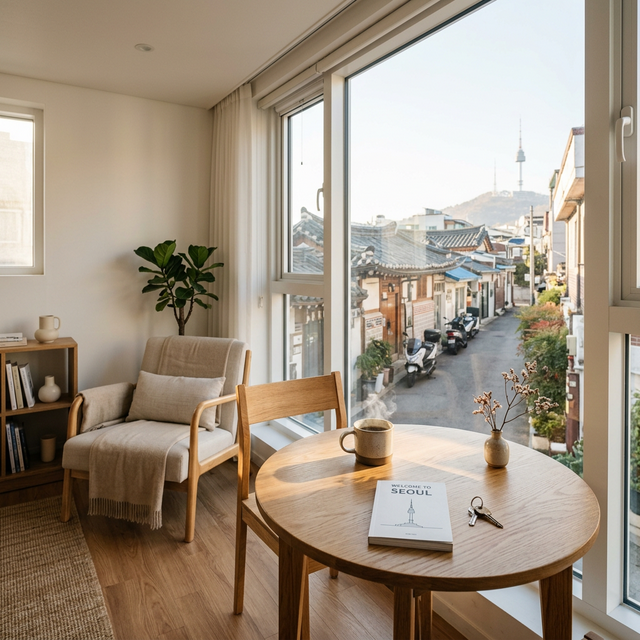
For many travelers, an Airbnb is the ultimate way to experience Korea. It offers the chance to live in a local neighborhood, cook with ingredients from a nearby traditional market, and—most importantly for long-term travelers—have access to a private washing machine.
However, the short-term rental market in South Korea is currently undergoing its most significant regulatory shift in history. If you are planning a trip for late 2024 or 2025, the "aesthetic" studio you see on Instagram might not actually be legal, and it might not even exist by the time you arrive.
In this guide, we will break down the complex legal landscape of Korean Airbnbs, the "Officetel" trap you must avoid, and how to ensure your stay is government-certified and safe.
1. The 2025 Reality: Airbnb’s Mandatory License Lockdown
For years, the Korean government and Airbnb operated in a "gray area." Many hosts operated without licenses, and crackdowns were sporadic. That is over.
The October 2025 Deadline
In late 2024, Airbnb announced a partnership with the South Korean government.
- The Rule: Every single host in Korea must now submit a government-verified business license to Airbnb.
- The Lockdown: By October 16, 2025, any listing that hasn't provided this verification will be blocked from receiving new bookings.
- The Result: By January 1, 2026, the number of Airbnbs in Korea is expected to drop by 40-60%.
Why this matters to you: If you book a place for late 2025 that doesn't have a verified license now, there is a high chance the host will be forced to cancel your reservation a few weeks before you arrive. Always look for the registration number in the listing description.
2. The "Officetel" Trap: Why "Sleek" Can Mean "Illegal"
If you search for Airbnbs in Hongdae or Gangnam, you will see hundreds of minimalist, glassy studio apartments (often with a "duplex" or "loft" layout). These are called Officetels.
What is an Officetel?
As the name suggests, they are a hybrid of an Office and a Hotel. They are technically classified as "Business Facilities" under Korean building codes.
The Legal Problem
Under current Korean law (Foreign Tourist Urban Homestay Act), short-term rentals are only permitted in residential properties like:
- Detached Houses (Villas)
- Apartments
- Traditional Hanok Homes
Officetels are strictly forbidden from being used as short-term rentals.
The Risk to the Traveler
While as a guest you won't be fined, the risks are real:
- Neighbor Reports: Residents of many officetels are increasingly reporting illegal Airbnb guests to the management office.
- Locked Out: You might arrive to find the building has changed the door codes or posted signs explicitly banning Airbnb guests.
- The "Friend" Lie: If a host asks you to "say you are my friend if anyone asks," cancel immediately. This is a sign of an illegal officetel rental.
3. The "Urban Guest House" License: Your Safety Seal
A legal Airbnb in Korea is registered as an 외국인관광도시민박업 (Foreign Tourist Urban Homestay Business). To get this license, the host must:
- Live in the property (though this rule is sometimes bent for apartments).
- Undergo a fire safety inspection (fire extinguishers and smoke detectors in every room).
- Be located in a residential building (No officetels).
How to Identify a Licensed Stay
- The Magic Number: Look for a registration number (usually a long string of digits) in the first paragraph of the host's profile or listing.
- The Government Badge: Some hosts will upload a photo of their "Urban Guest House" certification (a green or blue government logo).
- The Property Type: If the listing says "Apartment" or "House," check the exterior photos. If it looks like a regular neighborhood residence rather than a 30-story commercial tower, it’s likely legal.
The Trash Bag Science: "Jong-nyang-je"
To a foreigner, the Korean trash system feels like advanced chemistry. If your Airbnb host doesn't provide these bags, you must buy them at the local GS25 or CU.
- The General Waste Bag (Standardized): Each district (Gu) has its own specific bags. You cannot use a Mapo-gu bag in Gangnam-gu. These are usually white or translucent with blue/green text.
- The Food Waste Bag: Usually small and yellow. In some apartments, you don't use bags but rather a "Chip" or an "RFID Card" to open a communal bin. If your host gives you a keycard and says "For food," do not lose it.
- Vinyl vs. Plastic: Yes, there is a difference. Candy wrappers and clean plastic film go in "Vinyl." Hard plastic containers go in "Plastic." If you mix them, the building manager (Ajousshi) will likely find out and let your host know.
4. The "Resident Agreement" Hurdle: Why Your Host is Stressed
A major reason why so many Airbnbs are illegal is the Resident Consent rule.
- The Rule: To register an apartment as an "Urban Guest House," a host must get the written signature of all immediate neighbors (above, below, and on both sides).
- The Conflict: Many Korean apartment residents (especially elderly ones) do not want "strangers" with suitcases in their hallways.
- The Consequence: If a host couldn't get the signatures, they operate illegally. If a neighbor sees you and realizes they never signed a consent form, they can (and do) call the police or the district office immediately. This is why "being quiet in the hallway" is the #1 rule in every Korean Airbnb description.
5. Case Study: What Happens During a Crackdown?
It’s 11:00 PM and there is a knock on the door. It’s the Gu-cheong (District Office) officials.
- For the Host: They face a fine of up to 20 million KRW (~$15,000 USD) and potential criminal charges.
- For the Guest: You are technically not in trouble with the law. However, the official will ask you for your passport and your booking details. The property is usually ordered to "cease operations" immediately.
- The Exit: While they rarely kick you out into the street at midnight, you will likely have to find a new place to stay the very next morning. Airbnb’s support will eventually refund you, but finding a same-day 5-star hotel in Seoul is an expensive headache you want to avoid.
6. Wehome vs. Airbnb: The Choice for 2025
If you want 100% legal peace of mind, use Wehome.
- The Verification: Wehome is the only platform that uses a government-linked API to verify licenses in real-time.
- The "Local" Edge: Many hosts who have been banned or are afraid of Airbnb’s new verification systems are moving to Wehome. You will find more "local" homes here that are fully optimized for foreign tourists.
- The Price: Prices are often identical to Airbnb, but the cleaning fees are sometimes lower as it is a domestic platform.
7. The Digital Nomad: Long-Term Legal Rentals (1 Month+)
If you are staying for 30-90 days, the "Urban Guest House" rules still apply, but you have another option: Enkostay or Live Anywhere.
- The "Business" stay: If you are in Korea on a Workcation, look for "Monthly Rental" (Han-dal-sal-ki) platforms. These are often cheaper than Airbnb and are specifically designed for long-term legal compliance.
- ARC Address Update: If you have a long-term visa (D-10, H-1, etc.), you MUST update your address at the immigration office within 14 days of moving. Tip: Ensure your Airbnb host is willing to provide a "Letter of Confirmation of Residence/Accommodaton" (Geo-ju-suk-so-jae-gong-hwag-in-seo). Illegal hosts will refuse to sign this.
Common tactics used by illegal hosts to avoid detection:
- "Do not talk to people in the elevator": They are afraid neighbors will realize you are a tourist.
- Check-in after 10 PM: They want you to sneak in when the security guards are less active.
- No address until 24 hours before: They are hiding their location from the authorities until the last second.
- Basement Units: While common and sometimes aesthetic (Parasite style), these are rarely licensed due to ventilation and safety codes.
5. Pro-Tips: The Practical Reality of Korean Apartments
If you do book a legal Airbnb, you need to know the "Unspoken Rules" of Korean life.
The Strict Recycling System
Korea has one of the strictest waste disposal systems in the world. Failure to separate your trash can result in huge fines for your host.
- Food Waste (Eum-sik-mul): Must be disposed of in special yellow bags or dedicated bins. NO plastic or tissue in the food waste.
- Recyclables: Glass, Plastic, and Paper must be separated meticulously.
- General Waste: Must be in the official "Gu" (District) bags purchased from convenience stores.
The "Ondol" (Floor Heating)
Koreans don't heat the air; they heat the floor.
- The Control Panel: It’s usually a small white box on the wall in Korean. Ask your host for a translation guide.
- Energy Saving: Don't leave it on "High" when you go out. Set it to "Oechul" (Away mode) to maintain a baseline temperature.
The Digital Door Lock
Almost no one in Korea uses physical keys. You will be given a PIN code. Tip: Carry a portable power bank. If your phone dies and you don't remember the 4-8 digit code to your front door at 2 AM, it's a long night.
6. Alternatives: Finding "Safe Stays"
If the Airbnb uncertainty is too much, consider these verified alternatives:
Wehome (Certified Legal Platform)
Wehome is the only platform that has a specific "Regulatory Sandbox" agreement with the Seoul government. Every listing on Wehome is manually verified for legality.
Hanok Guesthouses
Staying in a traditional home is not only aesthetic but almost always licensed. Because of their cultural value, the government makes it much easier for Hanoks to get the "Urban Guest House" permit. Check our guide on The Hanok Experience.
Guesthouses & Hostels
If you want the social vibe of an Airbnb but the legal security of a hotel, boutique guesthouses in Hongdae or Sinchon are the perfect middle ground. See our Seoul Guest House Recommendations.
7. Summary Checklist for 2025 Booking
- Does the listing have a registration number?
- Is it a "House" or "Apartment" (Avoid "Officetels")?
- Does the host have recent reviews from 2024-2025?
- Did the host provide instructions for trash recycling?
- Is the communication happening strictly within the platform (No hidden WhatsApp/Kakao requests)?
The "Chung-gan-so-eum" Social Contract
In Korea, the primary cause of neighbor complaints is Layer-to-layer noise (Chung-gan-so-eum). Korean floors are often constructed in a way that transmits impact noise very easily.
- The "Elephant Walk": Many Westerners walk with their heels first. In a Korean apartment, this sounds like an elephant thumping overhead. Tip: Walk softly or wear the indoor slippers provided by your host.
- Nighttime Silence: Avoid using the washing machine or the vacuum cleaner after 9:00 PM. Many families have children who sleep early, and the vibration of the machine travels through the pipes.
- Hallway Whispers: From the moment you step out of the elevator until you are inside your door, be as quiet as possible. This one simple habit will prevent 90% of neighbor suspicions.
9. Decoding the License Number
When you look at a host's profile or listing description, you might see a string of numbers. Here is how to verify them:
- The Format: A typical registration for an Urban Guest House looks like: 제 2024-서울마포-00XX 호.
- The "District" check: If the number says "Mapo" but the listing is in "Gangnam," the host is likely using a single license to run multiple illegal properties.
- Verification Tip: If you are unsure, you can ask the host to send a photo of the Business Registration Certificate (Sae-up-ja-deung-rok-jeung). A legitimate host will be happy to show they are compliant.
10. Booking 28 Days or More: Your Legal Rights
In Korea, a booking of 28 consecutive days or more can trigger parts of the Housing Lease Protection Act.
- The Contract: If you are staying long-term, some hosts might ask you to sign a separate "Short-term Lease Agreement" (Dan-gi-im-dae-chah-gye-yak-seo). This is actually a good sign—it means they are treating your stay as a legal residence.
- Utility Bills: Some long-term Airbnbs will charge utilities separately. Ensure you have clear proof (a photo of the meter on day 1 and day 30) to avoid being overcharged.
- The Deposit: Airbnb handles the security, but if you book outside the platform for a second month, NEVER pay a large cash deposit (Bo-jeung-geum) without a signed, physical contract and a copy of the host's ID.
11. Final Summary Checklist: Your Safe Stay Blueprint
- License Check: Does the description have a number matching the district?
- Property Check: Is it a villa/house/apartment? (No Officetels).
- Review Audit: Are there any mentions of "neighbors were angry" or "hard to find entrance"?
- Host Vibe: Does the host provide a detailed manual for the floor heating and the trash?
- Safety Gear: Does the listing show photos of a fire extinguisher and a smoke detector?
- The "Friend" Test: Did the host mention anything about being a "friend" or "sneaking in"?
The "Toilet Paper Rule"
This is a delicate subject but a critical one for your stay.
- Older Buildings: If you are staying in an older villa or a traditional house, you might see a sign above the toilet saying, "Please put paper in the trash bin." Follow this rule. Korean plumbing in older residential areas is narrower than in the US or Europe. Flushing paper in these units will cause a backup that will be very expensive (and messy) to fix.
- Modern Apartments: If you are in a high-rise built after 2010, you can usually flush the paper as normal. If you are unsure, check the bathroom trash bin—if it’s small and empty, you're good. If it’s large and has paper in it, join the local habit.
Water Quality: The Shower Filter
You may notice that your Airbnb shower head has a clear handle filled with white sediment or gray beads.
- What it is: An "In-line Filter." While Seoul's tap water is technically drinkable, the old pipes in many residential neighborhoods can leach rust or minerals.
- The Tip: If you have sensitive skin, check the listing for "Water Filter Installed." Licensed Urban Guest Houses will often include this as a selling point.
12. Safety & Emergencies: Who to Call
If your host is unresponsive and you have a major issue (lockout, water leak, or safety concern), use these resources:
- 1330 (Korea Travel Helpline): Available 24/7 in English. They can act as an interpreter and help you communicate with the local police or your landlord. They are the "guardian angels" of foreign tourists in Korea.
- 119: The emergency number for Fire and Medical.
- 112: The emergency number for Police.
Conclusion
An Airbnb can be the highlight of your trip to Korea, offering a level of intimacy with the city that a hotel simply can't match. But as of 2025, the burden of verification is on the traveler. By avoiding the "Officetel Trap" and looking for licensed "Urban Guest Houses," you insure yourself against cancellations and legal headaches.
Once you understand how to navigate the short-term rental market, the next step is deciding exactly where to base yourself via our Best Areas to Stay in Seoul: A Neighborhood-by-Neighborhood Guide for Travelers. If the regulatory hurdles of Airbnb seem overwhelming, you might find peace of mind by booking a professionally managed Hanok Guesthouse Experience: Staying in a Traditional Korean Home. Alternatively, if you decide you simply want flawless service after a long flight, treat yourself to one of the Luxury Hotels in Seoul: The Best 5-Star Experiences in the Capital.