Best Time to Visit South Korea: A Seasonal Weather Guide (2025 Edition)

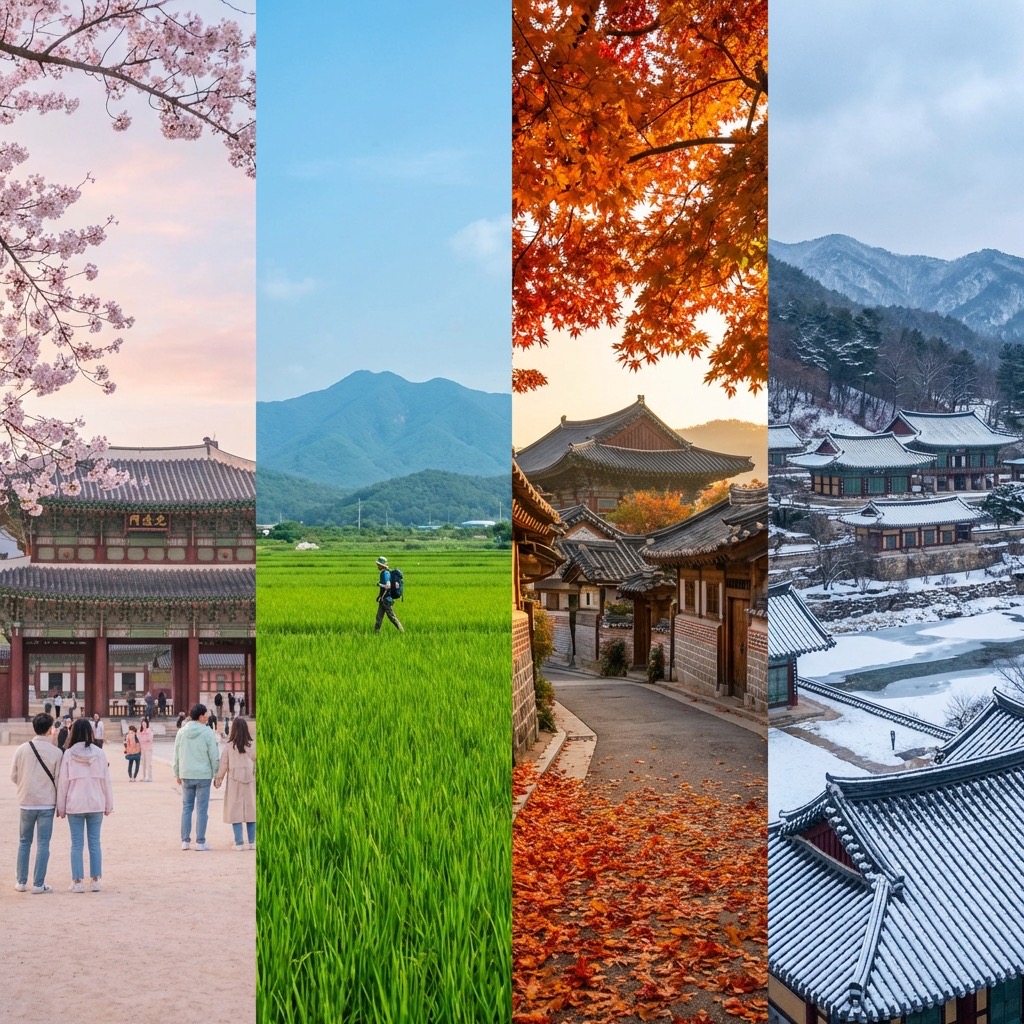
Close your eyes and picture South Korea. What do you see?
Is it soft pink cherry blossoms drifting over a palace wall? Is it fiery red maple leaves framing a mountain temple? Or perhaps it’s a steaming bowl of spicy soup on a snowy street corner?
The "Korea" in your head depends entirely on when you visit.
South Korea is one of the few countries with four distinct, intense seasons. Summer is tropical and humid; winter is Siberian and dry. Spring and Autumn are breathtaking but fleeting. As a traveler, timing is everything. A difference of two weeks can mean missing the cherry blossoms entirely or walking straight into a monsoon downpour.
We’ve broken down the Korean calendar month-by-month, including specific 2025 forecasts, to help you find your perfect window.
The Short Answer: When Should You Go?
If you want the "TL;DR" version, here it is.
The "Golden Windows" (Best Overall)
- Early April to Mid-May: For cherry blossoms and mild weather.
- Late September to Early November: For clear blue skies and stunning autumn foliage. Verdict: If it’s your first trip, aim for October. It has the most stable weather of the year.
The "Budget" Windows (Cheapest)
- January - February: Hotels and flights are cheapest, but you must tolerate sub-zero temperatures.
- July: Flight prices drop due to the monsoon rains.
The "Special Interest" Windows
- Skiing: Mid-December to February.
- Mud Festival / Beaches: Mid-July to Mid-August.
- Hiking: October (Fall colors) or May (Spring flowers).
Spring: The Pink Season (March - May)
Spring is arguably the most famous time to visit Korea, driven by one obsession: Cherry Blossoms (Beot-kkot).
The Weather
- March: The "Thaw." It’s still chilly (average 0°C - 10°C) and you’ll need a winter coat.
- April: The "Sweet Spot." Mild days (10°C - 20°C), cool nights. Light jackets are perfect.
- May: The "Pre-Summer." Sunny, warm (15°C - 25°C), and arguably the most pleasant month of the year.
2025 Cherry Blossom Forecast
Due to climate change, blooms are appearing earlier every year.
- Jeju Island: Starts March 21-22.
- Busan/Gyeongju: Starts March 22-23.
- Seoul: Starts April 1 (Peak bloom is usually 5-7 days after start, around April 4-10). Pro Tip: Don't book for late April exepcting blossoms in Seoul—they will likely be gone. Head to Incheon or the northern mountains if you arrive late.
The Downside: Yellow Dust (Hwangsa)
Spring brings fine dust from the Gobi Desert.
- Impact: Hazy skies and potential respiratory irritation.
- Solution: Download the MiseMise app to check air quality and buy KF94 masks at any convenience store. Don't let it ruin your trip, but be prepared.
Summer: The Wet & Hot Season (June - August)
Korean summers are intense. It’s not just heat; it’s humidity that feels like a sauna.
The Weather
- June: Warm but bearable. The calm before the storm.
- July: The Monsoon (Jangma). Prepare for torrential rain. It doesn't rain 24/7, but when it rains, it pours. Humidity hits 90%.
- August: The "Oven." The rain stops, and the heat spikes (30°C - 35°C). This is when most Koreans go on their own vacations.
Survival Guide for Summer Travelers
If you must visit in summer (e.g., school holidays), you need to be strategic. Expert Monsoon Tip: The Korean monsoon isn't just light rain—it's a tropical deluge that can last for days. Check the KMA (Korea Meteorological Administration) website for real-time radar. Consider staying in areas like Gangnam or Jamsil where the underground malls and pathways allow you to travel kilometers without ever stepping outside into the rain.
- Embrace "Mall-cance": Korea has world-class air-conditioned malls (COEX, Lotte World Tower, The Hyundai Seoul).
- Portable Fans: You will see everyone holding handheld electric fans ("son-poong-gi"). Buy one immediately on arrival.
- Water Parks & Beaches: Visit Caribbean Bay (near Seoul) or Haeundae Beach in Busan.
- Eat Like a Local: Fight heat with heat (Samgyetang - hot ginseng chicken soup) or cool down with Naengmyeon (iced buckwheat noodles).
Major Events
- Boryeong Mud Festival (July): A messy, massive party on the west coast.
- Waterbomb Festival: A huge K-pop concert where everyone sprays water guns.
Autumn: The Golden Season (September - November)
Ask any photographer, and they will tell you: Autumn is the best time to visit Korea.
The Weather
- September: The heat breaks. Days are warm, nights are cool.
- October: Perfection. Clear, deep blue skies (known as "Cheong-myeong") and crisp air (10°C - 20°C).
- November: The chill sets in. You’ll need a heavier coat by mid-month.
Fall Foliage Forecast 2025
Korea’s mountains turn into a painting of crimson and gold.
- Seoraksan (North): Starts late September, Peak ~October 20-23.
- Seoul (Bukhansan/Namsan): Peak ~Late October to Early November.
- Jeju (Hallasan): Peak ~October 30.
- Naejangsan (South): The most famous foliage spot, usually peaking in early November.
Chuseok (Korean Thanksgiving)
Usually in September or October (dates follow the lunar calendar).
- The Good: Cultural events, palaces are free, people wearing Hanbok.
- The Bad: Millions of Koreans travel home. KTX tickets sell out instantly, and highways are parking lots. Many shops close on Chuseok day.
- Strategy: Stay in Seoul during Chuseok—it’s surprisingly quiet—and visit the palaces. Do NOT try to travel between cities.
Winter: The White Season (December - February)
Korean winter is harsh. The wind happens to blow directly from Siberia. But it has a stark, frozen beauty.
The Weather
- December: Dry cold. Temperatures drop below freezing. Holiday lights are everywhere.
- January: The coldest month. Can hit -10°C to -15°C.
- February: Still freezing, but graduation season brings flowers and crowds to schools.
Why Visit in Winter?
- Skiing: Korea hosted the 2018 Winter Olympics. Resorts like Vivaldi Park, Yongpyong, and Alpensia are world-class and just 1-2 hours from Seoul.
- Onsens & Jjimjilbangs: Soaking in a hot bath while it snows outside is peak luxury.
- Winter Street Food: Hotteok (sweet pancakes), Bunggeoppang (fish-shaped pastry), and Eomuk (fish cake soup) taste infinitely better when you can see your breath.
- No Crowds: Aside from Christmas, popular tourist spots are empty.
Month-by-Month Cheat Sheet
| Month | Avg Temp (Seoul) | Clothing | Best For |
|---|---|---|---|
| Jan | -6°C to 1°C | Heavy coat, thermal, gloves | Investing in cheap luxury hotels, Skiing |
| Feb | -3°C to 4°C | Heavy coat, layers | Strawberry picking, late skiing |
| Mar | 2°C to 11°C | Winter coat → Trench coat | Seeing the very first blooms (South) |
| Apr | 8°C to 18°C | Light jacket, cardigan | Cherry Blossoms, Picnics |
| May | 13°C to 23°C | T-shirt, light cardigan | Festivals, Hiking, Outdoor cafes |
| Jun | 18°C to 27°C | Short sleeves, sunglasses | Rooftop bars, pre-monsoon travel |
| Jul | 22°C to 29°C | Raincoat, sandals, quick-dry | Water parks, Shopping malls |
| Aug | 23°C to 30°C+ | Linen, sleeveless, hat | Beaches, surfing, night markets |
| Sep | 17°C to 26°C | T-shirt, light pants | Cultural events, pleasant walks |
| Oct | 10°C to 20°C | Light jacket, layers | Fall Foliage, Hiking, Photography |
| Nov | 3°C to 12°C | Warm coat, scarf | Late foliage, cool crisp air |
| Dec | -4°C to 4°C | Puffer coat, heattech | Christmas lights, Skating |
Regional Weather Variations: Seoul vs. Busan vs. Jeju
Korea's climate varies significantly by region — what's true in Seoul may not apply in Busan or Jeju.
| Season | Seoul | Busan | Jeju |
|---|---|---|---|
| Winter | Siberian cold (-5°C to -15°C), dry, icy wind | Milder (-2°C to 8°C), less snow | Warm by comparison (3°C to 12°C), rainy |
| Spring | Cherry blossoms ~April 1–10; yellow dust | Blossoms ~March 22–28; ocean breeze | Blossoms earliest in Korea (~March 15–20) |
| Summer | Hot + humid; monsoon July–early August | Hot but coastal breeze moderates heat; fewer monsoon days | Typhoon risk; intense heat; beach season |
| Autumn | Peak October; Bukhansan maple/ginkgo | Warmer longer; Geumjeongsan peak late October | Later foliage (November); temperate and pleasant |
Key insight: If your trip spans multiple regions, factor in these differences. A week in Jeju during March can feel like spring while Seoul is still in winter coat territory.
Annual Events and Festivals Calendar
Planning around festivals can transform a good trip into a remarkable one.
| Month | Festival | Location | Notes |
|---|---|---|---|
| January | Hwacheon Sancheoneo Ice Festival | Gangwon-do | Ice fishing on frozen river; one of Korea's largest winter events |
| March | Jeju Cherry Blossom Festival | Jeju | First blossoms in Korea; uncrowded relative to April |
| April | Jinhae Gunhangje Blossom Festival | Jinhae (near Busan) | Korea's most intense cherry blossom event; 2+ million visitors over 10 days |
| May | Lotus Lantern Festival (Yeon-deung-hoe) | Seoul (Jogyesa) | UNESCO-listed; lantern parade from Dongdaemun to Jogyesa |
| July | Boryeong Mud Festival | Boryeong (West Coast) | Beach + mud wrestling + music; primarily for young travelers |
| August | Waterbomb Festival | Seoul (Jamsil) | K-pop concert + water guns; summer outdoor experience |
| September–October | Chuseok | National | Lunar holiday; avoid intercity travel; palaces are festive and free |
| October | Seoul Lantern Festival | Cheonggyecheon Stream | Illuminated lantern sculptures along the stream; free, spectacular |
| October | Naejangsan Maple Festival | Naejangsan NP (Jeonbuk) | Korea's most vibrant autumn foliage; pilgrimage for photographers |
| December | Christmas / New Year lights | Seoul, Busan | Major shopping districts light up; outdoor ice skating rinks open |
Hidden Seasonal Gems (Lesser-Known Experiences)
Spring: Gyeongju's Namsan Mountain
While everyone floods Seoul for cherry blossoms, Gyeongju's Namsan Mountain (7 km south of the old city) offers blossoms alongside Buddhist rock carvings, ancient stone lanterns, and royal tombs. No crowds, no traffic.
Summer: Sokcho and the East Coast
When Seoul roasts and beaches at Haeundae hit capacity, the East Coast (Gangwon-do) beaches — Sokcho, Naksan, Samcheok — have clearer water and a fraction of the crowd. The gateway is Sokcho, 2.5 hours by express bus from Seoul.
Autumn: Suncheon Bay Wetlands
October transforms Suncheon Bay (Jeollanam-do, South Korea's southwest coast) into a red and gold sea of reeds. The UNESCO Biosphere Reserve is extraordinary in autumn light and manageable by express bus from Gwangju or train connections from Seoul.
Winter: Jeonju Hanok Village
Jeonju's hanok village is most atmospheric in winter. Snow settling on the curving rooflines, hot makgeolli (rice wine) at a traditional tavern, and the streets mostly empty of summer tourists — it's the version of Jeonju that Koreans know but most tourists miss.
2026 Booking Lead Times: Plan Further Ahead Than You Think
Seoul accommodation fills faster every year. For cherry blossom season (late March–mid April) and autumn peak (October), hotels and guesthouses near Gyeongbokgung and Insadong routinely sell out 3–4 months in advance. If your dates overlap with Chuseok, add an extra month to that lead time. KTX tickets between Seoul and Busan for autumn weekends disappear within hours of going on sale — set a calendar reminder for the exact release date (typically 30 days before departure on the Korail website) if intercity rail is part of your plan.
Packing Guide by Season
To avoid freezing or melting, check out our detailed guide on What to Pack for South Korea, but here are the basics:
- Spring/Fall: Layers are key. The temperature difference between day and night (Il-gyo-cha) is huge (often 10 degrees). Bring a cardigan you can easily take off.
- Summer: Think "breathable." Linen and cotton. Don't bring heavy jeans; they will never dry. Bring waterproof shoes or sandals (Crocs/Teva/Chaco) for the rain.
- Winter: "Long Padding" (Long Puffer Coat) is the uniform of Korea. If you don't have one, you can buy one cheaply here. Heattech inners are non-negotiable.
Frequently Asked Questions
When is the cheapest time to visit Korea? January–February and July are the cheapest periods for flights and hotels. January is peak cheap season — flights from major Western hubs can be 30–50% less expensive than peak April or October. The trade-off is sub-zero temperatures. July is cheap because of the monsoon rains, but the rain is variable rather than constant — some July weeks are perfectly fine for outdoor activities.
Is August too hot to visit Korea? August is genuinely uncomfortable — temperatures regularly hit 33–36°C in Seoul with high humidity. That said, it's also one of the most energetic times in Korea: beach season is at its height, the Waterbomb Festival happens in July–August, and night culture (rooftop bars, night markets) thrives. If you can tolerate heat and plan your itinerary around indoor activities in the afternoons, August is workable.
Which month has the best weather overall? October. Consistently clear blue skies, temperatures of 10–20°C (perfect walking weather), no rain, no humidity, and the autumn foliage is extraordinary. October is also the most expensive and most crowded month — book accommodation 2–3 months ahead.
Can I see both cherry blossoms and autumn foliage on one trip? Not on the same trip — spring peak and autumn peak are separated by six months. Some travelers plan a second Korea trip specifically for the other season after falling in love on the first visit. If you want a single trip that captures both, the closest approximation is a late October/early November visit to Naejangsan (south Korea's famous foliage destination), which occasionally has late-season blossoms from the winter-flowering plum trees.
Does it snow in Seoul? Yes, but not heavily. Seoul averages 27 cm of snow per year, mostly in December–February. Snow days occur several times per winter but rarely accumulate beyond a few centimeters before melting. The northern mountains (Seoraksan, Deogyusan) receive significantly more snow and maintain cover through February.
Beyond Cherry Blossoms: The Spring Flower Wave
If you miss the cherry blossoms (or want to avoid the massive crowds), Korea has several other stunning floral events in Spring:
- Canola (Rapeseed) Flowers: Late March to mid-April. Jeju Island is famous for its yellow fields, particularly around Gwangchigi Beach.
- Azaleas (Jindallae): Mid-April. Head to Goryeosan Mountain for a sea of purple that covers the entire peak—it's a favorite for local hikers.
- Royal Azaleas: Early May. These are brighter and larger than standard azaleas; the Hwangmaesan County Park is the best place to see them.
2026 Climate Shift: Earlier Blooms
In 2026, we are observing a consistent trend of "Floral Acceleration." Due to rising average temperatures, the gap between the first bloom in Jeju and the peak bloom in Seoul has shrunk from two weeks to just 10 days.
- The Risk: If you book your flights based on 2010–2020 averages, you will likely arrive after the petals have fallen.
- The Strategy: Always book for the earlier end of the window. It is better to see the buds opening than the bare branches after a spring rain.
Final Thoughts
South Korea is a year-round destination, but the experience changes drastically.
- Want the postcard photos? Go in April or October.
- Want adventure and thrills? Go in January (ski) or July (surf/mud).
- Want to save money? Go in February or July.
Now that you've picked your ideal season, the logical next step is charting out your day-to-day schedule using The Ultimate 10-Day South Korea Itinerary for First-Timers as a foundation. For those wanting a more seasonal focus, check out our 7-Day Cherry Blossom Itinerary or our 10-Day Autumn Foliage Itinerary. Ready to pack? Don't forget to check our Seasonal Packing Checklist before you zip your suitcase!