Bukchon vs Jeonju: Which Hanok Village Should You Visit?
Both are celebrated as the best places in Korea to experience traditional hanok architecture. Both offer hanbok rentals, cultural workshops, and atmospheric alleyways. But they are very different places — and choosing between them depends on what kind of travel experience you're looking for.
At a Glance: The Key Differences
| Bukchon Hanok Village | Jeonju Hanok Village | |
|---|---|---|
| Location | Central Seoul, between two major palaces | Jeonju city, North Jeolla Province |
| Distance from Seoul | 0 (it's in Seoul) | ~1h 40min by KTX, ~2.5h by bus |
| Number of hanoks | 600–900 preserved hanoks | 700–900 preserved hanoks |
| Atmosphere | Urban, residential, photogenic | Slower, more immersive, tourism-focused |
| Best for | Day visit within Seoul itinerary | Overnight trip; food focus; deeper immersion |
| UNESCO status | No | No |
| Admission to area | Free (new visiting hours: 10AM–5PM) | Free |
| Hanbok rental | 10,000–25,000 KRW/hour | Often cheaper (~8,000–18,000 KRW) |
| Food scene | Cafes, tea houses, fine dining | Exceptional; UNESCO City of Gastronomy |
| Photography | Outstanding; complex urban backdrops | Outstanding; more traditional feel |
Bukchon Hanok Village, Seoul
What It Is
Bukchon Hanok Village (북촌 한옥마을) sits between Gyeongbokgung Palace and Changdeokgung Palace in the Jongno-gu district of central Seoul. It's a living residential neighborhood — over 600–900 preserved hanok houses line its hillside alleyways, many still occupied by families or operating as tea rooms, boutiques, guesthouses, and cultural centers.
The name "Bukchon" means "Northern Village" — it historically housed the aristocratic yangban class of the Joseon dynasty, and the surviving hanok reflect upper-class residential architecture of that era.
The New Visiting Rules (2025)
⚠️ Important Update: Effective November 1, 2024, access to certain sections of Bukchon (particularly the most photographed alleyways) is restricted to 10:00 AM – 5:00 PM only. Fines may be assessed for entering outside these hours. This is because Bukchon remains a residential neighborhood and resident quality of life had been severely impacted by tourist traffic.
This is the most important practical change for 2025 visitors. Plan your visit accordingly.
What to Do in Bukchon
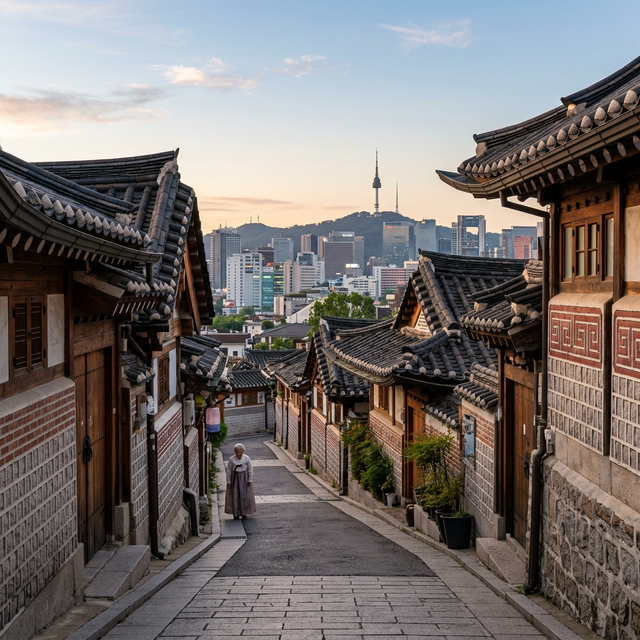
Photography and Walking The famous Bukchon 8 Views (북촌 8경) are the official scenic viewpoints along the village, each offering a distinctive composed angle on the hanok rooflines against the Seoul skyline. The most iconic view — looking down the tile-roofed lane of Gahoe-dong Alley (북촌로 11가길) with N Seoul Tower visible in the background — is where every visitor to Bukchon ends up.
Arrive before 10 AM (now the earliest permitted time) or just at opening. The alleyways become increasingly busy after 11 AM.
Hanbok Rental Hanbok rental shops cluster at the neighborhood's entrance and in the surrounding Samcheong-dong and Anguk-dong areas. Wearing hanbok grants free admission to Gyeongbokgung and Changdeokgung Palaces. The combination — rent hanbok, walk through Bukchon, enter one of the two palaces — is the classic Bukchon day.
Cultural Experiences
- Bukchon Traditional Culture Center: Cultural classes in tea ceremony, folk painting, hanji (Korean paper) crafts, and Korean knotting (maedeup)
- Bukchon Traditional Experience Center: Drop-in craft workshops — hanji boxes, gold leaf bookmarks
Cafes and Food Bukchon and adjacent Samcheong-dong have accumulated one of the best concentrations of independent cafes in Seoul. The area also contains Michelin-starred restaurants and traditional tea houses serving Korean seasonal menus.
Overnight Stay Several hanok guesthouses operate within Bukchon itself — sleeping in a heritage building while hearing Gyeongbokgung's closing bell is a distinctive experience.
Getting There
Subway: Line 3 (Orange) to Anguk Station, Exit 2 or 3; 5–10 minute walk uphill to the main village area.
Jeonju Hanok Village
What It Is
Jeonju Hanok Village (전주 한옥마을) is a contained neighborhood of 700–900 traditional hanok buildings in the Jeonju city, the capital of North Jeolla Province. Unlike Bukchon, which blends with Seoul's urban fabric, Jeonju's hanok village is largely self-contained — a discrete cultural zone within the city, walkable from end to end.
Jeonju is also a UNESCO City of Gastronomy and the birthplace of bibimbap — Korea's most internationally recognized dish. The food is not incidental to visiting Jeonju; it is a major reason to go.
Historical Significance
Jeonju has deep historical meaning for Korean culture: the city contains Gyeonggijeon Shrine, which houses the official portrait of King Taejo — the founder of the Joseon dynasty. It was from Jeonju that the Yi clan's royal lineage originated, making the city the symbolic birthplace of the dynasty that ruled Korea for 500 years.
What to Do in Jeonju
Walk the Village Jeonju's hanok village is compact and well-organized with clear walking routes. Major landmarks include:
- Gyeonggijeon Shrine — the royal portrait hall; a tranquil courtyard complex
- Jeondong Catholic Cathedral — the most beautiful Catholic church in Korea, built 1914; its Western Gothic architecture directly adjacent to hanok architecture creates a striking juxtaposition
- Omokdae and Imokdae Pavilions — hilltop viewpoints over the entire village
- Jaman Mural Village — across the stream from the main hanok area; colorful mural alleyways
Eat Everything Jeonju's food is the real reason many Koreans make this trip:
- Bibimbap — the original; try Jeonju Jungang Hoegwan or Gajok Hoegwan for the definitive version
- PNB Bakery Choco Pies — Jeonju's famous specialty chocolate pies; queue at the original PNB Bakery
- Haejang-guk (hangover soup) — the Jeonju version is particularly celebrated
- Jeonju Nambu Market morning market — street food vendors from early morning; ideal for a market breakfast
- Makgeolli (rice wine) alleys — Jeonju has a culture of makgeolli bars that serve complimentary side dishes (snacks that multiply as you keep ordering drinks)
Cultural Workshops
- Traditional tea ceremony classes
- Hanji (Korean paper) making — Jeonju is historically the center of hanji production in Korea
- Traditional name stamp (도장) carving
- Hanbok rental (generally cheaper than Seoul)
Overnight Stay Staying in a hanok guesthouse in Jeonju is easier and less expensive than Bukchon — there are many options at various budget levels. The experience of Jeonju at dawn and dusk — before the day tourists arrive and after they leave — is significantly richer than a day-trip allows.
Getting There
By KTX: Seoul KTX (Seoul Station) to Jeonju Station — approximately 1 hour 40 minutes.
By express bus: Seoul Express Bus Terminal to Jeonju → approximately 2.5–3 hours.
From the station: taxi or bus #79 or #855 to the hanok village (10–15 minutes).
Which Should You Visit?
Choose Bukchon if:
- You're based in Seoul and want a half-day cultural experience without traveling outside the city
- You want to combine hanok photography with palace visits and Samcheong-dong cafe culture
- You're tight on time
Choose Jeonju if:
- You can spare 1–2 nights outside Seoul
- You're serious about Korean food and want to eat some of the best bibimbap in existence
- You want a more immersive, slower-paced hanok experience
- You want to do cultural workshops in depth (hanji, tea ceremony, etc.)
Visit both if:
- You have a week or more in Korea and want to understand how the hanok tradition looks in two entirely different contexts
The Quick Decision Rule
If you are still stuck, simplify it like this:
- Choose Bukchon if you want hanok architecture as part of a broader Seoul day with palaces, cafes, and easy transit.
- Choose Jeonju if you want the hanok village itself to be the destination, with food and an overnight stay doing most of the work.
- Choose both only if your trip already has room for a Seoul culture day and one slower regional stop.
For most first-time visitors, Bukchon is the efficient choice and Jeonju is the more memorable one. That is the cleanest way to think about it.
Can You Do Both in One Trip?
Yes. A practical routing:
- Seoul (2–3 days including Bukchon half-day) → Jeonju by KTX (1h 40m) → overnight hanok stay → return to Seoul
Alternatively, use Jeonju as a base to visit Jeonju, then route onward to Gyeongju for historical sites, making it a longer Jeollabuk-do and Gyeongsangbuk-do cultural route.
Seasonal Considerations: When to Visit Each Village
The timing of your visit matters significantly. Both villages look and feel very different across the four seasons.
Spring (March – May) — Best Season for Both
Cherry blossoms arrive in late March through early April, and both Bukchon and Jeonju are transformed. In Bukchon, the alleyways fill with petals that fall over the tile rooftops. In Jeonju, the Gyeonggijeon Shrine courtyard blooms dramatically. This is peak tourist season — book hanbok rentals at least 2–3 days in advance and arrive at Bukchon by 10 AM opening to get ahead of the crowds.
Summer (June – August)
Summer in Korea is hot and humid. Jeonju's outdoor food markets remain vibrant, but the heat means most visitors prefer to stay in air-conditioned spaces during midday. Both villages are less crowded than in spring or autumn, which can make for a more relaxed experience. Early morning visits (immediately at the 10 AM opening for Bukchon) are especially rewarding in summer.
Autumn (September – November) — Second Best Season
Autumn foliage transforms both villages. The contrast of crimson maple leaves against grey tile rooftops in Bukchon is iconic. In Jeonju, the forested hillsides surrounding the village (visible from Omokdae Pavilion) turn golden and amber. Weekends in October are intensely crowded — plan weekday visits if possible.
Winter (December – February)
Winter is low season, and both villages acquire a quiet, almost melancholy beauty. Snow on the curved eaves of hanok rooftops produces some of the most stunning photographs possible in either location. Jeonju's food scene is arguably at its best in winter — warming soups, steaming bibimbap, and makgeolli by a traditional hearth feel especially right in the cold.
Budget Breakdown: A Full Day at Each Village
| Expense | Bukchon (Seoul) | Jeonju (Day Trip) |
|---|---|---|
| Transportation | Subway/bus: 1,500–2,500 KRW from central Seoul | KTX round trip from Seoul: ~40,000–60,000 KRW |
| Hanbok rental (4 hrs) | 15,000–25,000 KRW | 8,000–18,000 KRW |
| Palace admission | Free with hanbok | N/A (free to walk village) |
| Cultural workshop | 15,000–30,000 KRW | 10,000–25,000 KRW |
| Food and cafes | 20,000–50,000 KRW | 20,000–40,000 KRW (food is cheaper) |
| Souvenirs | 10,000–30,000 KRW | 10,000–25,000 KRW |
| Total (approximate) | ₩62,000 – ₩137,500 | ₩88,000 – ₩168,000 |
Note: Jeonju becomes significantly better value if you stay overnight — a hanok guesthouse room ranges from ₩50,000–₩120,000/night, which is less expensive than comparable accommodation in Seoul, and staying means you experience the village at dawn and dusk when the day-trip crowds have gone.
Hidden Gems at Each Village
Bukchon Hidden Gems
Changdeokgung Secret Garden (비원) Often overlooked in favor of the more famous Gyeongbokgung, Changdeokgung Palace and its Secret Garden (Huwon) are architecturally extraordinary. The Secret Garden — a royal retreat of pavilions, lotus ponds, and forested hillsides — requires a separate ticket and timed admission (bookings often sell out days ahead). It's one of the most serene experiences in Seoul.
Unhyeongung Palace A small, lesser-visited palace a few minutes' walk from Anguk Station. The residence where King Gojong spent his childhood years feels like a private discovery compared to the main palace circuit. Free admission, minimal crowds.
Samcheong-dong Cafe Street The neighborhood sloping down from Bukchon toward Gyeongbokgung is filled with independent cafes, galleries, and boutiques in renovated hanok buildings. It's a wonderful extension of a Bukchon half-day — less rushed than the main alleyways and filled with Seoul's best coffee shops.
Jeonju Hidden Gems
Jeondong Catholic Cathedral at Night The cathedral is beautiful during the day, but at night the illuminated Gothic spires against the darkened hanok rooftops create an otherworldly juxtaposition that few tourists bother to see. If you're staying overnight, this 10-minute evening walk is one of Jeonju's secret rewards.
Jeonju Jaman Mural Village (자만벽화마을) A neighborhood of hill-climbing alleyways decorated with colorful murals, directly accessible from the main hanok area. It's less polished than the main village — which is part of its appeal — with a local, lived-in quality.
Pre-dawn Nambu Market Breakfast Jeonju's traditional market comes to life before the rest of the city. Arriving at 7 AM for kongnamul gukbap (bean sprout rice soup), pajeon (green onion pancake), and handmade mandu (dumplings) among local vendors and farmers is an experience completely unavailable to day-trippers who arrive by KTX mid-morning.
Frequently Asked Questions
Is Bukchon worth visiting if it's raining? It can be atmospheric, but most hanbok shops will discourage you from renting when rain is forecast — traditional fabrics are not waterproof. The adjacent Gyeongbokgung Palace has a covered exhibit hall worth visiting in rain. Save the alleyway photography for a clear day.
How long do you need in Jeonju? A genuine minimum is one overnight stay (arrive afternoon, depart the following afternoon). A single day trip from Seoul is possible but you'll spend nearly 4 hours in transit and see the village only during peak midday crowds. Two nights allows you to explore more comfortably, take a workshop, and visit Gyeonggijeon without rushing.
Are children welcome at both villages? Absolutely. Both villages have children's hanbok sizes available at rental shops. Jeonju's compact layout and abundant food are particularly family-friendly. Bukchon's cobbled slopes can be challenging for strollers.
Can I enter Gyeongbokgung wearing hanbok rented from Jeonju? Yes — the free admission benefit applies to any properly worn traditional hanbok, regardless of where it was rented. However, most Jeonju shops will ask you to return the hanbok before you leave the city, so this scenario only applies if you're renting in Seoul.
Practical Tips for Each Village
Bukchon Practical Tips
- Arrive at 10 AM exactly. The restricted-entry alleyways fill up within 30 minutes of opening on weekends. The famous "View 2" lane (Gahoe-dong Alley) with N Seoul Tower visible in the background is achievable with near-empty shots only in the first 20–30 minutes.
- Walk downhill, not uphill. Anguk Station is at the bottom; start at the top of the hill (taxi from Gyeongbokgung's back gate) and work downward for easier terrain and better photo angles.
- Respect residential quiet. Noise restrictions apply in the alleyways. Many of the buildings are genuinely occupied homes. Keep voices low and avoid sitting on private doorsteps.
- Combine with Changdeokgung, not just Gyeongbokgung. Changdeokgung, 10 minutes east of Bukchon, is the more architecturally nuanced palace — less crowded and home to the Secret Garden, which is one of Seoul's most beautiful places.
Jeonju Practical Tips
- Take the afternoon KTX from Seoul. Arriving around 2 PM gives you 4 hours of daylight in the village — enough to walk, eat, and settle into your hanok guesthouse before dark. Day-trippers arrive between 11 AM and 1 PM; being there just before or after this window makes a significant difference.
- Buy PNB Choco Pies early. The famous PNB Bakery (original branch near Jeondong Cathedral) sells out their chocolate pies by early afternoon on most days. Go first thing in the morning.
- Walk to Omokdae Pavilion for the best village overview. The hilltop viewpoint above the hanok village is a 15-minute walk from the main area. The panoramic view at dusk — when golden light falls across 800 tile rooftops — is the defining image of Jeonju.
- Makgeolli bars start after 6 PM. Jeonju's famous makgeolli (rice wine) culture comes alive in the evening. Order a jug and the kitchen sends out a parade of complimentary side dishes — the more you order, the more they bring. It's one of Korea's most generous food traditions.
For the next planning step, pair this with Hanbok rental in Korea, Seoul's five grand palaces, or the wider heritage route in the UNESCO sites guide.