Staying Safe in Seoul: Emergency Numbers, Pharmacies, and Scams

South Korea is statistically one of the safest countries in the world for international travelers. Violent crime against tourists is genuinely rare. You can leave your laptop unattended at a cafe while you order at the counter and find it exactly where you left it. The subway runs reliably until after midnight, and taxis are metered and broadly honest. Women traveling solo consistently rank Korea among their safest destinations in Asia.
Understanding Safety in Korea: The Real Picture
South Korea ranks consistently among the world's top ten safest countries in global peace indices, and the day-to-day reality for travelers reflects this. Street crime is minimal, police response is fast, and the social culture of looking out for others creates informal safety nets in public spaces. That said, "safe" is not the same as "risk-free," and the specific risks Korea does present are quite different from what travelers coming from Western countries might anticipate.
The risks that most affect travelers in Korea fall into predictable categories: environmental (seasonal air pollution, summer heat), health-related (getting sick far from home, navigating an unfamiliar medical system), logistical-legal (strict drug laws, traffic dynamics), and social-opportunistic (specific scam patterns targeting tourists). Understanding each category takes less than an hour of preparation and substantially changes the quality of your trip.
Emergency Numbers: Save These Before You Land
These three numbers should be in your phone before you clear customs at Incheon Airport.
112 — Police emergency. Available 24 hours. Operators are trained to handle calls in English, though response quality varies. In serious situations, say "English" immediately after the call connects.
119 — Fire and medical emergency. Ambulances in Seoul and major cities have good response times, typically under 8 minutes in central areas. Korea's emergency medical system is well-funded and technically capable.
1330 — Korea Travel Hotline. This is the most important number on this list for most travelers. The 1330 service is a government-operated, 24/7 multilingual tourism assistance line staffed by interpreters in English, Chinese, Japanese, Russian, Vietnamese, Thai, Malay, and several other languages. It handles not only travel questions but active crisis situations: if you are in a hospital and cannot communicate with a doctor, call 1330 and pass the phone. If you are in a police station and need interpretation, call 1330. If you have been in a minor traffic accident and cannot communicate with the driver or police, call 1330. The operators are experienced in exactly these situations and can mediate effectively.
Additional useful contacts:
- Seoul Global Center: 02-2075-4180 (social services, legal advice, practical support for foreign residents and long-term visitors)
- Korea Emergency Dental Hotline: 02-2125-4600 (dental emergencies, referrals)
- Nearest hospital emergency ward (응급실, eunggeupshil): Major hospitals in Seoul with English-speaking staff include Severance Hospital (세브란스), Asan Medical Center (서울아산병원), and Samsung Medical Center (삼성서울병원)
Air Quality and Seasonal Health Risks
Fine Dust and Yellow Dust Season
Korea's most significant and predictable environmental health risk is seasonal air pollution. Two distinct phenomena overlap during spring and occasionally winter:
Hwangsa (황사) — Yellow Dust: Massive dust storms originating in the Gobi Desert of Mongolia and China are carried eastward by seasonal winds, arriving over Korea primarily between February and May. Unlike typical urban smog, yellow dust contains not just particulate matter but also pollutants, heavy metals, and bacteria that have been swept up from industrial zones in China. During severe hwangsa events, the sky takes on a yellowish-brown tint and visibility drops noticeably. The health effects — eye irritation, aggravated respiratory conditions, headaches — can be significant even in healthy adults.
Fine Dust (미세먼지, PM2.5): Separate from hwangsa, Korea experiences episodic spikes in PM2.5 fine particulate pollution year-round, with the worst periods concentrated in winter and spring. The sources are mixed: industrial emissions from China, domestic industrial activity, and vehicle emissions. Even on days when the sky looks clear, PM2.5 levels can be at levels the WHO considers unhealthy.
The essential tool: Download the MiseMise app (미세미세) before arrival. It provides real-time, hyperlocal air quality data for your specific location and uses a simple color-coded system: green (good), yellow (moderate), orange (unhealthy for sensitive groups), red (unhealthy for all), and dark red/black (hazardous). On red or worse days, limit outdoor exposure and wear a mask.
The correct mask: For serious protection, you need a KF94 mask (the Korean equivalent of N95/FFP2). These are sold at every convenience store, pharmacy, and supermarket for approximately 500 to 1,000 KRW each. Major brands include AirQueen (아이퀸), Kleenex, and LG. Do not use cloth masks or basic surgical masks for air quality protection — their filtration efficiency is insufficient for PM2.5. The KF94 designation means the mask filters 94% of particles of 0.4 microns and larger, including the relevant fine dust particulates.
Summer Heat and Humidity
Korean summers are substantially hotter and more humid than many travelers from temperate climates expect. Seoul's summer (June through August) combines temperatures of 30-36°C with humidity levels of 70-90%, creating a heat index that regularly reaches 40°C or above. Heat exhaustion is a real risk for active tourists.
Practical heat management:
- Plan intensive outdoor activity for before 10 a.m. and after 5 p.m.
- Seoul's extensive subway system doubles as a legitimate cooling strategy; the cars are cold
- Convenience stores (CU, GS25, 7-Eleven) provide reliable cold-air refuge and are on every block
- Stay hydrated beyond thirst; electrolyte drinks like Pocari Sweat are widely available and useful
- Be alert to heat exhaustion symptoms in yourself and travel companions: heavy sweating, weakness, cold pale clammy skin, nausea, faintness
If you experience suspected heat stroke (hot dry skin, confusion, extremely high body temperature), call 119 immediately.
Using Korean Pharmacies (약국, Yak-guk)
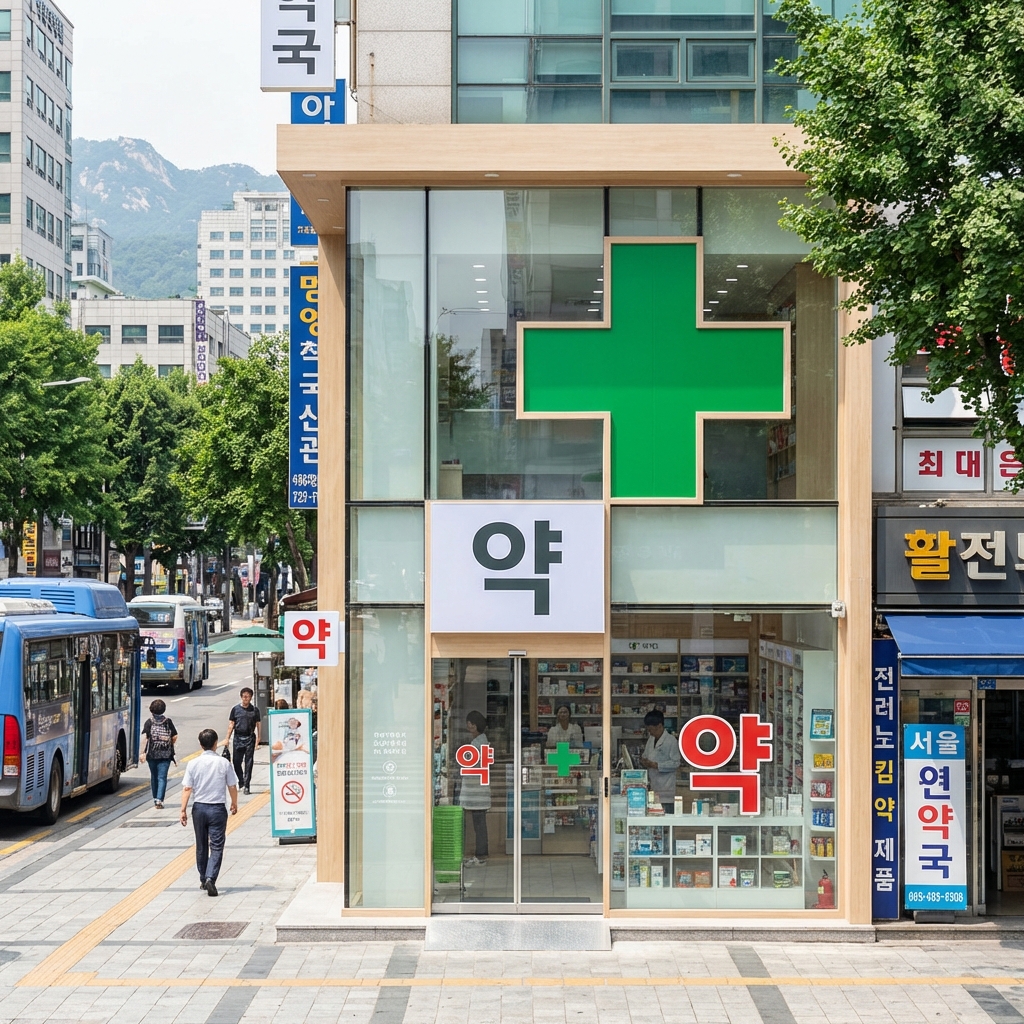
Korean pharmacies are a remarkable healthcare resource. They are identified by the large green or blue 약 (yak) character on their signage, which simply means "medicine/pharmacy." They are distributed throughout Korean cities at high density — in most neighborhoods, there are multiple within a few minutes' walk.
Korean pharmacists hold a professional degree requiring 6 years of university training and are considered primary healthcare providers for minor conditions, not just dispensers. Consulting a pharmacist about symptoms and receiving a recommendation is standard and appropriate, not a workaround.
What You Can Get Without a Prescription
A wide range of effective medications are available over the counter in Korea that would require a prescription in the US or some European countries.
Pain and fever relief: Acetaminophen (Tylenol equivalent, sold as Tylenol or generics), ibuprofen, and naproxen are available without prescription.
Digestive medications: The Korean digestive aid Bearse (베아제) is a combination enzyme medication useful for bloating, indigestion, and stomach discomfort after rich Korean meals. Geopung (겔포스) is a widely used antacid suspension. Smecta (스멕타) treats diarrhea effectively.
Topical pain relief: Korean Pasts (파스) pain patches are adhesive patches applied to sore muscles and joints, widely used by both locals and tourists for the inevitable aches of heavy walking. Multiple formulations are available, from mild warming patches to stronger topical analgesic formulas.
Skin conditions: Mild topical corticosteroid creams, antifungal creams, and antibiotic ointments are available over the counter.
Cold and flu symptom management: Standard antihistamines, decongestants, and cough suppressants are available, though see the important note below about pseudoephedrine.
The Pseudoephedrine Rule
Cold medications containing pseudoephedrine (the decongestant used in products like Sudafed) require you to show your passport, even for over-the-counter purchase. This is Korean drug regulation, not a reflection of any suspicion toward you specifically. Simply have your passport accessible when purchasing, and the pharmacist will process the sale normally.
Consulting Without Language
Korean pharmacists in cities regularly serve non-Korean-speaking patients. Several practical approaches:
- Symptom description in writing: Type your symptoms in the Google Translate app and show the Korean translation
- Body pointing: Simple gestures toward the affected area combined with a pain rating gesture are universally understood
- Photos: If you have a rash, bite, or visible symptom, a photograph often communicates more than words
- Translation apps: Papago (a Korean-developed app slightly superior to Google Translate for Korean) handles medical vocabulary accurately
After describing symptoms, pharmacists typically prepare a small envelope or blister pack of medication with simple dosing instructions written in both Korean and sometimes English.
After-Hours Medical Needs
When pharmacies are closed, convenience stores stock basic emergency supplies: acetaminophen, bandages, electrolyte drinks, and basic digestive remedies. For urgent medical issues, emergency rooms (eunggeupshil, 응급실) at major hospitals are open 24 hours.
Hospitals and Medical Care
Korean hospitals operate on a tiered system. For non-emergency conditions, start with a neighborhood clinic (의원, uiwon) rather than a large hospital, as clinics are faster and cheaper for routine care. Major hospitals are reserved for serious conditions and emergencies.
Medical costs: Korea's national health insurance system means that foreigners without Korean insurance pay out-of-pocket, but Korean healthcare costs are substantially lower than in the US. A walk-in clinic visit (consultation + prescription) typically costs 20,000 to 50,000 KRW. Emergency room visits run higher but remain far below Western hospital costs for comparable care.
Travel insurance: Strongly recommended. Korea's healthcare quality is high, but complex treatment or hospitalization can still generate significant costs. Ensure your policy covers emergency medical evacuation, as premiums for this coverage are modest and the peace of mind is substantial.
Hospitals with English-language services:
- Severance Hospital (세브란스, Yonsei University): 1599-1004
- Asan Medical Center (서울아산병원): 1688-7575
- Samsung Medical Center (삼성서울병원): 02-3410-2114
All three have international patient centers with dedicated English-speaking staff.
Scam Awareness for Tourists
Korea's low crime rate means tourist scams are less prevalent than in many travel destinations, but a few specific patterns recur reliably enough to warrant awareness.
The Cult Recruiter Approach
The most reported tourist encounter-scam in Korea occurs in high-traffic areas like Hongdae, Insadong, and Myeongdong. Typically, one or two people approach a lone traveler with one of several opening lines: "You have a very bright energy," "Can you help me with a quick survey about Korean culture," or "Would you like to learn about traditional Korean spiritual practices?"
These are recruitment approaches by aggressive new religious movements (cults) operating in Korea. The pattern: initial conversation, invitation to a nearby "ceremony room" or "spiritual reading session," escalating pressure to make cash payments to "cleanse ancestral energy" or participate in a ritual. The people involved are not physically dangerous, but the psychological pressure can be intense, and the financial request can reach hundreds of thousands of KRW.
The correct response is a polite but firm "No, thank you," and continuing to walk. If the person persists, walk into a crowded store or subway entrance. Do not engage, do not follow, and do not go to any "ceremony space" with strangers who initiated contact this way.
Taxi Irregularities
Legal surcharges you will encounter: A 20-40% automatic meter surcharge applies between 10 p.m. and 4 a.m. (sometimes 2 a.m. — it varies by city). An additional surcharge applies when taxis cross administrative boundaries (e.g., from Seoul proper into Gyeonggi-do). Both are legal and automatic on the meter. You will see the meter run somewhat faster at night; this is expected.
Illegal flat-rate demands: If a taxi driver quotes you a flat price before starting the meter, particularly for a route to the airport or for longer inter-city trips, decline and find another taxi. The legal obligation is to run the meter (with applicable surcharges). Using Kakao T for taxi dispatch reduces this risk significantly, as the app logs the trip and driver information.
The short-change attempt: Rare but documented in very touristy areas. When paying with a 50,000 KRW note for a small fare, confirm the change amount before the driver takes the note. Having the taxi app's fare estimate visible helps preempt confusion.
Bar and Nightclub Hostess Bar Misdirection
In some entertainment districts, men may be approached by people at the street who offer to guide them to a "cool bar," sometimes described as having K-pop performances or interesting foreigners. These often lead to hostess bars where the bill for two or three drinks arrives at 200,000 to 500,000 KRW or more. The establishments are not illegal, but the pricing is deliberately opaque. Choose bars independently and verify price lists before ordering.
Legal Awareness: Laws That Catch Travelers Off Guard
Drug Laws: Zero Tolerance
Korea enforces zero tolerance on illegal drugs without exception or national reciprocity. This means:
Cannabis: Fully illegal in all forms, including CBD oil derived from hemp, CBD gummies, and cannabis products legal in your home country. Korean customs inspectors are trained to identify these products. If you arrive with cannabis products — even prescription medical cannabis — you will be arrested, prosecuted under Korean law, imprisoned, and deported. Prior conviction in your home country for cannabis offenses does not protect you; multiple Korean celebrities have been prosecuted for cannabis use that occurred while legally residing in countries where it was legal.
Prescription medications: Bring a complete supply in original packaging. For medications that contain controlled substances (certain ADHD medications, opioid pain relievers, benzodiazepines), carry English-language documentation from your prescribing physician. Certain medications legal and prescribed in your home country may require advance permission to import into Korea; consult the Korean embassy or consulate before travel if you have concerns about a specific medication.
The Mutual Assault Law
Korean law applies a concept of "mutual assault" that surprises visitors accustomed to stronger self-defense provisions. If a physical altercation occurs — including one where you were clearly the victim of an initial attack — and you physically respond by striking the other person, both parties can be charged with assault, regardless of who started it.
The practical implication: in any physical confrontation, your legally safest response is to physically disengage (block, move away) and call 112 rather than striking back. This is counterintuitive for people from countries with broader self-defense legal frameworks, but it reflects Korean law as it actually operates.
Jaywalking
Officially illegal in Korea and occasionally enforced, particularly near police stations and at pedestrian crossings where cameras are visible. The practical enforcement is inconsistent but has increased in recent years, particularly in areas where pedestrian accidents have been frequent. Follow pedestrian signals, especially when crossing major roads.
Women Traveling Solo in Korea
Korea is consistently rated as one of the safer destinations for solo women travelers globally. Harassment of tourists is relatively uncommon compared to many other travel destinations, and the culture of public spaces — well-lit, populated late at night, with many other people present — creates inherent safety.
Practical considerations:
- Accommodation: Major hostels and guesthouses in tourist areas are reliable. For solo female travelers, female-only dorm options are available at most major hostels. Hanok guesthouses tend to be small-scale and family-operated, which provides informal oversight.
- Taxis at night: Use Kakao T for documented rides rather than flagging street taxis late at night. The app records the driver, route, and timing.
- The "Safe Return" confirmation culture: It is common in Korean social culture to text a confirmation that you arrived home safely. If you've been out with Korean friends, this check-in is standard behavior and creates an informal accountability chain.
Travel Insurance: What to Look For
Given Korea's high-quality but potentially expensive medical system for uninsured visitors, travel insurance is worth the cost. Key coverage elements:
- Emergency medical treatment (minimum $100,000 USD coverage recommended)
- Emergency medical evacuation
- Trip cancellation and interruption
- Lost or stolen belongings (including electronics — Korea is a prime target for phone theft in tourist areas)
Korea rewards preparation. The travelers who encounter difficulty are almost always those who assumed that safety meant no preparation was needed.
Before you land, finalize your Arrival Logistics and ensure you have your T-Money transportation card ready. Our seasonal packing guide covers essential health items to bring, or you can see how to stay safe throughout the country with our Ultimate 10-Day South Korea Itinerary for First-Timers.