Vintage Shopping in Seoul: Top Thrift Stores in Hongdae and Seongsu

Quick Navigation
- Part of the [Seoul Modern Lifestyle & Shopping] series.
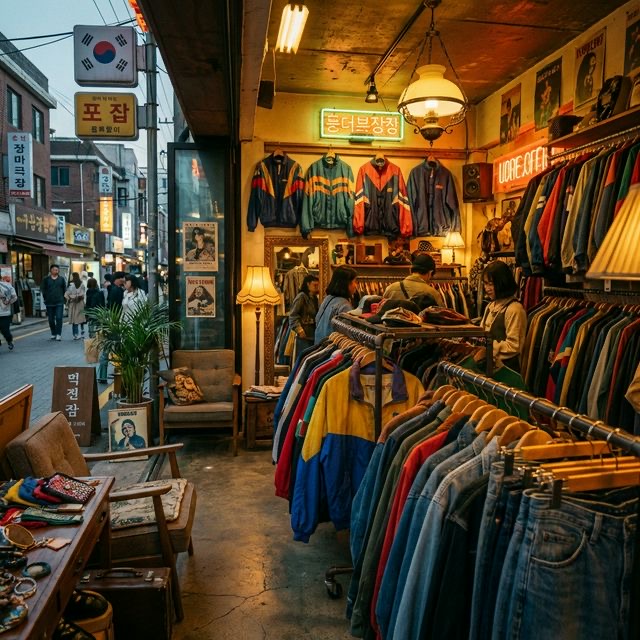
If you walk through the streets of Hongdae or Seongsu-dong, you'll notice that Seoul's youth don't just follow trends — they reinvent them. While the flashing neon of Gangnam showcases the newest luxury labels, the real fashion "it-spots" are hidden in basements and repurposed industrial lofts.
Seoul has quietly become one of the world's premier destinations for vintage shopping. Thanks to a massive influx of high-quality imports from Japan, Europe, and America, combined with a local culture that treats "used" as "curated," the city offers a thrift experience unlike any other.
Whether you're looking for a ₩1,000 ($0.75) treasure in a pile or a perfectly preserved 1990s Burberry trench coat, this guide shows you exactly where to dig — and how to leave with more than you expected.
The Seoul Vintage Scene at a Glance
| District | Price Range | Style Focus | Best Day |
|---|---|---|---|
| Dongmyo | ₩1,000–₩15,000 | Everything — raw hunting | Sat/Sun 10 AM |
| Seongsu-dong | ₩30,000–₩200,000+ | Curated, luxury vintage | Weekday afternoon |
| Hongdae/Yeonnam | ₩15,000–₩80,000 | Y2K, streetwear, Americana | Fri/Sat evening |
| Gwangjang (2F) | ₩20,000–₩300,000 | Imported luxury, designer | Any day |
| Hapjeong/Sangsu | ₩20,000–₩100,000 | Minimalist, Japanese aesthetic | Weekend |
| Vin Prime (chains) | ₩20,000–₩80,000 | Organized, accessible | Weekday |
1. The Hardcore Experience: Dongmyo Flea Market (동묘 벼룩시장)
Dongmyo is the heart and soul of Seoul's thrift culture. For years, it was a place where only grandfathers shopped for old radios and antique ceramics. Today, it is a battlefield for fashion students, thrift-tokers, and sustainable fashion advocates from around the world.
Getting There: Dongmyo Station, Line 1 or Line 6, Exit 1. The market begins immediately outside the exit. Google Maps: Dongmyo Flea Market, Dongmyo Station Exit 1
The Famous "Clothing Piles"
The signature of Dongmyo is the massive blue tarps spread across the ground, covered in literal mountains of clothes. Here, everything is a flat price — usually ₩1,000–₩5,000 per item regardless of brand.
- The Technique: You get on your knees and dig. It is physical. You're feeling for fabric weight, quality of stitching, and reading brand tags upside down while someone's elbow is near your ear.
- The Reward: People regularly find authentic Dickies, Levi's 501s, Pendleton wool shirts, and occasionally luxury labels buried at the bottom of piles. The ratio of hits to misses is low, but the hits can be extraordinary.
- Sizing Reality: Most pile items are sized for the Korean market (which runs smaller) or are vintage American workwear (which runs large). Bring a measuring tape and know your shoulder width and chest in centimeters.
The Permanent Shops
Beyond the piles, Dongmyo has a block of permanent indoor stalls — small, overcrowded shops run by vendors who've been there for decades. These shops have higher quality curation and slightly higher prices (₩5,000–₩30,000), but also more unusual finds (vintage military jackets, 1970s Korean department store pieces, old leather goods).
Etiquette:
- In the pile areas: prices are fixed and already low. Do not haggle.
- In permanent shops: politely asking for "서비스 좀 해주세요" (seo-bi-seu jom hae-ju-se-yo — "a little service/discount, please") when buying multiple items is accepted.
- Cash Only: Street vendors and most permanent stalls are cash-only. Bring ₩50,000–₩100,000 in small bills.
Best Time: Arrive at 10:00 AM on Saturday or Sunday for the freshest inventory before the Seoul fashion students clear the best items. By 1 PM on weekends, the best piles are significantly picked over.
Practical Note: Dongmyo market partially winds down by 5–6 PM. Go in the morning.
2. The Brooklyn of Seoul: Seongsu-dong Curation (성수동)
If Dongmyo is raw, Seongsu-dong is refined. Often compared to Brooklyn or Berlin's Prenzlauer Berg, this former shoe-making district has become Seoul's most avant-garde neighborhood — and its vintage boutiques reflect that.
Getting There: Seongsu Station, Line 2, Exit 3. Most boutiques are within 10 minutes' walk. Google Maps: Seongsu-dong, Seongsu Station Exit 3
Million Archive (밀리언 아카이브)
Google Maps: Million Archive
This is not just a shop — it's an event. Million Archive operates on a monthly theme model: one month might be "Ugly Christmas Sweaters from the 1980s," the next might be "Silk Shirts of the 90s" or "Vintage Japanese Denim."
- The Inventory: Sourced from estate sales, bulk importers from the US and Japan, and individual collectors. Every item is washed, steamed, and tagged by quality tier.
- The Vibe: High-fashion warehouse. Deliberate lighting, organized rails, the feel of a concept store.
- Price Range: ₩35,000–₩200,000+
- Hours: Tuesday–Sunday, 12 PM–8 PM
- Follow on Instagram before visiting to see the current month's theme.
Balbal Vintage (발발 빈티지)
Google Maps: Balbal Vintage
For "true" vintage — pieces with provenance and high material quality — Balbal is the definitive destination.
- Specialties: 1990s streetwear, oversized blazers with heritage brands (Polo Ralph Lauren, Tommy Hilfiger), and a rotating selection of luxury accessories (scarves, belts, bags).
- The Expertise: The curators at Balbal authenticate every piece. If they say it's a vintage Chanel brooch, it's a vintage Chanel brooch. This expertise commands a price premium — but the peace of mind is worth it.
- Price Range: ₩50,000–₩500,000+
- Hours: 12 PM–8 PM, closed Mondays
Other Seongsu Vintage Worth Visiting
Google Maps:
| Store | Specialty | Vibe |
|---|---|---|
| Salon de Seoul | 70s and 80s womenswear | Feminine, editorial |
| Retro Pop | 90s sportswear, branded outerwear | Athletic, accessible |
| Oasis Vintage | Japanese imports, workwear | Minimal, curated |
| WE ARE NOT | Luxury resale (Gucci, LV, Balenciaga) | High-end resale |
3. The Streetwear Hub: Hongdae and Yeonnam-dong (홍대/연남동)
Hongdae is where teenagers and college students shop, so the vintage here leans heavily into Y2K, Gorpcore, and American streetwear aesthetics. The energy is louder, the prices are lower, and the crowds are bigger.
Getting There: Hongik University Station, Line 2, Exits 1 or 9. Google Maps: Hongdae, Yeonnam-dong, Hongik University Station Exit 1, Hongik University Station Exit 9
ZUKU Vintage (주크 빈티지)
Google Maps: ZUKU Vintage
Located in the heart of the Hongdae busking area, ZUKU is famous for its denim wall — hundreds of pairs of vintage denim jeans organized by wash, cut, and era.
- What to Find: Oversized Carhartt work pants, vintage Harley Davidson tees, Dickies, Wrangler, Lee, and Levi's. Also strong on vintage American collegiate (Harvard, Yale sweatshirts from actual campus bookstores circa 1992).
- Price Range: ₩15,000–₩60,000
- Hours: 12 PM–10 PM daily
4th Floor Vintage (4층 빈티지)
Google Maps: 4th Floor Vintage
As the name suggests, this shop spans multiple floors of a commercial building, functioning like a department store for vintage categories.
- Floor Layout:
- Ground floor: Outerwear and heavy pieces (flannels, military jackets)
- 2nd floor: Women's vintage (blouses, dresses, knits)
- 3rd floor: Accessories, belts, bags
- 4th floor: European workwear and Japanese minimalist styles
- Price Range: ₩20,000–₩80,000
- Hours: 12 PM–9 PM daily
Yeonnam-dong Boutiques
Google Maps:
Walk 10 minutes from Hongdae Exit 1 into the Yeonnam-dong area for a quieter, more curated vintage experience. Boutiques here tend toward Japanese slow-fashion aesthetics — linen, natural dyes, carefully aged fabrics.
| Store | Style | Price |
|---|---|---|
| Clothes for the People | Vintage linen, Japanese workwear | ₩30,000–₩150,000 |
| Green Room | Sustainable vintage, upcycled pieces | ₩20,000–₩80,000 |
| Archive by Month | Seasonal curation, limited pieces | ₩35,000–₩120,000 |
4. The Hidden Floor: Gwangjang Market's 2nd Floor (광장시장 2층)
Most people visit Gwangjang Market for the world-famous street food. But follow the red signs for "수입구제" (Imported Quality) up to the second floor, and you'll find a hidden labyrinth of independent vintage stalls that most tourists never discover.
Getting There: Jongno 5-ga Station, Line 1, Exit 8. Enter Gwangjang Market and look for the staircase with red 수입구제 signage. Google Maps: Gwangjang Market, Jongno 5-ga Station Exit 8
What's on the 2nd Floor
The Gwangjang vintage floor is a series of tiny, independent stalls — maybe 50–80 vendors in total — each with their own niche. The overall quality level is high because these vendors specifically import selected vintage pieces rather than buying bulk.
What to Hunt For:
- Burberry trench coats (vintage nova check lining): ₩80,000–₩300,000 depending on condition
- Ralph Lauren Polo (vintage, made in USA tags): ₩30,000–₩80,000
- Vintage leather bags (Coach, Dooney & Bourke): ₩40,000–₩150,000
- High-quality knitwear (Scottish wool, cashmere): ₩30,000–₩100,000
- Vintage silk blouses: ₩20,000–₩60,000
The Authentication Rule: On the 2nd floor, items are significantly more expensive than Dongmyo because vendors have pre-sorted quality. You can generally trust what you see — but still check seams, lining condition, and zippers on outerwear before buying.
5. The Subway Savior: Vin Prime (빈프라임)
If you don't have time to travel to a specific district, Vin Prime stores are conveniently located inside or near major subway stations across Seoul.
- Locations: Hapjeong, Gangnam, Express Bus Terminal (7th floor of the underground shopping mall), Hongik University area
- What to Expect: A hybrid between a boutique and a thrift store. Clean, organized, and consistently affordable. Best for coats, blazers, and outerwear under ₩30,000.
- Hours: Typically 11 AM–9 PM daily
- Google Maps: Vin Prime Hapjeong, Vin Prime Gangnam, Vin Prime Express Bus Terminal, Vin Prime Hongik University
6. The Seasonal Sale Calendar
| Season | Event | What Happens |
|---|---|---|
| January (post-New Year) | Winter clearance | All winter outerwear 30–50% off at curated boutiques |
| March–April | Spring arrivals | New 1970s–90s womenswear pieces imported from Europe |
| July | Summer clearance | Light summer vintage; great time to buy for next year |
| October | Autumn haul season | Best inventory of the year — stores prepare for the peak shopping season |
| November–December | Holiday vintage | Ugly sweaters, wool coats, holiday-themed vintage |
Tip: Many Seongsu boutiques announce new inventory drops on Instagram 24–48 hours before items hit the floor. Follow your target stores and set post notifications.
7. Pro Tips for the Ultimate Seoul Thrift Haul
Before You Go
- Know Your Measurements in Centimeters: Almost no vintage shops in Seoul have fitting rooms. Shoulder width, chest, waist, and inseam in centimeters are essential. Keep them in your phone notes.
- Bring a Tape Measure: A small fabric tape measure weighs nothing and saves you from buying something that doesn't fit.
- Wear Easy-On/Off Layers: You'll be trying things on over your clothes outside fitting rooms. A simple base layer speeds up your browsing dramatically.
At the Market
- Check the Seams First: In the excitement of finding a deal, check for pilling, loose seams, stains (especially collar and underarm areas), and zipper function before committing.
- The Fabric Smell Test: Most curated boutiques wash their stock, but Dongmyo pile items will have a "vintage scent." Budget for a coin laundry session your first evening.
- Look at the Label: Key authenticity indicators include country of manufacture (USA, England, West Germany = pre-1990 vintage), union tags, and registered trademark symbols (® vs. ™ indicates era).
- Don't Rush Dongmyo: The best Dongmyo hunters spend 2–3 hours at a single pile. Patience rewards those who reach the bottom layers.
Practical
- Cash for Dongmyo: Street vendors are 100% cash-only. Bring ₩50,000–₩100,000 in small bills (₩1,000 and ₩5,000 denominations).
- Card for Seongsu: Most Seongsu boutiques accept cards and have English-friendly card terminals.
- Shipping Items Home: Korea Post's EMS (Express Mail Service) is reliable and affordable. A 5kg package to the US or Europe costs approximately ₩50,000–₩90,000 and arrives in 5–10 days. DHL and FedEx offices are available in most large neighborhoods for premium speed.
8. How to Authenticate Vintage Finds: A Quick Guide
The more you thrift, the better you get at spotting genuine vintage pieces versus "vintage-inspired" reproductions. Here are the key authentication markers by category.
Denim (Levi's, Lee, Wrangler)
- Made in USA tag: Any Levi's made in the USA dates to before 1999, when production moved offshore. These command a significant premium.
- Single stitch: Vintage denim uses single-stitch construction at the side seams. Modern denim uses double-stitch.
- Red tab: On real vintage Levi's, the red tab has "LEVI'S" in all capitals. After 1971, the tab says "LeVI'S" with a lowercase E.
- Big E: On very early Levi's (pre-1971), the "E" in the red tab is uppercase. "Big E" denotes genuine vintage.
Wool and Outerwear (Pendleton, Harris Tweed, Woolrich)
- Harris Tweed Orb: Genuine Harris Tweed has a woven Orb mark in the fabric. Fakes use a label only.
- Union-made tags: US garments from the 1960s–1980s often carry union labels (ILGWU, ACWA). These are strong era indicators.
- Dry-clean only labels: Pre-1971 American garments don't have care labels by law. If a piece has no care label, it predates that regulation.
Leather Goods (Coach, Dooney & Bourke, Louis Vuitton)
- Coach: Pre-2000 Coach uses a serial number on the interior leather patch. Genuine vintage Coach uses all-leather construction with minimal hardware branding.
- LV: Never buy Louis Vuitton from a pile or low-price stall. Even the Gwangjang 2F vendors' LV pieces should be cross-referenced with known authentication markers (serial numbers, date codes, stitching count per inch).
9. Building a Full Day Around Seoul Thrifting
For the dedicated vintage hunter, here's a complete one-day Seoul thrift itinerary.
The One-Day Thrift Itinerary
9:00 AM — Dongmyo (동묘) Arrive at opening. Two hours in the piles. This is the hardest physical work of the day — bend low, dig deep, stay focused.
11:30 AM — Breakfast/Brunch Near Dongmyo Walk 5 minutes to the pojangmacha area near Jongno 6-ga for haejangguk or gukbap (₩9,000–₩12,000). You've earned it.
1:00 PM — Gwangjang Market 2nd Floor After the soup, take a taxi or subway two stops to Jongno 5-ga. Spend 45–60 minutes on the 2nd floor hunting luxury pieces.
2:30 PM — Gwangjang Street Food Break Head downstairs for bindaetteok and mayak kimbap (₩6,000–₩10,000). Fuel for the afternoon.
3:30 PM — Hongdae (ZUKU, 4th Floor Vintage) Subway Line 2 to Hongik University. Two hours in the streetwear universe — Y2K, Americana, denim walls.
5:30 PM — Yeonnam-dong Walk 15 minutes on foot from Hongdae Exit 1. Slower browsing, Japanese minimalist aesthetics, coffee at a neighborhood café.
7:00 PM — Seongsu-dong (Evening Browse) Subway to Seongsu Station. The boutiques stay open until 8–9 PM. This is when Million Archive does their evening Instagram reveal of what's left in the day's inventory.
9:00 PM — Dinner in Seongsu Seongsu's restaurant scene is strong — try one of the converted factory restaurants for dinner (₩15,000–₩25,000/person) before heading home with your haul.
Conclusion
Vintage shopping in Seoul is more than just a way to save money — it's a way to connect with the city's creative energy. Each neighborhood offers a different slice of subculture, from the gritty democratic chaos of Dongmyo to the artistic future of Seongsu. The prices are fair, the quality is high when you know where to look, and the discoveries you make in these stalls are genuinely unrepeatable.
Once you've curated your new vintage wardrobe, compare your haul route with the Seongsu-dong shopping guide for newer independent brands and the underground shopping malls guide for cheaper fast-fashion alternatives. If you still plan to buy fitted apparel, the Korean sizing guide will save time before you head into more stores. And if you want a mainstream district after Dongmyo, finish with the Myeongdong shopping guide.