Best Jjimjilbangs in Seoul: Honest Reviews for Travelers

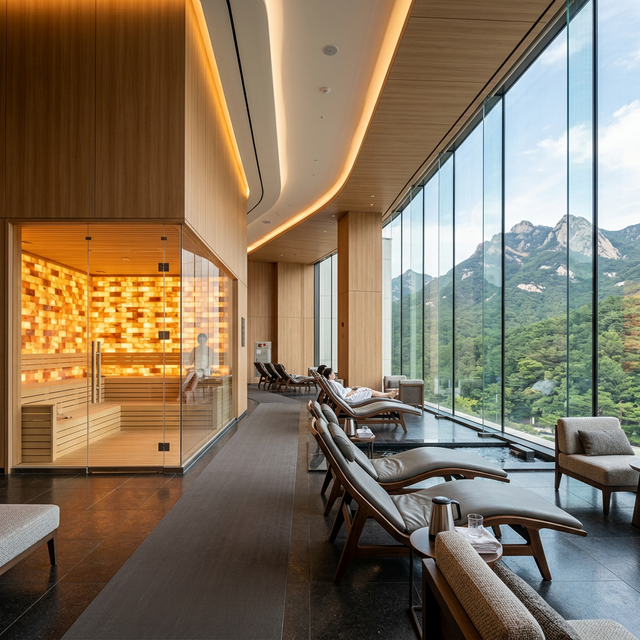
If you look at a Seoul guidebook from 2019, you'll likely see massive praise for legendary spots like Dragon Hill Spa or Siloam. However, the post-2020 landscape of Korean bathhouses has changed significantly. Some giants have closed their doors, while a new generation of high-tech, luxury "wellness parks" has emerged to take their place.
Choosing the right jjimjilbang is no longer just about finding the closest one; it's about finding the one that matches your comfort level and travel style. Whether you want a rugged, local experience or a hotel-style luxury retreat, here are the best Korean saunas in Seoul for 2026.
What to Expect at a Jjimjilbang: The Check-In Process Step by Step
Before diving into the reviews, it helps to understand exactly what happens when you walk through the door. If this is your first time at a Korean bathhouse, the check-in process can feel disorienting without a guide. Here is the complete sequence so you can walk in with confidence.
Step 1: The Entry Counter
You'll arrive at a front desk (접수대) staffed by attendants who handle payment and locker assignments. Day use typically costs between 10,000 and 15,000 KRW at mid-range facilities, while overnight stays run 12,000 to 20,000 KRW depending on the day of the week and the facility's tier. Luxury venues like Aquafield charge significantly more. Pay in cash or card, and you'll be handed a wristband with a magnetic chip — this functions as your locker key, your payment method for food and add-on services inside, and your exit ticket. Everything you spend inside gets charged to the wristband and settled when you leave.
Step 2: The Uniform
After payment, you'll receive a set of the iconic jjimjilbang uniform: lightweight shorts and a T-shirt at most venues, or a vest-and-pants combination at older, more traditional spots. The uniform is almost always a muted earth tone — ochre, grey, or brick red — and it's the same for everyone, which is part of what makes the jjimjilbang such a uniquely egalitarian social space. Fold it under your arm and head to your designated locker room.
Step 3: The Gender-Separated Bath Area (탕)
This is where newcomers often feel most nervous, and understandably so. You'll be directed to either the women's (여탕) or men's (남탕) bath section. Inside, clothing is not worn — this is a clothing-free zone, and that is simply the cultural norm. The pools vary by temperature and mineral content: a cool plunge pool, a standard warm bath, a very hot bath, and often a specialty pool (charcoal-infused, green tea, or salt water). There are also showers for rinsing before entering any pool, which is mandatory etiquette.
The Body Scrub Tradition (때밀이)
If you want the most authentically Korean part of the experience, book a 때밀이 (ddae-mili) — a professional body scrub performed by an attendant using a rough Italian towel (이태리 타올). It sounds alarming, but the result is genuinely remarkable: layers of dead skin slough away to reveal astonishingly smooth skin underneath. Prices run from 15,000 to 25,000 KRW depending on the facility. You don't need to book in advance at most traditional spots — just ask at the counter — but at premium venues like Spa Lei, you should reserve ahead.
Step 4: The Co-Ed Jjimjilbang Common Area (찜질방)
After bathing, put on your uniform and head upstairs or through a connecting corridor to the co-ed common area. This is the heart of the jjimjilbang experience: a large, warm, communal space filled with people of all ages sleeping, eating, watching television, playing board games, and just resting. The floor is heated (온돌), and most people simply lie down on the floor mats provided — some with wooden neck blocks as pillows, a traditional touch that is admittedly an acquired comfort.
Step 5: The Kiln Rooms (황토방, 소금방, 얼음방)
Off the main common area, you'll find a series of small rooms, each heated (or cooled) to different temperatures and lined with different materials. The yellow earth (황토) room, the salt (소금) room, and the charcoal (숯) room are heated to between 60°C and 90°C and are meant to be visited in short bursts of 10 to 15 minutes. Some facilities also have an ice room (얼음방) for contrast therapy — step from the sauna room directly into a chamber at 5°C. The thermogenic cycle of heat and cold is deeply restorative.
Step 6: The Sleeping Area and Departure
Most 24-hour jjimjilbangs have a designated sleeping area with dimmed lights, thicker mats, and blankets. It quiets down significantly after midnight. When you're ready to leave, return any rented items, settle your wristband tab at the exit counter, and you're done. The whole experience — from entry to exit after an overnight stay — typically costs the equivalent of a hostel dorm bed, making it one of the best-value accommodation options in Seoul.
1. The Luxury King: Aquafield (Goyang & Hanam)
If you are intimidated by the idea of a traditional, older bathhouse, Aquafield is the answer. Located inside the massive Starfield shopping malls, these facilities are more like "wellness theme parks" than simple saunas.
- The Vibe: Ultra-modern, spotless, and premium. It feels like a 5-star hotel spa.
- The Best Part: The themed rooms are works of art. The "Media Art Room" features 360-degree projections of the aurora borealis, while the "Cloud Room" creates a misty, dreamlike atmosphere.
- Foreigner Friendliness: 10/10. Everything is translated, and the staff is used to international visitors.
- Location: Goyang (50 mins from downtown) or Hanam (60 mins from Myeongdong).
Getting There: Directions to Aquafield Goyang
The Goyang location is the one most travelers make the effort to visit, and the journey is easier than it looks on a map. From central Seoul, take Subway Line 3 to Suseo Station, then transfer to the Gyeonggang Line toward Gwangju — but you only need one stop, exiting at Seohyeon Station. From there, shuttle buses run directly to Starfield Goyang, taking roughly 20 minutes. The total one-way journey from central Seoul runs approximately 50 to 60 minutes. Alternatively, express buses depart from Gangnam's Express Bus Terminal and the Dongseoul Bus Terminal toward Goyang district, with journey times of 35 to 45 minutes depending on traffic. Budget roughly 3,000 to 5,500 KRW for the subway-and-shuttle combination. It's a bit of an expedition, but this is genuinely one of the most impressive spa facilities in East Asia — worth every minute of transit time.
Pricing
Entry fees vary by day and time. On weekdays, expect to pay around 18,000 to 20,000 KRW for standard admission. Weekend and public holiday pricing rises to 22,000 to 25,000 KRW. These fees include access to all standard kiln rooms and the common area, as well as the bath section with its dramatic outdoor terrace pool. Note that several of the premium themed rooms — including the Media Art Room — carry an additional surcharge of 5,000 to 8,000 KRW per session, payable via your wristband inside. Food from the in-house restaurant and any massage add-ons are charged separately. Budget for an all-in experience of roughly 35,000 to 50,000 KRW if you plan to eat and use premium rooms.
What to Bring vs. What's Provided
Aquafield provides everything a first-timer needs: towels (both large bath towels and smaller face towels), the standard jjimjilbang uniform, and locker access. Shampoo, conditioner, and body wash are available at communal dispensers in the bath area, but the quality is utilitarian. If your hair requires specific care — or if you're particular about your skincare routine — bring your own products in a small travel bag. A zip-lock bag works well to keep toiletries dry. Flip flops are optional but genuinely useful in the shower area; the provided ones can be flimsy.
The Outdoor Terrace Pool
The single most spectacular feature at Aquafield Goyang is the outdoor rooftop pool, which sits at elevation with an unobstructed view of Bukhansan — the granite mountain that dominates Seoul's northern skyline. Soaking in warm water while looking at snow-capped peaks on a clear winter morning is the kind of moment that makes the long transit completely irrelevant. This is, without question, the most Instagram-worthy spa moment available in Korea right now. Visit on a weekday morning for the quietest experience and the best light for photography.
2. The Shopper's Choice: Sparex Dongdaemun
Located in the basement of the Good Morning City mall, Sparex is the most convenient option for those staying in central Seoul or planning a late-night shopping spree in Dongdaemun.
- The Vibe: A mix of traditional wooden lodge and modern facility. It's large and usually very lively.
- The Best Part: It is open 24/7, making it a reliable spot for travelers who need a place to rest between flights or after a 3 AM shopping run. The sleeping cubicles here are some of the most consistent in the city.
- Foreigner Friendliness: 8/10. Very central and used to tourists, though it can get crowded.
- Location: Dongdaemun History & Culture Park Station.
The Overnight Experience
Sparex is genuinely one of the best options in Seoul if you need a place to rest between late check-out and an early flight, or if you want to experience the classic 24-hour Korean spa overnight without venturing far from the city center. After 11 PM, the common area transitions noticeably: families with children have mostly gone home, the crowd skews toward young Koreans in their twenties and solo travelers, and the energy becomes quieter and more horizontal. The sleeping area at Sparex uses numbered pods — not full capsule enclosures, but defined spaces with individual thin foam mats and fleece blankets. By around 2 AM, the common area settles into a low hum of snoring and late-night television. Earplugs are worth packing if you're a light sleeper.
Waking up at Sparex on a weekend morning has its own charm. The communal breakfast area opens early and serves standard Korean comfort food: instant noodles, triangular gimbap, and the famous sauna eggs (맥반석 계란). These eggs — slow-cooked in the kiln rooms until the whites turn golden-brown and the flavor deepens into something almost caramel-sweet — are one of those irreplaceable jjimjilbang experiences that can't be replicated anywhere else.
Price Breakdown
Standard day admission at Sparex runs approximately 11,000 to 13,000 KRW. The overnight fee (체류요금) adds roughly 3,000 to 5,000 KRW on top of the base entry, making a full overnight stay cost in the range of 14,000 to 18,000 KRW. Food from the snack bar inside is very reasonably priced: a bowl of ramen costs around 3,000 to 4,000 KRW, sauna eggs sell for 1,000 KRW each (usually sold in pairs), and a cold bottle of Sikhye — the traditional sweet rice punch that is essentially the official beverage of jjimjilbang culture — costs 1,500 to 2,000 KRW. Budget an additional 8,000 to 12,000 KRW if you plan to eat and drink throughout your stay.
When to Go (and When to Avoid)
Sparex is well-managed and generally enjoyable, but Friday and Saturday nights are a different story. The Dongdaemun wholesale markets attract massive weekend crowds, and when shoppers finish their 2 AM buying runs, many of them pour directly into Sparex for a rest. The common area becomes extremely crowded, the sleeping zones fill up fast, and the bath area queues can stretch to 20 minutes. If you want the overnight experience without the chaos, target a Sunday through Thursday visit. Monday and Tuesday nights are reliably the quietest.
3. The Women-Only Sanctuary: Spa Lei (Gangnam)
For solo female travelers who want to relax without the "family" atmosphere of larger spas, Spa Lei is a refined, high-end sanctuary located in the heart of Sinsa-dong.
- The Vibe: Sophisticated and European-inspired. It feels more like a private club than a public bathhouse.
- The Best Part: Because it is women-only, the atmosphere is incredibly peaceful. They offer some of the best skin-care treatments and specialized massages in the Gangnam area.
- Foreigner Friendliness: 9/10. Very popular with expats and business travelers.
- Location: Sinsa Station (Gangnam).
Treatment Menu Highlights
Spa Lei's real selling point is the quality of its treatment menu, which goes far beyond what most jjimjilbangs offer. The signature body scrub service uses the traditional 이태리 타올 (Italian towel) technique — the same method you'd find in a neighborhood bathhouse, but executed by highly trained staff in a pristine private room. Prices for this service run from 30,000 to 50,000 KRW depending on the duration and whether you add a mineral oil treatment afterward.
For skincare, Spa Lei offers several facial package options that draw on Korean beauty principles: deep cleansing, hydration layering, and skin-barrier focus. These tend to be popular with visitors who've been exposed to Seoul's summer pollution or long-haul flight dehydration. The signature massage menu includes a traditional Korean style full-body massage, a Swedish relaxation option for those more accustomed to Western-style bodywork, and a pressure-point foot reflexology session that runs 45 to 60 minutes. Massage packages start at around 60,000 KRW and climb toward 120,000 KRW for the extended full-body combinations.
Booking Your Visit
Entry to the general jjimjilbang and bath area does not require advance booking. However, the treatment rooms are consistently booked out — particularly on weekday afternoons and all weekend slots. If you want a body scrub or massage, book in advance. Spa Lei is listed on Naver Booking (네이버 예약), which accepts foreign credit cards and has an English interface. Alternatively, the spa's own website has a reservation portal. Aim to book at least three to five days ahead for weekend appointments, and two to three days ahead for mid-week slots. Walk-in treatment availability exists but should not be counted on.
4. The Hidden Traditional Gem: Insadong Hanjeungmak
If you want an authentic cultural experience without traveling to the outskirts of the city, this small, focused facility near the Hanok Village is a great choice.
- The Vibe: Traditional and intimate. It focuses more on the quality of the heat than on flashy amenities.
- The Best Part: The "Yellow Archer Stone" kiln. This is an authentic dry-heat experience that feels much more ancient and medicinal than the electric rooms in modern malls.
- Foreigner Friendliness: 7/10. It's small, so you'll need to rely on your etiquette knowledge, but the staff is very kind.
- Location: Anguk Station.
5. Spa 1 (Yongsan): The Mid-Range Workhorse
For travelers who want a reliable, no-frills-but-no-disappointments jjimjilbang experience right in the heart of Seoul, Spa 1 in Yongsan is one of the most consistently well-reviewed mid-range options in the city.
- The Vibe: Functional, busy, and authentically Korean. This is not a luxury destination, but it is a well-maintained, large-scale facility that delivers exactly what it promises. The décor leans toward generic tile-and-wood construction rather than dramatic theming, but everything works, everything is clean, and the kiln rooms are genuinely good.
- The Best Part: Spa 1 runs multiple kiln rooms across different temperature ranges and materials — a 황토 (yellow earth) room, a 소금 (salt) room, and a standard hot room — giving you the full rotating heat circuit without paying luxury prices. The bath section is spacious enough to avoid the crowding that plagues smaller urban facilities.
- Practical Details: Open 24 hours, seven days a week. Standard admission runs approximately 12,000 to 14,000 KRW for day use, with the overnight surcharge adding 3,000 to 5,000 KRW. Food and snack options are available inside at typical jjimjilbang prices.
- Foreigner Friendliness: 8/10. The Yongsan area is well-trafficked by tourists visiting the electronics market, and the staff are accustomed to guests who don't speak Korean. Basic directional signage is available in English. You won't feel lost, though some menus and service requests may require gesturing.
- Location: Yongsan Station (Lines 1 and 4, and KTX), making it easily accessible from almost anywhere in the Seoul metropolitan area and directly convenient for travelers arriving by KTX from Busan or Gyeongju.
6. Itaewon Seoul Dragon City Hotel Spa (Day Use Option)
This entry is for a specific type of traveler: one who is genuinely curious about the Korean spa culture but finds the shared-uniform concept too confronting to dive into headfirst. The Dragon City Hotel Spa in Itaewon offers a legitimate middle path.
- The Vibe: Western hotel spa with Korean elements. Think marble, mood lighting, and a staff that communicates entirely in English. There is no jjimjilbang uniform, no communal floor sleeping area, and no required clothing-free zones. You access the facilities — infinity pool, sauna, steam room, and a well-equipped gym — in your own swimwear, exactly as you would at a resort pool in Europe or Southeast Asia.
- The Best Part: The infinity pool at Dragon City is one of the more atmospheric in Seoul, positioned to offer a skyline view across the Itaewon and Namsan area. The sauna and steam room are small but well-maintained, and the overall facility is a genuine luxury day-use option for those who want to spend several hours unwinding without committing to the full cultural immersion of a traditional jjimjilbang.
- Day Use Pricing: Day use access to the pool, sauna, and gym typically runs from 50,000 to 80,000 KRW depending on the day of week and whether promotional packages are active. This is significantly more expensive than any jjimjilbang on this list, but you are paying for the Western-amenities wrapper and the full privacy that comes with a hotel spa environment. Massages and treatments are available at a further additional cost.
- Foreigner Friendliness: 10/10. This is an international hotel. Every interaction happens in English, the app and booking process is straightforward, and the environment is intentionally designed to feel familiar to Western visitors.
- Location: Itaewon Station (Line 6), a two-minute walk from Exit 1.
7. Important Closures & Status Updates for 2026
- Dragon Hill Spa (Yongsan): Still CLOSED. Despite appearing in many online guides, this legendary spot has not reopened its jjimjilbang area.
- Siloam Spa (Seoul Station): Still UNSTABLE. It has pivoted towards a "sauna-only" (baths) model and frequently closes its jjimjilbang overnight floors. We do not recommend relying on it for an overnight stay in 2026.
How to Find New Jjimjilbangs in 2026 and Beyond
The landscape keeps shifting. Facilities open, close, renovate, or quietly reduce their hours without updating their English-language profiles. The single most important skill a jjimjilbang traveler can develop is knowing how to verify that a place is actually open before making a trip — especially if you're traveling across town.
Use Naver Maps, Not Google Maps
For jjimjilbang research in Korea, Naver Maps is substantially more reliable than Google Maps. Search for "찜질방" (jjimjilbang) or "스파" (spa) combined with your neighborhood name, and you'll get a list with ratings, photos, opening hours, and — critically — recent reviews from Korean users. The review dates matter enormously: if the most recent review is from 2023, treat that as a yellow flag and investigate further.
Kakao Map is an equally good alternative with a cleaner interface. Both apps are free and support location sharing, which is useful when you're navigating to an address with a Korean street system.
Reading Naver Ratings Critically
On Naver, a rating of 3.8 stars or above is generally a reliable indicator of a functioning, maintained facility. Below 3.5, you should read the individual reviews carefully for recurring complaints about cleanliness, closures, or reduced services. Korean reviews can be translated using the Papago app — a Naver product that handles Korean-to-English translation with far more accuracy than standard machine translation for colloquial and regional language. Open the review text, paste it into Papago, and you'll get a readable translation in seconds.
Check the Last Review Date
This is the most practical piece of advice on the list. Before visiting any jjimjilbang you find online, check the date of the most recent review. A place with hundreds of positive reviews but nothing newer than 18 months ago may well have closed, reduced hours, or dropped in quality. Conversely, a place with 40 reviews but three posted in the past month is very likely still operating normally.
Naver Booking for Current Availability
Many jjimjilbangs and day spas now list on Naver Booking (네이버 예약), which shows real-time availability for treatment slots. If a facility is bookable, it is almost certainly operational. This is the fastest way to confirm that a spa is currently accepting guests before you make the journey.
Quick Comparison Table
| Spa Name | Best For | Vibe | Price Range |
|---|---|---|---|
| Aquafield | Families & Luxury | Modern/Futuristic | $$$ |
| Sparex | Shoppers & Transit | Social/Active | $$ |
| Spa Lei | Women Solo | Refined/Intimate | $$$ |
| Insadong | Cultural Purists | Traditional/Local | $$ |
| Spa 1 Yongsan | Value Seekers | Functional/Local | $$ |
| Dragon City Hotel | Nervous First-Timers | Western/Luxury | $$$$ |
Conclusion
The right jjimjilbang for you comes down to a simple set of questions. Work through this decision path before you book your visit:
Are you staying near Dongdaemun or need a 24-hour option? Sparex is your answer. It's central, reliable, and gives you the full overnight experience within walking distance of one of Seoul's most energetic neighborhoods.
Do you want the most impressive, world-class facility? Make the trip to Aquafield Goyang. The outdoor pool with the Bukhansan view alone justifies the 50-minute transit. This is the place you'll be talking about when you get home.
Are you a solo female traveler looking for peace, privacy, and great skin treatments? Spa Lei in Gangnam is your best option. Book a treatment in advance, and you'll leave feeling genuinely restored.
Do you want cultural authenticity without traveling far from the Jongno sightseeing corridor? Insadong Hanjeungmak is a small but genuine traditional experience. Pair it with a morning walk through Bukchon Hanok Village.
Do you want a straightforward, no-nonsense mid-range option near transport links? Spa 1 in Yongsan ticks every box.
Are you nervous about the communal bathing format and want to ease in gradually? Start at Dragon City Hotel Spa in Itaewon. Experience the heat and relaxation in a familiar Western-hotel format first, and once the sauna culture clicks for you, graduate to a full jjimjilbang on your next Seoul visit.
What to Pack for a Jjimjilbang Visit
Regardless of which facility you choose, this packing list will make your experience smoother:
- Clean underwear to change into after the bath section. The uniform goes on over this, and having a fresh set ready is basic comfort.
- A small personal face towel. The provided towels at most facilities are thin and utilitarian. A soft microfiber travel towel is worth having.
- Flip flops. Optional but genuinely recommended for the shower area and wet zones. Most facilities provide basic plastic sandals, but bringing your own is more hygienic.
- Your own toiletries. Shampoo, conditioner, and face wash from home. The communal dispensers work, but quality varies considerably.
- Earplugs. If you're staying overnight in the common area, earplugs transform the sleeping experience.
- Something to do during the resting period. A downloaded podcast, a book on your phone, or a pair of earbuds with a good playlist. The rest periods between kiln room sessions can last 20 to 30 minutes, and having entertainment ready makes the thermal circuit much more pleasant.
- Cash (or a card that works in Korea). Entry fees can usually be paid by card, but smaller in-facility purchases like food and sauna eggs are sometimes cash-only.
If you only have time for one visit on this trip, make the effort to get to Aquafield Goyang. The combination of the Bukhansan mountain views and the stunning interior design makes it a world-class wellness destination. However, if you're looking for that classic 24-hour Seoul energy, Sparex Dongdaemun remains the reigning champion of the city center.
Before you pack your bags for the spa, we highly recommend mastering the unspoken rules outlined in our Korean Spa Etiquette: Do's and Don'ts for International Visitors. To fully grasp how these facilities operate from check-in to check-out, read the Ultimate Guide to Jjimjilbang: How to Use a Korean Sauna Like a Local. And for those wanting an elevated pampering experience outside of the traditional bathhouse, explore the Best Luxury Spas in Seoul for a Premium Wellness Day.