Korean Spa Etiquette: Do’s and Don’ts for International Visitors
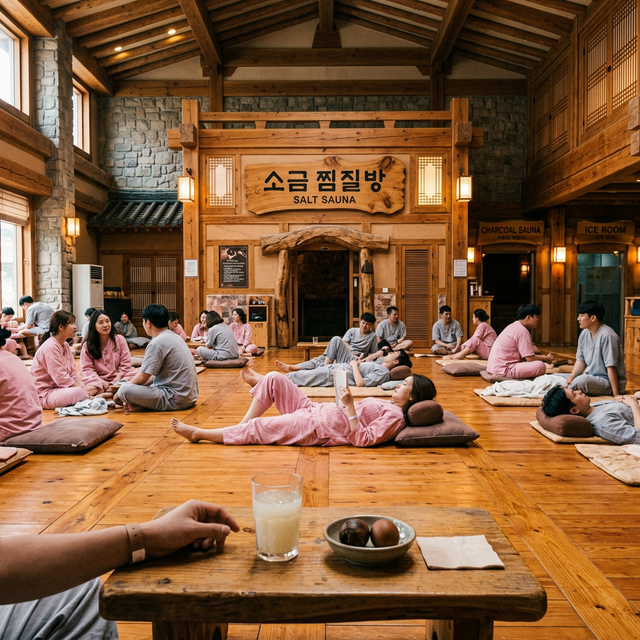
Walking into a Korean jjimjilbang for the first time can feel like entering a secret society. There are silent codes of conduct, specialized uniforms, and a level of communal nudity that can be daunting for the uninitiated. However, once you understand the rhythm of the bathhouse, you’ll discover that it is one of the most welcoming and relaxing spaces in South Korea. It is a place where social hierarchies disappear, and everyone—from grandmothers to office workers—comes together for the shared goal of "healing."
As of 2026, the jjimjilbang scene has undergone a massive transformation. Many legendary massive spas (like the now-permanently closed Dragon Hill Spa) have been replaced by ultra-modern, aesthetic "Wellness Resorts" like Cimer and Aquafield. Whether you're visiting a neighborhood bathhouse or a luxury spa, the etiquette remains the foundation of the experience.
A jjimjilbang (찜질방) is more than just a sauna; it is a multi-story cultural hub equipped with themed heated rooms, restaurants, sleeping zones, and massive gender-segregated bathhouses (mokyeoktang). To ensure you have a seamless experience, we’ve put together this essential guide to the unspoken rules of the Korean spa.
1. Arrival and Entry: The 2026 Logistics
Your journey begins at the front desk. While technology has modernized (many spas now use unmanned kiosks), the flow remains the same.
- Shoe Lockers & The "No Shoe" Zone: Korea is a no-shoe culture. Take off your shoes before you even reach the counter. Place them in a small locker, take the key, and hand it to the receptionist.
- Admission Fees: In 2026, prices have stabilized. Expect to pay 12,000 to 18,000 KRW for a standard 24-hour facility. Luxury "Time-limited" spas like Aquafield typically charge around 30,000 KRW for a 6-hour pass.
- The All-In-One Wristband: This band is your life. It opens your locker and serves as your digital wallet. Use it to tap for snacks, masks, or massages. You pay the total balance when you exit. Do not lose this—replacement fees are high (approx. 20,000 KRW).
- The Kit: You’ll receive two small towels and a set of cotton pajamas. Traditional spas give pink for women and grey for men, though modern "Aesthetic" spas are moving toward neutral beige and linen tones.
2. The Wet Area (Mokyeoktang): The Naked Truth
This area is strictly gender-segregated. Nudity is 100% mandatory and expected.
The Golden Rule: The Pre-Bath Scrub
Before you even touch the surface of a communal pool, you must shower. Not just a quick rinse—a thorough scrub with soap. Entering the pools without washing is considered a major cultural offense. Use the seated shower stations (a classic Korean experience) to scrub from head to toe.
Modesty vs. Reality
While you receive small towels, they are never used to cover yourself inside the water. In fact, most locals don't use them for modesty at all; they tie them around their heads to keep hair dry or to manage sweat. If you feel shy, remember: Nudity here is functional, not sexual. No one is looking at you.
3. The Seshin Ritual: The Ultimate Exfoliation
If you want the "real" Korean spa experience, you must book a Seshin (세신) session.
What to Expect:
Located in a corner of the wet area, you'll see "scrub masters" wearing modest black lingerie (for women) or shorts (for men). They use a rough, sandpaper-like mitt known as the "Italy Towel."
- The Process: You soak in a hot tub for 15-20 minutes to soften your skin. Then, you lay on a plastic-covered table. The scrubber will vigorously exfoliate every inch of your body.
- The Result: You will see grey "noodles" of dead skin being rubbed off. It might sting slightly, but you will emerge with the softest skin of your life.
- Price (2026): A basic body scrub usually costs 25,000 to 40,000 KRW. Premium sessions including a milk rinse, oil massage, and hair wash can go up to 70,000 KRW.
4. The Common Area: Life in the "Cave"
Once you’ve bathed and put on your uniform, you enter the mixed-gender common area. This is where the social magic happens.
Themed Sauna Rooms
Each room has a specific health benefit:
- Salt Room (Himalayan/Korean Sea Salt): Great for skin purification and respiratory health.
- Oxygen Room: Infused with cypress (hinoki) scents for deep relaxation.
- Bul-hanjeungmak (Fire Pot): The most intense. It's a stone dome heated with charcoal. You wear a thick burlap sack to protect your skin from the 80°C+ heat.
- Ice Room: The essential "cold plunge" for your pores after the heat.
The "Sheep Head" (Yang-meori)
You’ll notice almost everyone wearing their towels folded into two round "ears."
- How to do it: Fold the towel into thirds lengthwise, then roll the ends outward until you reach the center.
- Function: In 2026, it's 20% for heat protection and 80% for the "Instagrammable" jjimjilbang aesthetic.
5. Jjimjilbang Gastronomy: The Recovery Diet
The heat will make you hungry. The jjimjilbang cafeteria is a highlight of the trip.
- Sikhye (식혜): This sweet malt-and-rice drink is served in giant 1-liter cups with floating ice. It is culturally mandatory.
- Maekbanseok Eggs: Slow-baked in the sauna rocks. They have a brown, smoky interior and are more nutrient-dense than boiled eggs.
- Miyeok-guk (Seaweed Soup): The ultimate recovery meal. Rich in iodine and calcium, it's what Koreans eat after giving birth or for birthdays—and it’s the most popular meal at a spa for a reason.
6. Important Updates for 2026
The Tattoo Policy Shift
Historically, tattoos were forbidden in many public baths due to associations with gangs. As of late 2025/2026, the stigma has largely evaporated. Tattoos were legalized in Korea for non-medical professionals, and younger Koreans are now heavily tattooed.
- Rule of Thumb: In Seoul (at places like Aquafield or Cimer), tattoos are generally ignored. In rural areas, if you have a full "suit" of tattoos, you might receive some stares from the elderly, but you will rarely be asked to leave.
Sleeping Overnight
Many travelers ask: "Can I use a jjimjilbang as a hotel?"
- Yes, but: It is a communal floor. You get a thin plastic mat and a hard rice-husk pillow. People snore. It is safe, but it is not "comfortable." It is a great 1-night budget hack, but not a long-term accommodation strategy.
7. Survival Checklist
| Item | Status | Note |
|---|---|---|
| Cash/Card | Not Needed | Use your wristband for everything inside. |
| Soap/Shampoo | Bring or Buy | Small packets are sold for 500-1,000 KRW. |
| Modesty | Leave at the door | Nudity is normal. Indifference is the code. |
| Silence | Essential | Keep voices low in the heated "stone caves." |
Conclusion
The jjimjilbang is the soul of Korean wellness. It is where families bond, friends gossip, and solo travelers find a moment of peace in a high-speed society. By following these simple etiquette rules, you move from "tourist" to "local" in just a few hours.
Once you've mastered the etiquette, it's time to choose. Consult our Review of the Best Luxury Spas in Seoul or explore the more Traditional Neighborhood Jjimjilbangs for a rugged, authentic experience. If you're traveling with kids, make sure to check out our Family Survival Guide to Korean Spas.
Top Jjimjilbangs in Seoul: 2026 Recommendations and Prices
The post-Dragon Hill Spa era has produced a new generation of wellness facilities. Here are the best options across different budgets and styles.
Cimer (씨머) — Sinchon
The most design-forward jjimjilbang in Seoul. Cimer is housed in a repurposed industrial building and features 12 distinct themed rooms including a "Forest Dome" cedar sauna, a Himalayan salt cave with real Himalayan salt blocks, and a subterranean cold plunge pool maintained at 14°C.
- Price: ₩28,000 (weekday) / ₩35,000 (weekend), 8-hour pass. Overnight: +₩10,000.
- Best for: First-timers who want a premium, photogenic introduction to the jjimjilbang format.
- Getting there: Sinchon Station (Line 2), Exit 3, 7-minute walk.
Aquafield Goyang — The Largest in Greater Seoul
Located in Starfield Goyang shopping complex, Aquafield offers 4,600 square meters of spa facilities including an outdoor heated pool overlooking the Han River basin, 9 themed indoor rooms, and a Korean medicine consultation room.
- Price: ₩33,000 (weekday) / ₩40,000 (weekend), 6-hour pass. Extended stays add ₩5,000/hour.
- Best for: Those wanting an integrated day out combining the jjimjilbang with shopping, dining, and a movie. The Starfield complex has everything needed for a full-day experience.
- Getting there: Wondang Station (AREX), 10-minute walk to Starfield.
Itaewon Land (이태원랜드) — Budget Classic
A genuine neighborhood jjimjilbang in the international Itaewon district. Less polished than Cimer or Aquafield, but authentically local and half the price. Heavily tattooed visitors are fully accommodated — common in this district.
- Price: ₩12,000 (standard), ₩15,000 overnight.
- Best for: Budget travelers and those who want to experience a traditional jjimjilbang without the Instagram-optimized aesthetics. Staff have basic English ability.
- Getting there: Itaewon Station (Line 6), Exit 3, 3-minute walk.
Siloam Sauna (실로암사우나) — Seoul Station
One of Seoul's most famous traditional bathhouses, operating since 1972. Siloam is known for extremely hot sauna rooms (the main bul-hanjeungmak room reaches 95°C), cold plunge pools at 10°C, and exceptional value.
- Price: ₩8,000 (1–2 hours), ₩12,000 (all-day), ₩15,000 overnight.
- Best for: Travelers with limited time who want the authentic experience quickly — it's 5 minutes from Seoul Station, making it ideal for an overnight train arrival or pre-flight relaxation.
- Getting there: Seoul Station (Lines 1, 4, AREX), Exit 11, 5-minute walk.
Sauna Room Guide: Temperatures, Benefits, and Duration
The themed rooms are the communal heart of the jjimjilbang. Each has distinct heat levels, materials, and intended health effects. Staying in any single room too long causes dizziness — understand the rotation before you start.
| Room Type | Temperature | Recommended Stay | Primary Benefit | Notes |
|---|---|---|---|---|
| Bul-hanjeungmak (Fire Pot) | 80–95°C | 5–10 minutes | Detox, circulation boost | Wear the thick burlap sack provided; cotton pajamas are insufficient |
| Hwangtoh (Yellow Clay) | 55–65°C | 15–20 minutes | Skin purification, joint relief | Clay walls radiate heat differently — feels cooler than temperature suggests |
| Himalayan Salt Room | 45–55°C | 20–30 minutes | Respiratory, anti-bacterial | Sitting on salt crystals is normal; they are changed daily |
| Oxygen/Cypress Room | 40–50°C | 20–30 minutes | Relaxation, air quality | Hinoki (cypress) scent is genuine; look for real wood panels |
| Jade Room | 40–50°C | 20–30 minutes | Joint pain, detox | Jade floors heated from below; lie directly on the jade slabs |
| Ice Room | 5–10°C | 3–5 minutes | Circulation, pore closure | Always use after a hot room — the temperature contrast is the core mechanism |
| Warm Room (찜질) | 38–42°C | 60+ minutes | Gentle relaxation | The social room; Koreans nap, watch TV, and eat here |
Rotation protocol: Move between hot rooms and the ice room in cycles. A standard effective sequence is: hot room (10 min) → cool down in common area (5 min) → ice room (3 min) → repeat. This vascular cycling is the physiological basis of jjimjilbang's health claims.
Seshin (세신): How to Book and What to Expect
The body scrub service is optional but worth experiencing at least once. Knowing the protocol prevents awkward moments.
Booking the service: Walk to the seshin area in the wet zone (look for the row of plastic-covered tables near the back wall). A staff member will quote the price and available slots. Payment is added to your wristband total at checkout. Advance reservations are not usually available — it's walk-in only. During peak weekend hours (2–5 PM), wait times can reach 30–45 minutes.
Seshin price tiers (2026):
| Service | Duration | Price |
|---|---|---|
| Basic body scrub only | 30 minutes | ₩25,000–₩30,000 |
| Body scrub + milk rinse | 40 minutes | ₩35,000–₩45,000 |
| Full package: scrub + rinse + oil massage | 60 minutes | ₩55,000–₩70,000 |
| Add-on: hair wash and conditioning | +15 minutes | +₩10,000–₩15,000 |
Language: The scrub masters typically speak little to no English. Use hand signals to indicate if pressure is too strong (wave palm down = less pressure). They are professionals and will adjust immediately. The entire process is performed in functional silence.
The Italy Towel (이태리타올): The green, slightly rough mitt used for scrubbing is sold at every convenience store and pharmacy in Korea for ₩1,000–₩2,000. Many travelers buy a few to take home — they work better for at-home exfoliation than any Western equivalent at 10x the price.
Jjimjilbang Etiquette: Quick-Reference Table
Print this or screenshot it before your visit.
| Situation | Correct Behavior | Common Mistake |
|---|---|---|
| Entering the wet zone | Shower thoroughly before any pool contact | Rinsing quickly and entering pools unwashed |
| In the pools | Relax silently; no swimming or splashing | Treating the hot tub like a swimming pool |
| Towel use | Fold into "sheep head" or keep on head | Wrapping around body inside the wet zone |
| In sauna rooms | Silence; phones outside or on silent | Video calls or playing audio without headphones |
| Common area | Normal conversation at low volume is fine | Loud groups disrupting those sleeping |
| Sleeping area | Use the provided mat and pillow only | Bringing outside blankets or reserving multiple spots |
| Wristband | Never remove; use for all purchases | Leaving it in your locker and using cash separately |
| Food | Buy from the jjimjilbang cafeteria only | Bringing outside food in (generally prohibited) |
| Photography | Exterior/common area photos are fine | Any photography inside the wet zones (strictly prohibited) |
What to Bring: The Perfect Jjimjilbang Packing List
Most items are provided, but a few additions significantly improve the experience.
Provided by the facility: Two small towels, cotton pajamas (shorts + shirt), locker, wristband, access to all sauna rooms.
Bring from outside:
- Flip flops or sandals — for moving between wet and dry areas. The facility slippers are often uncomfortable and shared.
- Hair ties — for the mokyeoktang wet zone. Long hair and steam are not compatible without a tie.
- Exfoliating mitt (optional) — if you want to do your own pre-soak scrub before the seshin.
- Hydrating toner or moisturizer — post-scrub skin is maximally receptive; apply immediately after your seshin and final shower. A small travel-size bottle fits in a locker bag.
- Eye mask and earplugs — essential for overnight stays. The common sleeping area is never fully dark or quiet.
- Water bottle — rehydration is critical after extended sauna time. Most facilities have water dispensers; your wristband buys bottled water from the vending area.
Choosing the Right Jjimjilbang Style
Choose a neighborhood jjimjilbang if:
- you care about price
- you want the most local version
- you do not need design-heavy or English-friendly service
Choose a premium complex like Cimer or Aquafield if:
- this is your first jjimjilbang
- you want a softer introduction
- you are traveling with family, tattoos, or first-timer anxiety
Choose overnight only if:
- you already sleep well in communal spaces
- saving hotel cost matters more than sleep quality
For many travelers, a daytime visit is the correct first move.
The Easiest First-Timer Flow
- check in and change
- wash properly in the wet zone
- spend a short time in the baths
- do only one or two sauna rooms
- eat after the heat cycle, not before
Do not try to "finish" the entire facility. That is the fastest way to stop enjoying it.