Hanjeungmak vs. Jjimjilbang: What's the Difference and Which to Choose?

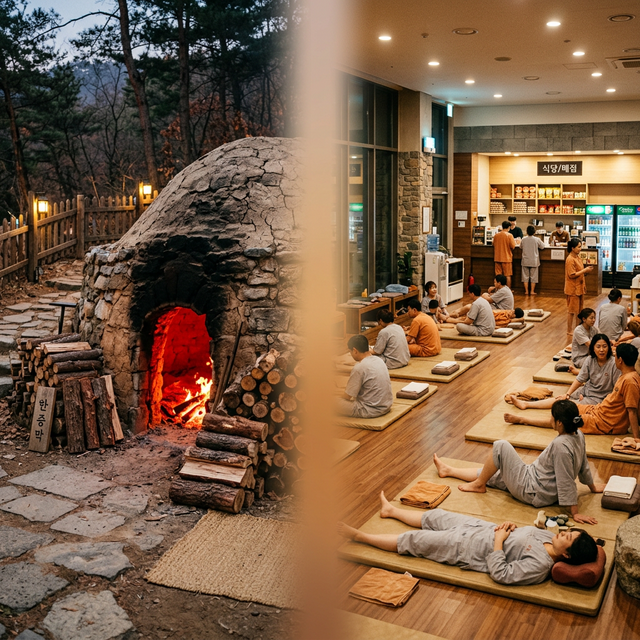
If you're researching Korean wellness, you've likely come across two terms: Jjimjilbang and Hanjeungmak. For many first-time visitors, these are used interchangeably, leading to a bit of confusion when you actually step inside a facility. Are you going to a social hub with a snack bar and a movie room, or are you about to sit inside a 90°C stone dome heated by burning pine wood?
The answer is often "both," but understanding the distinction is key to getting the experience you actually want.
To put it simply: the Jjimjilbang is the entire building or facility, while the Hanjeungmak is a specific, traditional type of sauna found within (or sometimes independently of) that facility.
Let's break down the differences so you know exactly what to expect when you "go to the sauna" in Korea.
A Brief History: From Royal Bathhouse to Social Institution
The Hanjeungmak is not a modern wellness trend. It predates the jjimjilbang by centuries, with documented use tracing back to the Joseon Dynasty (1392–1897). Dome-shaped kilns were built near palaces, monasteries, and rural villages primarily for medicinal purposes — treating skin diseases, rheumatism, arthritis, and facilitating post-childbirth recovery. Traditional Korean medicine (한의학, hanyak) viewed intense, sustained heat as a tool for purging toxins, improving circulation, and restoring balance to the body's energy systems.
The method was remarkably specific. Pine or oak wood was burned inside the stone dome for two to three full days. The fire was then extinguished and the embers cleared. People entered the residual heat chamber — typically ranging from 80°C to 100°C — to sweat in silence. This "fire-then-enter" approach is fundamentally different from both Finnish sauna culture (where the heat source remains active during the session) and modern steam rooms (which use humid heat). In the Hanjeungmak, you are sitting inside a giant pre-heated stone oven. Every surface radiates heat. The experience is unlike anything else.
The Jjimjilbang, as we know it today, is a product of South Korea's 1990s economic boom. As urban density increased and apartment living became the norm, public bathhouses evolved into something far more ambitious: multi-story wellness complexes with hot tubs, cold pools, themed heat rooms, restaurants, PC rooms, and sleeping facilities. They became places where families could spend an entire day or night for a very affordable entry fee (typically 10,000–15,000 KRW, or roughly $7–$11 USD). The Hanjeungmak kiln was folded into these modern complexes as a premium feature, preserving the ancient tradition within a thoroughly contemporary container.
Today, both traditions coexist — sometimes in the same building. Understanding which is which will transform how you experience Korean sauna culture.
1. The Jjimjilbang: A Modern Social Playground
The word Jjimjil means "heating" and Bang means "room." A modern Jjimjilbang is a massive wellness complex designed for social interaction and long-term stays (often 24 hours).
- The Vibe: It's like a community center. You'll see families eating, friends watching TV, and travelers taking naps.
- The Heat: Jjimjilbang rooms are usually heated to comfortable temperatures between 40°C and 60°C. They use materials like salt blocks, jade, or charcoal to provide gentle, therapeutic warmth.
- The Amenities: Most include restaurants, PC rooms (internet cafes), fitness centers, and even napping capsules.
- Best For: First-timers, social groups, and travelers looking for an affordable place to sleep.
A Typical Jjimjilbang Session: Floor by Floor
One of the most disorienting things about your first jjimjilbang visit is not knowing what to do or where to go. Most large facilities are multi-story buildings with distinct zones, each serving a different purpose. Here is what to expect as you move through the space:
Ground Floor / Reception: You pay the entry fee and receive a locker key, a pair of numbered shorts and a t-shirt (the jjimjilbang uniform), and a small towel. You change into the uniform in the locker room. Everything — your shoes, your clothes, your bag — goes into the locker. You are now ready.
Gendered Floors (The Bathhouse / 탕 Area): Before you ever set foot on the co-ed jjimjilbang floor, most Koreans begin here. This section is strictly gender-separated and fully nude. It contains the hot soaking tubs (온탕), the scalding hot tubs (열탕), the cold plunge pools (냉탕), individual shower stations, and the famous body scrub tables (때 밀기). You clean your body thoroughly here — shower first, always — before soaking in the tubs. This is the ritual cleansing that prepares you for everything that follows. Plan to spend at least 30–45 minutes here.
Co-Ed Jjimjilbang Floor (The Heat Room Floor): This is the famous floor you've seen in K-dramas. Everyone is wearing matching shorts and t-shirts. The floor is heated underfloor (온돌 style). The main communal area has mats and pillows scattered across the warm floor — people are sleeping, watching the wall-mounted TVs, eating, and chatting. Leading off the main hall are the themed heat rooms: the 황토방 (hwangto room, loess clay, ~50°C), the 소금방 (salt room, ~45°C), the 얼음방 (ice room, a cold room for recovery between heat sessions), the charcoal room, the jade room, and — if you're lucky — the Bulgama kiln itself.
Upper Floors (If Applicable): Premium jjimjilbangs add outdoor rooftop pools, a proper restaurant (not just vending machines), a nail salon, a gym, a PC room, and private sleeping cabins. Facilities like Aquafield in Hanam or Dragon Hill Spa in Seoul are essentially full-day resorts.
The key insight: a jjimjilbang visit is not a 45-minute errand. It is a structured ritual with a natural rhythm. Block out at least three to four hours, and you will leave feeling like a different person.
2. The Hanjeungmak: The Original "Fire Kiln"
The Hanjeungmak is a traditional Korean kiln sauna with roots dating back to the 15th-century Joseon Dynasty. Historically, these were used for medicinal purposes to treat joint pain and skin ailments.
- The Vibe: Intensely focused on health and detox. The atmosphere is quiet, heavy with the scent of pine wood, and physically demanding.
- The Heat: This is not for the faint of heart. Hanjeungmaks are dome-shaped stone kilns that reach temperatures between 80°C and 100°C (176°F - 212°F). The heat is dry and penetrating.
- The Ritual: Because the floor is so hot, you usually enter wrapped in a thick burlap sack or carrying a heavy mat to sit on.
- Best For: Serious wellness seekers, those with chronic muscle pain, and anyone looking for a "hardcore" traditional experience.
The Science of the Kiln Heat
The Hanjeungmak is not simply "a very hot sauna." The physics of how it heats your body are genuinely different from other heat therapies, and understanding this helps explain why devotees swear by it.
In a Finnish sauna, the heat source (the kiuas, or stone stove) remains active while you are inside. Hot air rises and surrounds you through convection. The heat reaches your body primarily through the air. In the Hanjeungmak, the fire has been extinguished before you enter. What remains is radiant heat — the stone dome walls emit infrared-like thermal radiation in all directions simultaneously. Your body absorbs heat not just from the air, but from the walls, ceiling, and floor around you. It is more enveloping, more penetrating, and in some ways more efficient at raising your core body temperature quickly.
The humidity inside a Hanjeungmak is very low, which makes the extreme temperature more tolerable than you might expect. (A 90°C Finnish sauna with added steam would be nearly unbearable. A 90°C dry kiln is survivable for short bursts.) However, that low humidity also means you are dehydrating faster than you realize. Sweat evaporates almost instantly. You may not feel as wet as you would in a steam room, but your body is losing fluids rapidly.
Traditional Korean medicine attributes a range of benefits to the Hanjeungmak: improved blood circulation, deep muscle relaxation, detoxification through intense perspiration, skin purification, and even improved respiratory function from the residual pine resin in the air. Scientific evidence for specific detoxification claims is limited, but the cardiovascular and muscle-relaxation benefits of intense, sustained heat are well-documented in sports medicine research.
Types of Hanjeungmak and Heat Room Materials
Not every "kiln-style" room is identical. The material of the walls and floor significantly affects both the heat quality and the health claims associated with each room type:
-
Bulgama (불가마 - True Fire Kiln): The authentic dome structure, typically clay, granite, or a combination of stone and earth. This is the real deal — the structure that was heated with wood fire. When you see "Bulgama" on a sign, expect the highest temperatures (85°C–100°C) and the most traditional experience. The scent of charred wood and earth is distinctive.
-
Hwangto Room (황토방 - Loess/Yellow Earth Room): The most common material found in modern jjimjilbangs. Loess is a fine, yellowish-brown clay soil found across Korea. It is heated electrically in modern rooms but believed to emit far-infrared radiation that penetrates deeper into muscle tissue than surface-level heat. Temperature is typically 45°C–60°C. This is the approachable gateway into Korean heat therapy.
-
Jade Room (옥방): Premium rooms lined with nephrite jade. Jade has a high thermal mass — it retains and releases heat slowly and evenly. Believed in Korean traditional wellness to promote energy balance and skin health. Temperatures are moderate (40°C–55°C), making this a comfortable option for longer stays.
-
Salt Room (소금방): Walls covered in Himalayan pink salt or Korean sea salt crystals. Salt is hygroscopic — it draws moisture from the air. The resulting environment is very dry and believed to benefit respiratory conditions and skin health. Popular with people who have eczema, psoriasis, or sinus issues. Temperature ranges from 40°C–50°C.
-
Charcoal Room (숯방): Lined with activated charcoal blocks. Charcoal is believed to absorb and neutralize odors and potentially harmful air particles. The heat has a soft, diffuse quality. Temperature is typically 45°C–55°C.
3. Side-by-Side Comparison
| Feature | Jjimjilbang (Modern Room) | Hanjeungmak (Traditional Kiln) |
|---|---|---|
| Temperature | 40°C - 60°C (Warm) | 80°C - 100°C (Scorching) |
| Heat Source | Electric or hot water pipes | Burning Pine Wood |
| Material | Salt, Jade, Charcoal, Clay | Stone, Earth, or Clay Dome |
| Primary Goal | Relaxation and Socializing | Deep Detox and Pain Relief |
| Vibe | Casual and Loud | Calm and Focused |
The Bathhouse Ritual: The Gender-Segregated Bath Area (탕)
Many first-time visitors focus entirely on the heat rooms and completely overlook the bathhouse floor — but this is where seasoned regulars spend a significant portion of their time, and for good reason.
The 탕 (tang) area is gender-separated, fully nude, and strictly about physical cleansing and thermal cycling. No swimwear is permitted. No exceptions. You shower thoroughly before entering any pool — this is non-negotiable etiquette, and other bathers will notice if you skip it.
A standard bathhouse area includes several pools at different temperatures. The hot tub (온탕) is typically around 40°C–42°C. The scorching hot tub (열탕) pushes to 44°C–46°C. The cold plunge pool (냉탕) sits at a bracing 15°C–18°C. Experienced Korean bathers cycle between these pools in a rhythm: hot tub for five to ten minutes, cold plunge for one to two minutes, rest on the edge of the pool, repeat. Three cycles is considered the standard. This alternating vasoconstriction and vasodilation — the blood vessels expanding in heat and contracting in cold — is intensely invigorating and is one of the most underrated parts of the entire jjimjilbang experience.
The other feature unique to Korean bathhouse culture is the 때 밀기 — the Italy Towel scrub. The "Italy Towel" (이태리 타올) is a scratchy, abrasive mitt (despite the name, it is made in Korea and has nothing to do with Italy) used to exfoliate dead skin cells from the body. After soaking in the hot tub for a sufficient time, your skin softens and the outer layer of dead cells begins to separate. At this point, the Italy Towel scrub becomes extraordinarily effective — grey rolls of dead skin peel away as you or a professional scrubber works across your body.
You can do this yourself, but many visitors opt to hire a 때밀이 (ddaemili) — a professional body scrubber. These skilled workers operate from specific tables in the bathhouse area and provide a full-body scrub service that typically costs 15,000–30,000 KRW ($11–$22 USD). If you have never had a professional body scrub, it is a genuinely transformative experience. Your skin will feel like it belongs to a different person when they are done.
Etiquette summary for the 탕 area: shower before entering any pool, no swimwear, keep noise to a minimum, and do not bring your phone onto the bathhouse floor.
4. How to Survive the Hanjeungmak (Kiln)
If you decide to brave the traditional kiln, follow these survival tips:
- The Burlap Sack is Your Friend: Many traditional kilns provide heavy fiber sacks at the entrance. Use them to cover your head and body. The air inside can literally sting your skin if you're not protected.
- Short Bursts: Don't stay in for more than 5 to 10 minutes at a time. The goal is to break a deep sweat, not to faint.
- Cool Down Slowly: After exiting the kiln, don't immediately jump into an ice pool. Let your body temperature normalize in the hall first.
- Hydrate with Sikhye: The high sweat rate of the Hanjeungmak means you need to replace fluids immediately.
The Optimal Sequence for Maximum Benefit
If you want to approach a jjimjilbang visit the way Koreans do — extracting maximum physical benefit in a structured, sustainable way — follow this protocol. It has been refined by generations of regulars and represents the most effective use of the facilities available to you.
- Shower and enter the hot tub (5–10 min): Start by warming your body gradually in the 온탕. This prepares your muscles and opens your pores.
- Cold plunge (1–2 min): Step into the 냉탕. If this is your first time, even thirty seconds counts. The cold shock activates your nervous system and sets the stage for deeper heat penetration in subsequent rounds.
- Dry off and move to the jjimjilbang floor: Change into your uniform and head to the co-ed floor.
- Start with a moderate room (50°C loess / hwangto room) for 10–15 min: Do not start with the Bulgama kiln. Let your body acclimate to elevated heat first. The hwangto room is the ideal entry point.
- Rest in the common area (hydrate with sikhye): Exit the room, find a mat on the warm floor, and rest. Drink sikhye or water. Give your body 10–15 minutes to recover.
- Step up to the Hanjeungmak / Bulgama (5–8 min): Now you are ready for the kiln. Enter slowly. Breathe through your nose. Wrap yourself in the burlap sack provided. Keep sessions to five to eight minutes maximum. When you feel lightheaded, leave — not in thirty more seconds, immediately.
- Return to the common area and eat smoked eggs: This is not a joke. The sauna eggs (맥반석계란) available at the snack bar are the ideal recovery food. The protein and sodium help replenish what you have sweated out.
- Repeat 2–3 cycles over 3–4 hours: The real benefit of the jjimjilbang is cumulative. One cycle is pleasant. Three cycles over four hours is genuinely restorative.
- Final cold shower / cold plunge before leaving: Close out your session with cold water. This seals the pores, brings your body temperature back to baseline, and leaves you feeling alert and clean.
The single most important piece of advice for any jjimjilbang first-timer: patience. A good session lasts three to four hours minimum. Visitors who spend 45 minutes and leave are getting perhaps 20% of the experience. The Korean approach to wellness at the jjimjilbang is not a quick errand — it is a slow, deliberate ritual.
Foods You Must Try
The snack bar is not an afterthought. It is an essential part of the experience. These are the non-negotiable items to try during your session:
- Sikhye (식혜): A traditional sweet rice punch served cold, with floating grains of rice at the bottom. Mildly sweet, refreshing, and genuinely effective at replacing carbohydrates and fluids lost through sweating. The standard jjimjilbang drink.
- Sauna Eggs (맥반석계란): Hard-boiled eggs cooked slowly inside the kiln heat over many hours. The shells turn yellow-brown. The protein inside takes on a slightly more savory, almost nutty flavor compared to a standard boiled egg. These are a jjimjilbang icon. Eat at least two.
- Ice Cream Bar: This is perhaps the most counterintuitive jjimjilbang tradition, but it is deeply ingrained. Eating an ice cream bar while sitting in a 90°C heat room is a beloved ritual. The temperature contrast is surreal and wonderful. Look for the vendor cart on the heat room floor.
- Banana Milk (바나나우유): Korea's famous bottled banana milk in the distinctive rounded bottle. Cold, slightly sweet, and deeply nostalgic for Koreans. Available at the convenience counter.
- Ramen: Most jjimjilbangs operate a small kitchen. A bowl of simple ramen — salty, hot, deeply satisfying — eaten on a mat on the warm floor is one of the simple pleasures of Korean wellness culture.
5. Which One Should You Choose?
- Choose a Jjimjilbang room if... you want to hang out with friends, eat some smoked eggs, and feel a gentle, pleasant warmth while you scroll through your phone.
- Choose a Hanjeungmak if... you are feeling physically exhausted, have lower back pain, or want to experience the "authentic" ancient method of Korean healing.
By Health Condition
Korean wellness culture has always been practical about matching the right heat to the right body. Here is a straightforward guide based on common health considerations:
-
High blood pressure or heart conditions: Avoid the Hanjeungmak entirely. Extreme heat causes a rapid increase in heart rate and can spike blood pressure dangerously. Stick to the moderate-temperature jjimjilbang rooms (40°C–50°C) and skip the cold plunge if your doctor has advised against thermal shock. The salt room or jade room at 45°C is an excellent option.
-
Chronic back pain or joint pain: The Hanjeungmak's deep radiant heat is your best friend. The penetrating warmth loosens muscle fascia and temporarily reduces inflammation around joints more effectively than surface-level heat. Keep individual sessions to five to eight minutes, repeat two to three times, and apply gentle stretching in the common area between sessions. You may feel dramatically better within a single visit.
-
Skin conditions (eczema, psoriasis): The salt room is widely recommended by both traditional Korean wellness practitioners and some dermatologists. The hygroscopic salt environment can reduce skin inflammation and bacterial load. Avoid any rooms with added chemical scents or aromatherapy additives, as these can be irritating. The intense scrubbing of the Italy Towel may be too abrasive for active eczema flares — use your judgment.
-
Pregnancy: Avoid all high-heat rooms. Elevated core body temperature in the first trimester in particular is associated with developmental risks. The cool pools and moderate lounge areas are generally considered safe, but consult your doctor before any visit during pregnancy. This is not a situation to improvise.
-
Jet lag recovery: This is an underrated use of the jjimjilbang that frequent Seoul visitors swear by. The alternating cold-plunge and moderate-heat cycle is profoundly effective at resetting the body's circadian rhythms. The cold exposure triggers a cortisol response (alertness), while the heat promotes melatonin production (sleepiness) in the subsequent recovery phase. A 3–4 hour evening jjimjilbang session after an international flight — followed by sleep in the facility's sleeping area — often corrects jet lag faster than any supplement or sleep schedule adjustment.
Where to Find Them in Seoul
If you want the best of both worlds, head to Aquafield (Goyang or Hanam) for the most luxurious modern rooms, or Myeongdong Traditional Scocobulhanjeungmak for an authentic, kiln-focused experience in the heart of the city.
Conclusion
Whether you prefer the high-tech luxury of a modern spa or the rustic intensity of a centuries-old fire kiln, Korea's sauna culture has something for everyone. Start with a 50°C salt room in a Jjimjilbang, and when you're feeling brave, step into the "Bulgama" kiln for a truly transformative sweat.
Ready for the full experience? Read the Ultimate Guide to Jjimjilbang: How to Use a Korean Sauna Like a Local to walk in with confidence. Make sure you don't commit any cultural faux pas by studying our Korean Spa Etiquette: Do's and Don'ts for International Visitors. If you're looking for recommendations on where to start sweating, browse our list of the Best Jjimjilbangs in Seoul: Honest Reviews for Travelers.