Capsule Hotels in Korea: A Compact and Affordable Sleep Experience

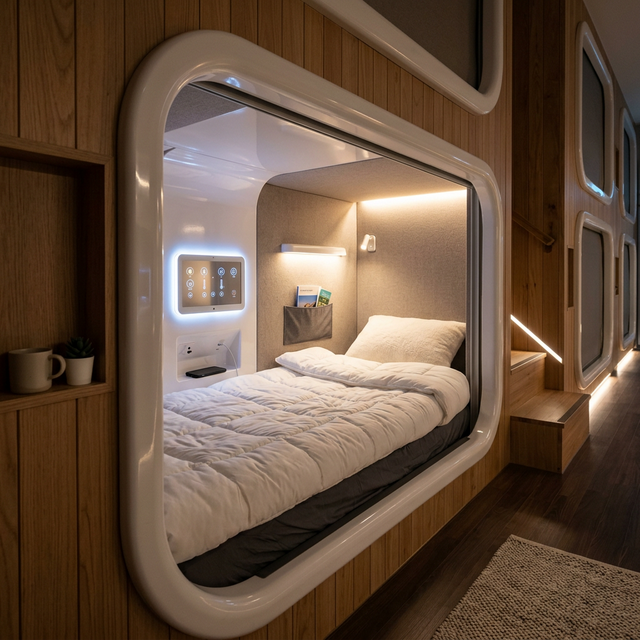
Ever wondered what it's like to sleep in a high-tech pod that feels like it stepped straight out of a Sci-Fi movie? Capsule hotels in South Korea are transforming the way budget travelers experience the peninsula, offering a perfect blend of "Cyberpunk" aesthetics and practical efficiency.
Introduction: The Rise of Capsule Hotels in South Korea
South Korea is world-renowned for its rapid technological advancement and its ability to turn everyday experiences into something "Instagrammable." The accommodation sector is no exception. While Japan may have pioneered the capsule hotel concept in the 1970s, South Korea has taken that foundation and infused it with modern Korean hospitality, 5G connectivity, and a commitment to cleanliness that is hard to match.
For the modern traveler, choosing a capsule hotel isn't just about saving money—though that is a significant perk. It's about maximizing privacy in a shared environment. Unlike traditional hostels where you might share a room with 11 other people on creaky bunk beds, a capsule gives you a solid wall, a lockable (or at least lock-guarded) door, and your own regulated air space. In a city like Seoul, where space is at a premium but excellence is expected, these "micro-hotels" are the ultimate solution for solo travelers, digital nomads, and transit passengers.
In this guide, we’ll explore the best capsule hotels in Korea, what you can expect inside those sleek pods, and how to navigate the communal lifestyle without sacrificing comfort. We will look at why these unique spaces are becoming the preferred choice for a new generation of travelers who value experiences over square footage.
Darakhyu: The Ultimate Incheon Airport Transit Experience
If you are flying into Incheon International Airport (ICN) and have a long layover or an early morning flight, you have likely seen the glowing, minimalist signs for Darakhyu. Operated by the prestigious Walkerhill Hotel Group, Darakhyu is the gold standard for airport capsule hotels globally.
Terminal 1 and Terminal 2 Locations
Darakhyu has branches in both major terminals. Unlike traditional "transit hotels" that are located airside (after security), Darakhyu is located landside. This means you must clear immigration to access it. This makes it perfect for those arriving late at night when the KTX or Airport Express (AREX) has stopped running, or for locals living far from Incheon who want to be at the gate refreshed at 6:00 AM.
The Terminal 1 location is situated near the Transportation Center (1F), while the Terminal 2 location is on the 2nd floor of the transportation center as well. Both are just a short 5-10 minute walk from the AREX gates.
High-Tech Features and Comfort
Walking into Darakhyu feels like entering a futuristic library. The noise level is strictly monitored to remain around 40db (library level), ensuring that even though you are in a bustling airport, your sleep is undisturbed.
- Simmons Mattresses: Despite the compact size, they don't skimp on sleep quality. The beds feature premium Simmons mattresses usually found in 5-star hotels. This is a critical point; many budget stays use thin foam, but Darakhyu understands that a transit traveler needs deep, orthopedic support.
- IoT Control System: Everything from the lighting to the temperature is controlled via an individual console or your smartphone. You can even check the humidity levels within your pod and adjust it to ensure the dry airport air doesn't affect your breathing.
- Soundproofing: The walls are designed with high-performance sound-blocking materials, a crucial feature when you are sleeping just meters away from a thousand travelers.
Deep Dive: Logistics of an Airport Stay
When staying at Darakhyu, you should be aware of the "Day Use" vs "Overnight" distinction. Day use is capped at 3-hour increments between 8:00 AM and 8:00 PM. If you are a business traveler needing a place to shower and take a 90-minute nap before a meeting in Seoul, this is the most cost-effective way to do it. The showers are equipped with high-end Korean beauty products, ensuring you leave the airport looking like you didn't just spend 12 hours in economy class.
Top Capsule Hotels in Seoul: Where to Stay
While Incheon handles the transit crowd, Seoul is where the variety really starts to shine. From the shopping mecca of Myeongdong to the youth-centric vibes of Hongdae, here are the top picks for your stay in the capital.
1. The Capsule Myeongdong: The Gold Standard
Located right in the heart of Seoul’s most famous shopping district, The Capsule Myeongdong is consistently ranked as the #1 budget stay in the city.
- The Vibe: Minimalist, white-box aesthetic. It’s incredibly clean—so clean that they have a strict "no shoes" policy throughout the entire building.
- Female Solo Traveler Friendly: They offer dedicated female-only floors with their own keycard access, making it one of the safest options for women traveling alone in Korea.
- Interior Layout: Each capsule is stacked two-high. Unlike cheaper hostels, the frames are made of heavy-duty reinforced plastic and metal, meaning if your "upstairs neighbor" moves, your capsule won't shake.
- Pricing: You can often find beds here for as low as 28,000 KRW ($21 USD) per night, which is unheard of for such a central location near Myeongdong Cathedral and the night market.
2. Seoul Cube (Jongro & Myeongdong)
Seoul Cube bridges the gap between a hostel and a capsule hotel. While the beds are capsules (built-in wooden pods with thick curtains), the common areas encourage a bit more social interaction.
- Interior Design: Heavy on wood and industrial accents, giving it a "Nordic-meets-Korean" feel. The atmosphere is warm and inviting, less "clinical" than some other capsule brands.
- Free Breakfast: Unlike many ultra-budget stays, Seoul Cube often includes a basic breakfast (toast, cereal, coffee), which helps you save even more on your daily food budget. The kitchen area is also a great place to meet fellow travelers and exchange tips on the best gimbap spots in Jongro.
3. GOYOO INN & Cabins: For the Digital Nomad
If you find traditional capsules a bit too tight, GOYOO INN offers "Cabins." These are slightly larger than a standard pod, allowing you enough room to sit up fully and perhaps even have a small fold-down desk for your laptop.
- Location: Situated near the Sinchon/Hongdae area, it is perfectly placed for those who want to experience Seoul’s nightlife but want a quiet sanctuary to crawl back into at 3:00 AM.
- Workspace Integration: They have dedicated silent zones with high-speed Wi-Fi, making it a favorite for remote workers who don't want to pay for a full hotel suite but need a professional environment to take calls or write code.
4. Sleep Box: The High-Tech Choice
Located near the trendy areas of Gangnam, Sleep Box caters to a younger, tech-savvy crowd. The capsules here look like they were designed by a Silicon Valley startup. They feature wider entry points and better internal storage for tech gadgets, including built-in tablet stands.
Regional Gems: Capsule Stays Outside Seoul
While Seoul is the hub, other cities are catching on. If you are heading south to Daegu or Busan, you can still find excellent capsule-style accommodations.
Daegu: DG HOUSE and The Style
Daegu is known as the "hottest" city in Korea (literally, during summer), and having a climate-controlled pod is a godsend.
- DG HOUSE: Offers a very high-end capsule experience for around $40. It’s located near the main rail station, making it perfect for those on a KTX tour of the country.
- The Style Capsule Guesthouse: This is the ultra-budget option. For as low as $12-$15, you get a clean pod in a very social environment. It’s a great way to save money if you plan on spending most of your time at the Seomun Market or exploring Daegu’s famous cafe alleys.
Busan: The Beachfront Pods
Imagine waking up in a capsule, pulling back your blind, and seeing the East Sea. Some hostels near Haeundae Beach have adopted the capsule model but with large "porthole" windows that face the ocean. While slightly more expensive than a land-locked pod, the view is worth every extra won.
What to Expect Inside a Korean Capsule: A Detailed Look
For first-timers, the idea of sleeping in a "box" can be intimidating. Let’s break down the physical reality of the capsule experience so you can walk in like a pro.
Dimensions and Mental Prep
A standard capsule is typically about 2 meters long, 1 meter wide, and 1 meter high. While this sounds small, most people find it surprisingly roomy once they are inside. The key is in the design—the white walls and bright LED lighting prevent it from feeling like a dark coffin.
- Claustrophobia Check: If you are extremely claustrophobic, look for "L-type" capsules (where you enter from the side) rather than "Front-entry" types. The side entry feels much more open.
- Vertical Space: Most pods allow a person of average height (175cm) to sit up completely without hitting their head on the ceiling. This is where you’ll do your reading, journaling, or phone browsing before bed.
In-Capsule Amenities: Your Private Dashboard
Think of your capsule as a high-tech cockpit. Most will include:
- Dimmable LED Lighting: Multiple settings for reading, "chill" mood lighting, and total darkness.
- Power Hubs: In Korea, you’ll find a mix of USB-A ports and standard 220V outlets. Always carry a universal adapter just in case.
- Integrated Clock and Alarm: Many pods have a built-in alarm that vibrates the bed or uses light to wake you up gently, so you don't wake up the entire room with your phone’s "Radar" tone.
- Ventilation: This is arguably the most important feature. A quiet, high-efficiency fan constantly pulls fresh, filtered air into the pod. You can usually adjust the fan speed yourself.
Communal Facilities: Mastering the Shared Life
Because your "room" is just for sleeping, everything else is shared. This requires a bit of an adjustment if you are used to large hotel suites.
- The Locker System: You won't bring your suitcase into the sleeping area. Upon arrival, you’ll be given a locker for your carry-on and personal items. Your larger suitcase will usually be stored in a "Luggage Zone" locked with a chain or monitored by CCTV.
- Showers and Toilets: Korean standards for public hygiene are among the highest in the world. You should expect heated bidet toilets (like TOTO or Novita) and showers stocked with shampoo, conditioner, and body wash.
- Shared Stalls: Most showers are individual stalls with a small changing area inside the stall, ensuring you don't have to be naked in front of others.
Cultural Context: Why Capsules Work in Korea
To truly appreciate the capsule hotel, you have to understand the "Ppalli-ppalli" (Hurry-hurry) culture and the "Solo" (Hon-bap/Hon-sul) trend in Korea.
- Hurry-Hurry Culture: Koreans value efficiency. A capsule hotel is the ultimate "efficient" stay. You check in, sleep in a high-quality bed, and check out with zero friction.
- The Hon-족 (Hon-jok) Trend: More and more Koreans are embracing solo activities. Solo dining (Hon-bap) and solo traveling are no longer seen as lonely; they are seen as a form of self-care and independence. Capsule hotels fit this cultural shift perfectly, providing a dignified, clean, and modern space for the solo adventurer.
Safety and Privacy: A Guide for Female Solo Travelers
South Korea is already one of the safest countries in the world for travelers, but capsule hotels go the extra mile. Many establishments have implemented systems specifically for female travelers to provide absolute peace of mind.
Secure Entry Systems and Floor Splits
Expect a multi-layered security approach that is often more secure than a standard 3-star hotel:
- Building Entry: Keycard required after 10:00 PM to even enter the lobby.
- Floor Entry: Even if you have a building card, the elevator will only go to your designated gender floor based on your card's programming.
- Internal CCTV: All common areas and locker zones are under 24/7 surveillance.
The Sense of Community
There is an unspoken bond between solo female travelers in these spaces. While it is a quiet environment, the shared lounge areas often become a safe space to ask other women for recommendations on the best local restaurants or safe walking routes at night.
Pros and Cons of Staying in a Capsule
To decide if this is right for you, let’s look at the trade-offs in detail.
The Pros
- Extreme Cost Efficiency: You get a central location for 1/4 the price of a standard hotel. This allows you to spend your money on things that matter—like Korean BBQ and skincare hauls.
- Superior Privacy: Compared to a hostel bunk bed, a capsule is a private fortress. You can change your clothes, snore, or read without people looking at you.
- Novelty Factor: It’s a quintessentially modern East Asian experience that makes for great travel stories.
- Convenience: Perfect for solo travelers who don't need a large room and want to spend their time exploring the city instead.
The Cons
- Noise: No matter how good the soundproofing is, you might hear a neighbor snoring or someone who didn't set their alarm to "vibrate." Always bring high-quality earplugs (or ask the front desk; they usually give them for free).
- Limited Space for Groups: If you are traveling as a family or a couple who wants to be together, a capsule hotel can feel isolating. Some hotels offer "Double Capsules," but they are rare.
- Shared Bathrooms: If you aren't comfortable walking down a hallway in your pajamas to brush your teeth, this might not be your speed.
How to Book and Practical Tips for Success
Timing Your Booking
Capsule hotels at Incheon Airport (Darakhyu) book up weeks in advance. If you want a weekend transit stay, do not wait until you land. For Seoul city center stays, you can usually find a spot 2-3 days before, but the best "top-bunk" or "female-only" pods go fast.
Checklist: What to Pack for your Capsule Stay
- Compact Hanging Toiletry Bag: Since counter space in communal bathrooms is limited, a bag you can hang on a hook is a life-saver.
- Flip-Flops: While most hotels provide slippers, some travelers prefer their own waterproof flip-flops for the shower area.
- Lightweight Pajamas: Capsules can get warm due to body heat, so choose breathable fabrics like linen or thin cotton.
- Portable Battery: Although pods have outlets, having a small battery pack means you can charge your devices in your locker while you are out exploring.
Etiquette 101: The Silent Code
- No Phone Calls: Never take a call in the capsule area. Go to the lounge or the hallway.
- Brightness Control: When coming in late at night, dim your phone screen and use a small book light rather than the main pod light to avoid light leaking into your neighbor's space.
- Luggage Prep: Pack your "night kit" (pajamas, toothbrush) at the top of your bag so you don't have to rummage through a noisy suitcase in the middle of the night.
Best Platforms for Booking
While global sites like Expedia and Booking.com are reliable, you often find the most detailed reviews (and sometimes better prices) on Agoda, which has a massive footprint in South Korea. Look for the "Agoda Homes" or "Capsule" filters.
Check-in Etiquette: The Shoe Rule
In Korea, the transition from the "outside" world to the "inside" space is marked by your shoes. You will likely be asked to leave your shoes in a locker at the entrance and switch to provided slippers. Never wear your outside shoes into the sleeping hall.
What to Pack for your Capsule Stay
- Earplugs and Eye Mask: Essential for a 10/10 sleep.
- Lightweight Pajamas: Capsules can get warm due to body heat, so choose breathable fabrics.
- Travel Adapter: Korea uses Type C and F (two round pins).
- Snooze-Friendly Tech: Noise-canceling headphones are a lifesaver in the lounge areas.
Conclusion: Is a Capsule Hotel Right for Your Korea Trip?
If you are a solo traveler on a budget, a tech enthusiast, or a minimalist adventurer, staying in a capsule hotel in South Korea is a no-brainer. It is more than just a place to sleep; it’s an exercise in efficiency and a window into a culture that values both high-tech innovation and deep personal respect for others.
Even if you usually prefer luxury hotels, I highly recommend booking at least one night in a capsule—perhaps during a transit at Incheon or a quick weekend in Myeongdong. It will challenge your perceptions of space and likely become one of the most memorable parts of your journey through the Land of the Morning Calm.
If the capsule hotel aesthetic appeals to you, you might also appreciate combining high efficiency with historic living by reading up on the Jjimjilbang Stay: Can You Really Sleep at a Korean Sauna?. For more general strategies regarding safety and health in tight quarters during your trip, review our Health and Safety Tips for Travelers Visiting South Korea. Capsule hotels are a fun, unique way to stretch your budget, enabling you to comfortably complete The Ultimate 10-Day South Korea Itinerary for First-Timers without sacrificing access to prime city-center locations.