Eat, Pray, Sleep: A Foodie's Guide to Jeonju Hanok Village

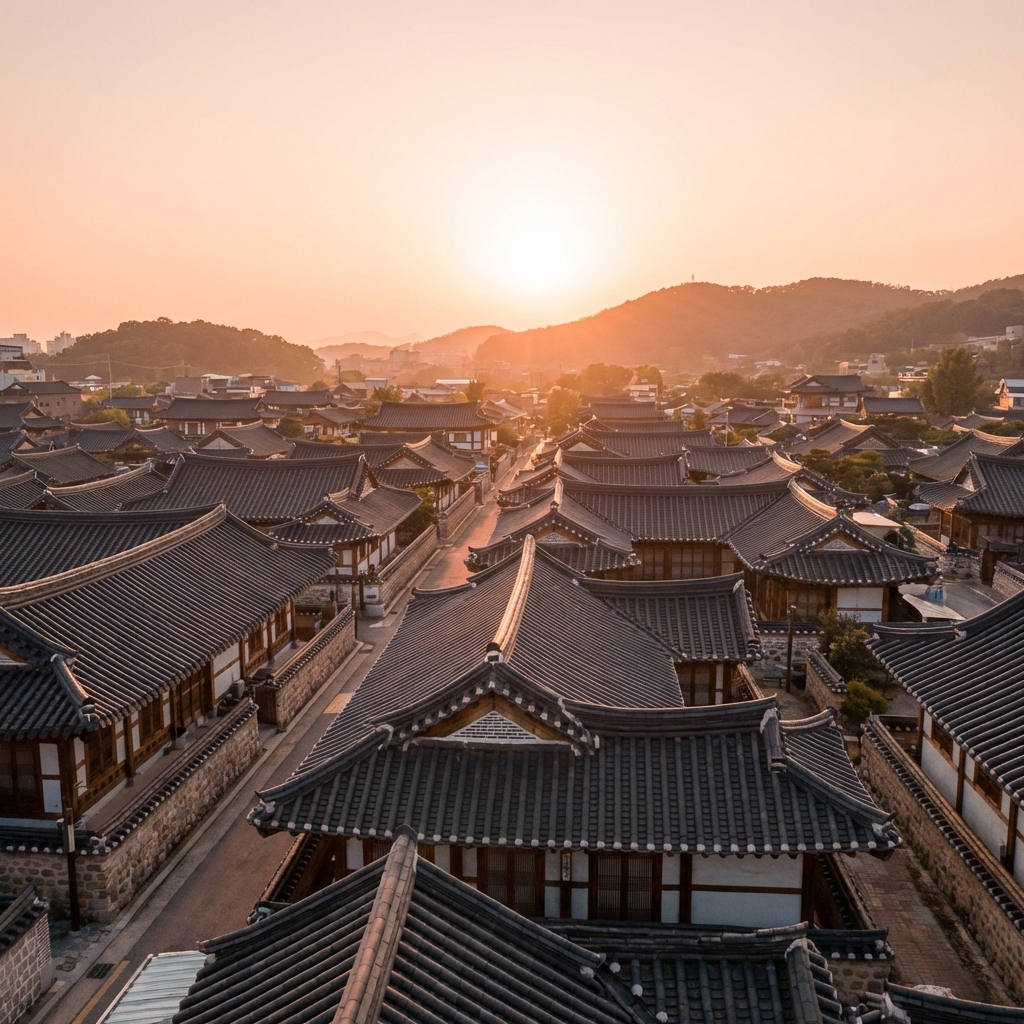
When Koreans argue about food — and they do, passionately — Jeonju always wins. Designated a UNESCO Creative City of Gastronomy, this mid-sized city in Jeollabuk-do province is considered by many Koreans to be the spiritual home of the country's culinary tradition. The bibimbap here is not the same dish you've eaten before. The makgeolli comes with side dishes that keep arriving unbidden. The bean sprout hangover soup has been perfecting its recipe for decades. And all of this is happening inside one of Korea's most beautifully preserved traditional neighborhoods, where over 700 hanok tile-roofed houses line narrow stone alleys that feel permanently suspended somewhere in the late Joseon dynasty.
Why Jeonju Belongs on Every Korea Itinerary
Jeonju Hanok Village (전주 한옥마을) is the largest and most intact traditional Korean village in the country, and unlike many historic sites in Korea that feel like outdoor museums, this one is genuinely alive. People live in the hanok houses. Families run restaurants that have been in the same building for three generations. The street food vendors on Dongmun Street have been selling the same recipes since the 1970s. Visitors walk through wearing colorful rented hanbok alongside locals in modern clothing, and the contrast somehow feels natural rather than jarring.
The village sits within the broader city of Jeonju (population around 650,000), which means it is a real destination rather than a theme park appendage. Beyond the village itself, Jeonju has excellent restaurants, a lively university district, and a surrounding province full of natural beauty — from the jagged granite peaks of Maisan to the dramatic autumn foliage of Naejangsan.
Getting here from Seoul takes roughly two hours by KTX high-speed train from Yongsan or Seoul Station. Trains depart multiple times per hour, and the round-trip journey costs between 40,000 and 70,000 KRW depending on the class and time of day. For a comprehensive guide to booking KTX tickets, see how to book KTX train tickets. From Jeonju Station, the Hanok Village is a 20-minute taxi ride costing approximately 8,000 to 10,000 KRW, or take Bus 79 or 78 from in front of the station.
The Architecture and Atmosphere of the Hanok Village
Curved Roofs and Stone Alleys
The most immediately striking feature of Jeonju Hanok Village is its roofline. Traditional hanok architecture uses curved clay tiles (giwa, 기와) arranged in sweeping lines that lift at the corners — a design developed to allow rainwater to run off efficiently while also, according to traditional Korean aesthetics, reflecting the gentle curves of the surrounding mountains. Walking through the village at dawn, when the stone alleys are quiet and the tile roofs are still dark from morning dew, creates a visual depth that no photograph fully captures.
The village covers roughly 0.4 square kilometers, which is walkable from end to end in under 30 minutes but requires several hours to explore properly. The main alleys are paved with pale flagstone and lined with hanok walls; the side alleys get progressively narrower and quieter the further you walk from the central tourist strip.
Gyeonggijeon Shrine
Gyeonggijeon Shrine (경기전) is the anchor cultural site of the village and the most significant historical building in Jeonju. Built in 1410 during the early Joseon dynasty, the shrine was constructed to house a portrait of Yi Seonggye, the founder of the Joseon dynasty and a native of the Jeonju Yi clan. The shrine is significant because it is one of only a few places where the original royal portrait survived Korea's turbulent 20th century — it was moved to safety multiple times during the Japanese colonial period and the Korean War.
The grounds are beautiful in every season: cherry blossoms in spring, dense green canopy in summer, golden ginkgo trees in autumn, and a clean austere beauty in winter. Entry costs 3,000 KRW (free with hanbok rental). Allow 30 to 45 minutes to walk the grounds, peer into the main hall, and visit the small exhibition gallery that explains the portrait's history.
Jeonju Hyanggyo Confucian School
Set slightly above the main village on the slope toward Omokdae, Jeonju Hyanggyo (전주 향교) is one of Korea's best-preserved Confucian schools. Built during the Goryeo dynasty and rebuilt in the early Joseon period, the complex served as the primary educational institution for the Jeonju region's scholar-official class. The main courtyard, lined with old ginkgo trees, is extraordinarily photogenic in autumn when the leaves turn yellow. Entry is free, and the complex is less crowded than Gyeonggijeon.
Jeondong Cathedral
Standing at the northern entrance of the village, Jeondong Cathedral (전동성당) is a 1914 red-brick Romanesque basilica built by French missionaries on the site where three of Korea's early Catholic martyrs were executed in 1791. The contrast of the European-style cathedral against the surrounding hanok rooftops is one of Jeonju's most iconic visual juxtapositions. The cathedral is still an active parish church; visitors are welcome outside of service times.
Omokdae Pavilion and the Village View
The hilltop above the village holds Omokdae (오목대), a small pavilion platform where Yi Seonggye is said to have celebrated a military victory in 1380. The historical significance is secondary to the view: from the wooden pavilion platform, the entire hanok village spreads below, a sea of curved grey tile punctuated by the red-brick cathedral, the white walls of Gyeonggijeon, and the green hills of the surrounding landscape. The best times to visit are early morning (before crowds arrive) and the hour before sunset, when the angled light turns the tile roofs golden.
Jaman Mural Village
A five-minute walk uphill from the main hanok district brings you to Jaman Mural Village (자만 벽화마을), a hillside residential neighborhood that has become famous for the colorful murals painted on its alley walls and stairways. The murals were created by local artists as part of an urban regeneration project and range from simple geometric patterns to elaborate scenes of village life. The neighborhood sits at the top of the slope, offering some of the best elevated views of the hanok rooftops below.
The Jeonju Food Experience
Jeonju Bibimbap: The Real Thing
Jeonju bibimbap (전주비빔밥) is not the convenient rice-and-vegetable dish you may have encountered elsewhere. It is a specific, ritualized preparation that reflects the Jeolla province's tradition of abundant, labor-intensive cooking, and eating it at a proper Jeonju restaurant is a genuinely different experience from bibimbap anywhere else.
The Jeonju version is distinguished by several specific elements: the rice is cooked in seonji (ox blood) broth for depth; the yukhoe component is raw seasoned beef, not cooked; the namul (vegetable side preparations) typically number 15 to 30 individual preparations, each cooked and seasoned separately; and the dish is served in a stone dolsot bowl so hot that the rice continues cooking and crisping against the bowl bottom as you eat.
The traditional method is to mix everything thoroughly before eating, combining the egg yolk, the gochujang paste, and the sesame oil into the rice and vegetables until uniform. Eating it unmixed is like not mixing the ingredients in a paella — technically possible but missing the point.
Gajok Hoegwan (가족회관) on Geonjirock-gil has been operating since 1952 and is the most historically significant bibimbap restaurant in Jeonju. The main dining room seats over 100 people and fills to capacity at lunch on weekends. The bibimbap here is served with a sprawling accompaniment of side dishes that turns a single bowl into a full table spread. A bibimbap set costs approximately 14,000 KRW.
Gogung (고궁) on Taejo-ro is the other major institution, notable for its banchan variety and its brasher tourist-facing presentation — not a negative in this context, as it means the staff are accustomed to helping confused foreigners with the mixing ceremony and happy to explain the ingredients.
For the most detailed exploration of how regional specialties like Jeonju bibimbap fit into the broader Korean culinary landscape, the regional food specialties guide provides essential context.
Dongmun Street Food Crawl
Dongmun Street (동문거리) and the surrounding alleys in the northern part of the hanok village are the center of Jeonju's street food culture. This is not the Seoul street food experience of individual snacks grabbed on the way somewhere else — in Jeonju, the street food crawl is the attraction, and locals approach it with the same seriousness they bring to restaurant dining.
Gilgeoriya (길거리야) is the signature street food: a baguette-style roll split lengthwise, hollowed slightly, and packed with spiced pork, vegetables, and sauces. The combination of French bread (a legacy of the missionaries who established the Catholic community here in the 19th century) and Korean seasoning is a genuine Jeonju invention and not found in this form elsewhere.
PNB Bakery Choco Pie is perhaps Jeonju's most famous souvenir food item — a thick, palm-sized confection of chocolate cake, strawberry jam, and marshmallow cream, handmade fresh daily at the PNB Bakery (파리바게뜨 아님, 전주 PNB빵집) on Taejo-ro. The original PNB shop has a permanent line of customers, and the product is sold across the village, but the freshest ones come from the source. A box of 10 costs around 15,000 KRW and is the default souvenir gift to bring back to Seoul.
Grapefruit makgeolli served in hollowed citrus halves has become a visual staple of Jeonju street photography — sweet, slightly fizzy, and enormously photogenic against the backdrop of tile rooftops.
Injeolmi tteok (rice cakes dusted in roasted soybean powder) are made fresh by street vendors and eaten immediately while still warm and slightly chewy.
Makgeolli Alley (Samcheon-dong)
A 10-minute taxi ride from the Hanok Village (approximately 6,000 to 8,000 KRW), Samcheon-dong Makgeolli Alley (삼천동 막걸리 골목) operates on a food-delivery model found nowhere else in Korea. You do not order food. You order a kettle of house-brewed makgeolli, unfiltered rice wine that arrives milky-white and slightly fizzy in a traditional clay pot, alongside a small bowl and a ladle. That is it. No menu.
Then the food starts arriving. Alongside your first kettle comes a round of side dishes — kimchi pancake (kimchi jeon), a bowl of seasoned vegetables, perhaps some tofu. When you order a second kettle, another round of side dishes appears, this time more elaborate: a plate of boiled pork belly with sauce, or a steamed egg dish, or house-made kimchi. Each successive kettle brings a more generous accompanying spread. The final rounds at some establishments include small dishes of raw soy-marinated crab (ganjang gejang) or grilled fish.
This system — technically called anju service, but in Jeonju elevated into an art form — means that dinner at a Samcheon-dong makgeolli house costs roughly 10,000 to 18,000 KRW per person for a full, multiple-course meal, with the drinks as the nominal organizing principle. It is one of the great food-and-drink value experiences in Korea.
The alley has approximately 20 to 30 establishments in various states of modernity. The more worn-looking ones with handwritten signs and tables that wobble tend to produce better food than the ones with laminated menus. Most are open from around 5 p.m. until midnight.
For cultural context on Korean drinking traditions, the guide to Korean drinking culture and etiquette explains the social conventions around sharing makgeolli, pouring for others, and the rhythms of a proper Korean drinking dinner.
Kongnamul Gukbap: The Morning After
Jeonju's kongnamul gukbap (콩나물국밥) is the city's most famous breakfast food and one of Korea's most celebrated hangover cures. A clear broth soup made with bean sprouts, rice, dried seaweed, and a poached egg floating on top, it is served at a temperature that borders on scalding, with a side of house-made kimchi and dried seaweed.
The correct technique: transfer the hot bowl contents by ladling the soup over the rice slowly, crack the egg directly into the bowl to finish cooking in the residual heat, and eat immediately. The clean, mineral-forward broth combined with the crunchy-tender bean sprouts and soft rice is one of those preparations that achieves exactly what it promises — a gentle, nourishing reset.
Hyundai Ock (현대옥) is the most famous kongnamul gukbap establishment in Jeonju, operating since 1959, with multiple branches across the city. The original location near Jeonju Station opens at 7 a.m. and fills with businesspeople and tourists before 8 a.m. on weekends. A bowl costs 8,000 to 9,000 KRW.
Wearing Hanbok in the Village
Hanbok rental is one of the most popular activities in Jeonju Hanok Village and, done well, genuinely enhances the experience of walking through the historic streets. Wearing traditional clothing transforms you from an observer of the architecture into something more reciprocal — you become part of the visual texture of the village rather than just photographing it.
Where to Rent and What It Costs
Rental shops line the main entrance alleys of the village. Most offer packages starting at 10,000 KRW for two hours (basic hanbok) up to 25,000 KRW for four hours (premium modern-hanbok or traditional formal dress). Accessories — a traditional gache hairpiece, a small embroidered bag, a decorative fan — add 2,000 to 5,000 KRW per item.
Modern hanbok (현대 한복) — linen and cotton interpretations of traditional silhouettes in pastel and earthy colors — are more comfortable for extended walking and have become the dominant style worn by younger Korean visitors. Traditional formal hanbok with full jeogori jacket and chima skirt is available for more elaborate photo shoots.
Best Photo Spots in Hanbok
The most rewarding hanbok photography spots require some walking to find:
- The main gate of Gyeonggijeon Shrine at opening or closing time, when crowds are minimal
- Omokdae's lower steps with the village rooftops as background
- The alley between Hyanggyo and the village — a long straight stone path lined with traditional walls
- The narrow alleys in the northwest corner of the village, away from the main tourist flow, where the hanok walls are oldest and least restored
- Jaman Mural Village stairs — the murals provide colorful contrast against hanbok colors
Where to Stay: Hanok Guesthouses vs. Modern Hotels
Staying in a Hanok
The signature Jeonju accommodation experience is staying in a hanok guesthouse (hanok minbak, 한옥 민박). Traditional hanok architecture means sleeping on a thick floor mattress (yo, 요) on an ondol heated floor — radiant heat that comes up from below rather than forced air, producing a warmth that is deeply comfortable in cold weather. Rooms typically lack Western beds; the floor is the bed.
Well-regarded hanok guesthouses in the village include Lahan Select Jeonju (a boutique property blending hanok aesthetics with modern amenities) in the premium range, and smaller authentic guesthouses like Jeonju Classic Stay and Hanok Stay 52 for a more traditional experience. Prices range from 80,000 to 200,000 KRW per room per night depending on size, season, and included breakfast.
Staying in a hanok means accepting certain conditions: walls and floors are not soundproofed the way a modern hotel would be, some bathrooms are shared communal facilities, and early morning noise from the streets is noticeable. In exchange, you wake up to the sound of rain on clay tiles and the smell of a traditional Korean breakfast being prepared.
Modern Hotels Near the Village
The Ramada by Wyndham Jeonju and Lotte City Hotel Jeonju offer standard Western-style accommodation a short taxi ride from the village, at 80,000 to 150,000 KRW per night. These make more sense for visitors who want a comfortable base but are not seeking the hanok experience itself.
Two-Day Jeonju Itinerary
Day One: The Village Core
10:30 a.m. — Arrive at Jeonju Station from Seoul by KTX. Take a taxi to the Hanok Village (20 minutes, ~8,000 KRW).
11:00 a.m. — Check into your hanok guesthouse or store luggage. Rent hanbok from a village entrance rental shop.
12:00 p.m. — Lunch at Gajok Hoegwan or Gogung. Order the full bibimbap set and take time to appreciate the banchan spread before mixing.
2:00 p.m. — Visit Gyeonggijeon Shrine. Walk the grounds, enter the portrait hall, and spend time in the bamboo grove behind the main building.
3:30 p.m. — Explore Jaman Mural Village via the stone stairway alleys above the shrine. The elevated views are best in afternoon light.
5:00 p.m. — Walk to Omokdae Pavilion for the sunset view over the rooftops.
6:30 p.m. — Return hanbok to the rental shop.
7:00 p.m. — Taxi to Samcheon-dong Makgeolli Alley for dinner. Budget 2 to 3 hours and multiple kettles.
Day Two: Food and Surroundings
7:30 a.m. — Breakfast at Hyundai Ock for kongnamul gukbap. The morning crowd validates every food reputation this dish has earned.
9:00 a.m. — Visit Jeonju Hyanggyo Confucian School and Jeondong Cathedral before tourist crowds arrive.
10:30 a.m. — Dongmun Street food crawl: Gilgeoriya baguette, PNB Choco Pie, grapefruit makgeolli, tteok.
12:00 p.m. — Browse the craft shops and ceramics studios in the southern part of the village. Jeonju has a strong hanji (traditional paper) craft tradition; several workshops sell handmade paper products.
1:30 p.m. — Buy PNB Choco Pie boxes and any remaining souvenirs before heading to Jeonju Station for the return KTX to Seoul.
Day Trips from Jeonju
Maisan Provincial Park
Approximately 30 kilometers southeast of Jeonju, Maisan (마이산, "Horse Ears Mountain") is a pair of dramatically shaped granite peaks rising from flat farmland in a way that looks entirely improbable. The park is best known for the stone pagodas of Tapsa Temple, built entirely by hand in the late 19th century by a hermit monk who stacked thousands of stones without mortar. The pagodas have stood through Korean winters and earthquakes for over a century. Travel time from Jeonju: 40 minutes by bus, or 20 minutes by taxi (approximately 25,000 KRW one way).
Naejangsan National Park
The most celebrated autumn foliage destination in southwest Korea, Naejangsan (내장산) is about 40 kilometers southwest of Jeonju. Peak foliage typically runs from late October to mid-November. The park's main valley creates a natural tunnel of maple and ginkgo trees that turns the entire gorge orange and crimson. Day trip by bus from Jeonju takes about one hour each way.
Gyeongju
For visitors with flexible itineraries, Jeonju and Gyeongju — Korea's ancient Silla capital — make a natural combination. Gyeongju is approximately 2 hours from Jeonju by KTX (with transfer at Dongdaegu), and the contrast between Joseon-era Jeonju and Silla-era Gyeongju provides a sweeping arc through Korean history. For a complete guide to Gyeongju, see A Journey to Gyeongju: Stepping Into South Korea's Ancient History.
Practical Tips for Jeonju
Best time to visit: Spring (cherry blossoms in the village from late March to early April) and autumn (October to early November) offer the most dramatic settings. Summer is hot and humid but the village remains beautiful; winter is cold but the hanok stays are at their coziest.
Getting around: The Hanok Village itself is compact and walkable. For Samcheon-dong Makgeolli Alley and other outlying destinations, use Kakao T (the Korean taxi app — more reliable than flagging in side streets) or local buses. Download Kakao T before arrival.
Cash: The village has ATMs, but many smaller restaurants and street vendors remain cash-preferred. Bring sufficient Korean won for two days of eating and any hanbok rental.
Crowds: Weekend afternoons in peak seasons (late March, October) see significant tourist density in the main alleys. For a more peaceful experience, arrive on a weekday or stay Sunday to Tuesday when day-trippers from Seoul are absent.
Language: English signage in the village is reasonable, and most restaurant menus have photos. Google Translate's camera mode handles any remaining barriers. Korean food vocabulary is worth learning before arrival; the Korean dining etiquette guide covers useful phrases and mealtime customs.
Jeonju is more than just a destination; it’s a living museum of Korean heritage and a temple to its culinary soul. As you wander through the Hanok Village, remember that every bowl of bibimbap and every glass of makgeolli carries centuries of tradition. To ensure a smooth arrival, check our guide on how to book KTX train tickets, and before you sit down to your first feast, master the local customs with our essential Korean dining etiquette rules. For a wider look at the country's diverse flavors, explore our culinary journey through Korea's regional specialties.