Understanding Korean Sizing: A Guide to Buying Clothes in Korea

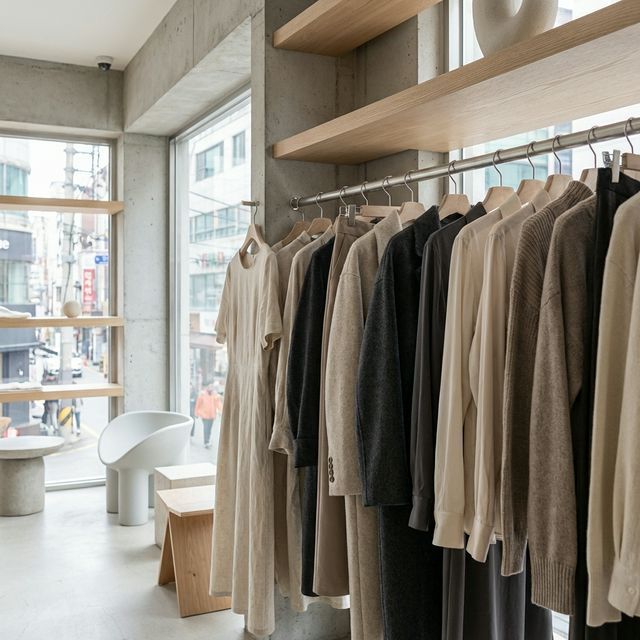
You walk into a trendy boutique in Hongdae, spot the perfect dress, and look for the size tag. It just says "F". Or maybe a number like "55". Welcome to the unique, and often confusing, world of Korean clothing sizes.
For international shoppers, navigating Korean sizing can be a minefield. "Free Size" does not mean "One Size Fits All"—it usually means "One size fits the average Korean woman." But fear not! With this guide and a measuring tape, you can shop with confidence.
The "Free Size" Phenomenon Explained
In Korea, many street shops and smaller boutiques manufacture items in only one size to save on production costs. This is labeled "Free Size" (F).
The Reality Check:
- What it usually fits: US Size 2-6 (UK 6-10).
- Tops: Tend to be loose and boxy (oversized style), so they are more forgiving.
- Bottoms: Skirts and pants often have elastic waists, but the hips are cut narrow.
- The Myth: "It stretches." Even if it's knitwear, "Free Size" shoulders are often quite narrow.
Decoding the Numbers: Size Conversion Charts
When sizes are offered, they follow a unique numbering system derived from traditional measurement units.
Women's Standard Sizes
| Korean Size | Approximate US | Approximate UK/AU | Best For |
|---|---|---|---|
| 44 | XS (0-2) | 4-6 | Petite / Very Slender |
| 55 | S/M (4-6) | 8-10 | The "Standard" Korean fit |
What To Check Before You Pay
Size tags in Korea are only a starting point. The fit usually comes down to cut, fabric, and whether the shop has a return policy.
Fit Questions to Ask Yourself
- Does the shoulder line sit correctly?
- Can you sit down and raise your arms comfortably?
- Does the waistband still feel okay after a meal?
- Will the fabric stretch after washing?
Store Strategy
- Try the same item in two colors if the fabric feels different
- Check the inner lining on dresses and coats
- For online purchases, compare your measurements to the seller's chart, not the generic size label
- If the shop has no fitting room, assume the item runs smaller than expected
Best Rule of Thumb
- Buy fitted items one size safer than you think
- Buy oversized outerwear by style, not by tag
- Treat
free sizeas a design choice, not a universal fit | 66 | M/L (6-8) | 10-12 | Average height/build | | 77 | L/XL (10-12) | 14-16 | Curvy / Taller | | 88+ | XL+ (14+) | 16+ | Plus Size (Specialty shops) |
Note: If you are tall (over 170cm), you may find sleeves and skirt lengths to be short, even if the width fits.
Men's Standard Sizes
Men's sizing is a bit more straightforward, usually based on chest measurement in centimeters.
- 95: Medium (M) - Slim fit.
- 100: Large (L) - The most common stock size.
- 105: X-Large (XL).
- 110: XX-Large (XXL).
Shoe Sizing: The Millimeter System
Forget US 7 or Euro 38. Korea uses millimeters (mm). To find your size, map your US size to these 5mm increments:
- 230mm: US Women's 6
- 235mm: US Women's 6.5
- 240mm: US Women's 7
- 245mm: US Women's 7.5
- 250mm: US Women's 8
- 280mm: US Men's 10
Shopping Tips for Non-Standard Sizes
If you don't fit into the "Free Size" box, you can still shop till you drop. You just need to know where to look.
1. Global Brands & Large Department Stores
Shops like H&M, Zara, and Uniqlo carry their global size ranges. Major Department Stores (Shinsegae, Lotte) carry brands with wider size ranges (e.g., sizes 66, 77, 88).
2. Itaewon: The Foreigner District
Itaewon isn't just for nightlife. It has a long history of tailoring for US military and expats. You will find shops specifically advertising "Big Size" or "King Size" for both men and women.
3. Online Shopping with "ZigZag"
The popular shopping app ZigZag allows you to filter by specific measurements.
- Pro Tip: Measure your favorite t-shirt at home in centimeters (Chest width, Length). Compare these numbers to the detailed flat-lay measurements provided on every Korean shopping site. This is foolproof.
4. Keywords to Know
- "Tong-tong" (통통): Meaning "chubby" or "plump," this is used by influencers to describe fit. "Tong-tong 66" means it fits a curvy size 66 comfortably.
- "Slim Fit": Avoid this unless you want a skin-tight K-pop idol look.
The Hardest Item to Buy: Jeans in Korea
Jeans deserve their own section because they combine two of the most challenging sizing variables—waist circumference and hip-to-waist ratio—with Korean manufacturing standards that skew narrow.
The Waist vs. Hip Problem: Korean jeans are cut with a lower hip-to-waist ratio than Western patterns. If you have a proportionally larger hip measurement relative to waist, the waist will feel uncomfortably tight before the hips even fill the fabric properly. This is the most common fit failure international shoppers experience.
Sizing Reality: Korean jeans are labeled by waist measurement in inches (24, 25, 26, 27, 28, 29, 30, 32, 34). However, due to "Korean vanity sizing," a Korean "28" typically corresponds to a US "26" or "27" in actual cut. Always try before buying, and bring your actual waist and hip measurements in centimeters.
Where to Find Jeans for Larger Builds:
- Itaewon custom tailors: Several tailors near Itaewon market specialize in custom denim and can produce bespoke jeans within 24–48 hours. Price: ₩80,000–150,000.
- Musinsa Large Size category: The dominant Korean fashion app/website has a dedicated "대사이즈" (large size) filter. Many sellers ship internationally.
- Global brands: Zara, Levi's, H&M, and Uniqlo carry international sizing in their Korean stores. Sizing at these stores matches global standards.
Sportswear and Activewear Sizing
Korea has a booming activewear market, and if you plan to hike, visit gyms, or buy fitness wear, the sizing dynamics shift slightly.
Major Korean Sportswear Brands:
- Descente Korea: Runs small compared to the international parent brand. Size XL in Descente Korea ≈ M in Western sizing.
- Fila Korea: Better for wider body types than pure streetwear brands; sizes run slightly more generous.
- Kolon Sport / K2 / Blackyak: These outdoor performance brands (dominant in Korea's hiking culture) offer clothing through size XL–2XL with more generous chest and hip allowances. They also stock technical layers for serious hikers.
- Adidas / Nike Korea: Sized identically to global standards.
Compression Wear: Korean compression tights and sports bras are sized XS/S/M/L/XL (not the number system). They tend to run 1–2 sizes smaller than Western equivalents. A Western medium should start with a Korean Large.
Hiking Clothes: A Special Note: If you are buying hiking gear at a Korean outdoor specialty retailer (which are excellent and well-priced), the pants and jackets often come in separate size codes. A "100" jacket paired with "100" pants from the same brand may not have consistent proportions across brands—always try both separately.
Underwear and Intimate Sizing
Korean underwear uses cup letters (A, B, C, D) and a band size measured in centimeters. The band size corresponds to the underbust measurement in cm.
Bra Conversion:
| Korean Band (cm) | Western Size Equivalent |
|---|---|
| 70 | 30–32 |
| 75 | 34 |
| 80 | 36 |
| 85 | 38 |
| 90 | 40 |
Cup sizes generally run parallel to Western alphabet sizing (A=A, B=B, etc.), though Korean brands occasionally have smaller cup volumes at equivalent letters. If you wear a D cup or larger, selection becomes limited—international brands sold at department stores are more reliable.
For Men: Korean men's underwear sizing follows S/M/L/XL or waist measurements in centimeters. A Korean "M" typically fits a 75–80cm waist; a "L" fits 80–85cm. Boxers and briefs run narrow in the seat—size up if you are between sizes.
Where to Buy:
- Vibrant mid-range: 6ixty8ight (brand name, sold throughout malls and online) offers well-priced basics with a wider size range than most Korean intimate brands.
- Premium: Wacoal Korea (at department stores) has a trained fit-consultation service—staff will measure you and recommend sizes across their range.
Children's Sizing
Korean children's clothing uses height in centimeters as the primary size indicator—a far more intuitive system than the Western age-based method.
Standard Children's Size Reference:
| Korean Size (Height) | Approximate Age | Western Equivalent |
|---|---|---|
| 80 | 1 year | 12–18 months |
| 90 | 2 years | 2T |
| 100 | 3–4 years | 4T |
| 110 | 5–6 years | 5–6 |
| 120 | 7–8 years | 7–8 |
| 130 | 9–10 years | 9–10 |
| 140 | 11–12 years | 11–12 |
| 150+ | Pre-teen / Teen | 12–14 |
Practical Note: Korean children's wear runs slightly slimmer than Western sizing. If your child is on the broader side for their height, size up one increment.
Best Children's Shopping:
- Zara Kids and H&M Kids in Korea carry international sizing and are reliably consistent
- Babyface and Tyche: Popular Korean children's brands with good quality at fair prices; available in most malls
- Market/Dongdaemun: Wholesale children's apparel at Dongdaemun Design Plaza area runs considerably cheaper than mall retail
Korea's Secret Weapon: Alterations and Tailoring
This is the most underutilized resource in the international shopper's arsenal. Korea has an extraordinary tailoring culture built on decades of garment manufacturing. In almost every shopping district, you will find small alterations shops (수선집, suseonjip) that can modify purchased items within 24–48 hours at very low cost.
What They Can Do:
- Hem pants, jeans, skirts, or dresses: ₩5,000–10,000
- Take in or let out a waist: ₩10,000–20,000
- Shorten sleeves: ₩10,000–15,000
- Adjust shoulder width: ₩20,000–35,000 (more complex)
- Custom alterations (significant body modifications): ₩30,000–80,000
Where to Find Alterations Shops: They are often found in the corridors of large traditional markets (Namdaemun, Gwangjang), on the back streets behind main shopping streets in Myeongdong, and sometimes inside underground shopping malls. Look for the Korean character 수선 on small shop signs.
Communication: Most tailors do not speak English, but pointing to the area of the garment that needs adjustment, combined with a simple "작게" (jakge, "smaller") or "짧게" (jjalge, "shorter"), goes a long way. A tape measure makes the conversation universal.
Measuring Yourself Before You Go
The single most useful thing you can do before shopping in Korea is to measure yourself in centimeters. Bring a small measuring tape, or screenshot your measurements on your phone.
Women's Key Measurements:
- Chest: Measure around the fullest part of the bust
- Waist: Natural waist (smallest point, typically 2–3cm above navel)
- Hips: Fullest point, typically 20–23cm below natural waist
- Shoulder width: Across the back, from shoulder point to shoulder point
- Height: Korean sizing accounts for height through garment length
Men's Key Measurements:
- Chest: Around the fullest part of the chest
- Waist: Natural waist (for pants) or where you wear pants
- Inseam: From crotch to floor
- Shoulder width: Back shoulder point to shoulder point
The Flat-Lay Measurement Method: Most Korean online stores and many physical stores provide "상품 실측" (product actual measurement) charts—measurements of the garment itself laid flat, not body measurements. To use these: lay your favorite similar item flat and measure it. Compare your item's chest width flat (half the full circumference) to the product's flat chest measurement. This removes size-label ambiguity entirely and is the most reliable way to assess fit online.
Extended Size Store Directory: Where to Go First
If you wear above a Korean women's "66" or men's "105," knowing which stores to prioritize saves time and frustration.
Women's Extended Sizes (77, 88, and above):
| Store | Notes | Where to Find |
|---|---|---|
| Musinsa Large Size | Best online selection; filter "대사이즈" | App/website, ships internationally |
| Lotte Department Store (Big Size Floor) | Physical floor dedicated to larger sizes; staff assistance available | Main Lotte flagships (Myeongdong, Jamsil) |
| Zara / H&M Korea | Carry EU/global sizing up to XL–XXL | All major malls |
| Yoox / SSENSE Korea | International sizing standard | Online |
| Itaewon "Big Size" shops | Multiple dedicated shops on the main strip and side streets | Near Itaewon Station, Exit 1–2 |
Men's Extended Sizes (110, 115, and above):
| Store | Notes | Where to Find |
|---|---|---|
| Kolon Sport / K2 / Blackyak | Technical outerwear up to 3XL; excellent quality | Outdoor specialty malls (Namdaemun outdoor district) |
| SPAO | Korea's answer to Uniqlo; larger size range than most local brands | Nationwide chain; Myeongdong, Hongdae |
| Itaewon tailors | Custom fit in 24–48 hours for shirts, trousers, suits | Near Hamilton Hotel alley |
| Uniqlo Korea | Global sizing standard; reliable consistency | All major malls |
For Shoes Above 270mm (Women's US 9+) or 290mm (Men's US 11+): Korean shoe stores generally stop at 250–260mm for women and 275–280mm for men. Your options:
- Nike / Adidas / New Balance flagship stores in Myeongdong and Gangnam carry full international size ranges
- Itaewon shoe shops near the Hamilton Hotel have historically served the US military base community and stock larger sizes
- Custom order from online Korean shoe retailers (29CM app, Musinsa) who offer domestic delivery—not useful for current-trip shopping, but excellent if you plan ahead
Return and Exchange Policies: Know Before You Buy
Korean retail has more conservative return policies than many Western markets. Understanding this prevents frustration.
General Rules:
- Most chain stores: 7–14 days for exchange or refund with receipt and intact tags. Items that have been worn, washed, or altered are not returnable.
- Street market stalls and Dongdaemun wholesale shops: No returns, no exchanges. All sales final. Try before you buy—most vendors will accommodate this.
- Online purchases: Korean e-commerce (Musinsa, Kakao Fashion, Coupang) has a 7-day return window by law. However, as an international visitor without a Korean address, return logistics can be complicated.
- Department stores (Lotte, Shinsegae, Hyundai): More generous policies—typically 30 days for unused items with tags. The best place to buy if you are unsure about fit.
The "I'm A Tourist" Factor: Most retail staff will be flexible with international tourists on minor issues. If an item developed a fault or you have a genuine fit emergency, approach the store's customer service desk calmly. English speakers are commonly available at major chains.
Your Pre-Trip Sizing Checklist
Before you land in Seoul, spend 10 minutes at home with a measuring tape and this checklist:
Measure and record (in centimeters):
- Height
- Chest / bust (fullest point)
- Natural waist
- Hips (fullest point)
- Shoulder width (back, point to point)
- Inseam (crotch to floor)
- Foot length (in mm—measure longest toe to heel)
Test your favorite garments:
- Lay a well-fitting t-shirt flat → measure the chest width across the underarm seam
- Lay well-fitting pants flat → measure the waist opening across the top
- Note the inseam measurement on pants that fit correctly
Screenshot these numbers and reference them against product flat-lay measurements on Korean shopping apps. This 10-minute preparation will save significant fitting room time across your entire trip.
Conclusion
Don't let the number on the tag define your experience. Korean sizing is notoriously small and inconsistent. If a "Free Size" doesn't fit, the issue is manufacturing constraints, not your body type. Before you choose where to shop, compare retail environments in the Myeongdong shopping guide, the Seongsu-dong shopping guide, and the Gangnam luxury fashion districts guide. If you want looser, less size-sensitive hunting, move to the traditional market shopping guide or the vintage shopping in Seoul guide.