A Deep Dive into the National Museum of Korea

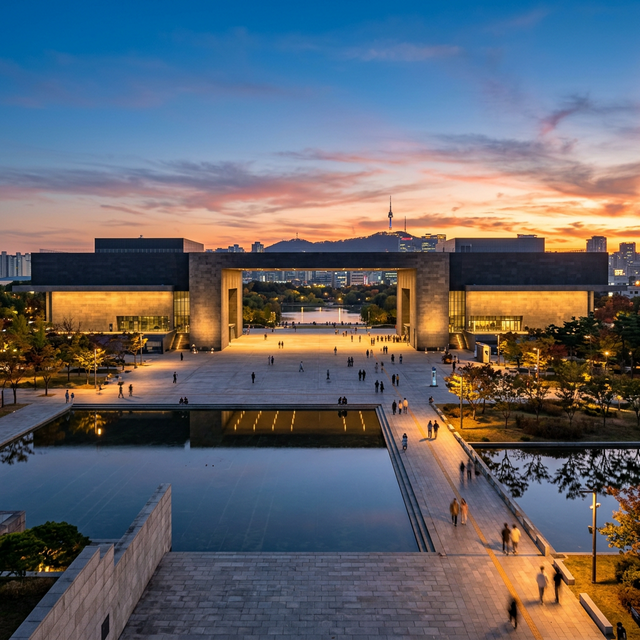
Korea has 5,000 years of history. You could spend a lifetime visiting its palaces, temples, and tombs — or you could spend four hours in one building and emerge with a profoundly richer understanding of this extraordinary civilization. The National Museum of Korea is that building, admission is free, and it belongs at the top of every Seoul itinerary.
Quick Facts: Know Before You Go
Before diving into the collection, here's the practical information you'll need:
| Detail | Info |
|---|---|
| Address | 137 Seobinggo-ro, Yongsan-gu, Seoul |
| Subway | Ichon Station (Line 4 / Jungang Line), Exit 2 — free shuttle to entrance |
| Hours (Mon/Tue/Thu/Fri/Sun) | 9:30 AM – 5:30 PM (last entry 5:00 PM) |
| Hours (Wed & Sat) | 9:30 AM – 9:00 PM (last entry 8:30 PM) |
| Admission | FREE for all permanent galleries |
| Special Exhibitions | Separate fee applies |
| Closed | January 1, Lunar New Year's Day, Chuseok; first Monday of March, June, September, and December |
| Collection Size | 310,000+ relics; 12,000+ on permanent display |
| Time Required | Minimum 2 hours; ideally a full 4+ hours |
Tip for savvy visitors: Come on a Wednesday or Saturday evening. The museum is open until 9 PM, crowds are dramatically thinner, the galleries take on a contemplative atmosphere under artificial light, and admission remains free.
The Six Permanent Galleries: A Roadmap
The museum is organized across three floors and an outdoor space, with six major permanent exhibition sections:
Floor 1
- Prehistory and Ancient History Gallery — Stone Age through the Three Kingdoms period (Goguryeo, Baekje, Silla)
- Medieval and Early Modern History Gallery — Unified Silla, Goryeo, and Joseon dynasties
Floor 2
- Donated Works Gallery — Treasures gifted by private collectors and patrons
- Calligraphy and Painting Gallery — The Korean ink painting and calligraphy tradition
Floor 3
- Sculpture and Crafts Gallery — Buddhist statuary, ceramics, metalwork — some of the most spectacular pieces in the entire museum
- Asian Art Gallery — Artifacts from China, Japan, and Central Asia contextualized within East Asian history
Outdoor Courtyard
- The Ten-Story Stone Pagoda (National Treasure No. 86) sits in a glass-roofed interior court — monumental and unforgettable
Must-See Exhibits: The Masterpieces
The museum houses over 12,000 items in its permanent galleries. To help you prioritize, here are the absolute masterpieces you cannot leave without seeing:
The Silla Gold Crowns (Three Kingdoms Gallery, Floor 1)
These are among the most extraordinary objects in all of Korean history — pure gold crowns adorned with jade comma-shaped ornaments (gogok) and dangling gold spangles, excavated from ancient Silla royal tombs in Gyeongju. They were made between the 4th and 6th centuries AD, and their craftsmanship defies the imagination. Standing before them, you feel the weight of a kingdom that was simultaneously ancient and dazzlingly sophisticated.
The Two Pensive Bodhisattvas — National Treasures #78 and #83 (Room of Quiet Contemplation)
Perhaps the most beloved artifacts in the entire museum. These two gilded bronze statues — from the 6th and 7th centuries — depict a Bodhisattva in a posture of deep contemplation: one leg crossed, one hand raised gently to the cheek, the face carrying an expression of such profound, serene beauty that visitors often fall silent in front of them. They are a peak of Korean Buddhist sculpture, and scholars debate whether they represent Maitreya (the Future Buddha) or Guanyin. The room they occupy is deliberately quiet and softly lit. Give yourself time here.
Goryeo Celadon Openwork Incense Burner — National Treasure #95 (Sculpture & Crafts, Floor 3)
Goryeo dynasty celadon (12th–14th century) is widely regarded as among the finest ceramics ever produced anywhere on Earth. The distinctive jade-green glaze — achieved through centuries of refined kiln technique — has never been perfectly replicated. The Openwork Incense Burner is the crown jewel: intricate perforated designs, a spherical form supported by three lion feet, with incense smoke designed to drift through the lacework. It is staggering in its precision.
Ten-Story Stone Pagoda — National Treasure #86 (Courtyard)
Built in 1348 during the Goryeo dynasty from Aioshan marble (originally from China), this pagoda was moved from its temple site and has now been reassembled inside the museum. Its 13.5-meter height and intricate carved reliefs — bodhisattvas, dragons, cloud patterns — make it one of the most impressive structures in any museum in Asia. The indoor setting, backlit and visible from multiple floors, turns it into an architectural centrepiece.
Baekje Incense Burner (Three Kingdoms Gallery)
From the 6th to 7th century Baekje Kingdom, this bronze incense burner is a tour de force of ancient Korean metalwork. The lid is formed as a mountain landscape teeming with human figures, animals, and mythological creatures in extraordinary detail, all rising from a lotus base held by a dragon. It is the kind of object that makes you stop mid-stride.
Joseon Moon Jars (Medieval Gallery)
White porcelain from the Joseon dynasty — milky, spherical, slightly asymmetric, simple and yet profound. Korean aesthetics have a concept called baemsaek — an appreciation for white as purity and restraint, a deliberate stepping away from decoration. The Moon Jars embody this philosophy. They have influenced countless modern artists and designers, and seeing them in person reveals a beauty that photographs simply cannot capture.
The Acheulean Handaxe (Prehistory Gallery)
Easy to overlook, but extraordinary in context: stone handaxes from the Lower Paleolithic found at Korean sites. They are estimated to be 300,000–700,000 years old — evidence of human habitation of the Korean peninsula stretching back to a period most visitors don't associate with Korea at all. A quiet, humbling beginning to the collection.
Hidden Gems and Underrated Rooms
The blockbuster exhibits attract the crowds. But these rooms are worth seeking out:
The Asian Art Gallery (Floor 3) — One of the few places in Seoul where you can study Chinese Tang dynasty ceramics, Japanese lacquerware, and Central Asian Buddhist art in immediate proximity, understanding Korea's position within a broader East Asian cultural sphere.
The Calligraphy and Painting Gallery (Floor 2) — Korean ink painting (sumukhwa) and court painting traditions are profoundly underappreciated internationally. This gallery is calm, rarely crowded, and visually stunning.
The Donation Gallery (Floor 2) — Some of the most personal and unexpected objects in the museum: donated by private collectors, these pieces often carry fascinating provenance stories and include items you wouldn't encounter in the main chronological galleries.
Getting There and Getting Around
By Subway: Take Line 4 (Blue) or the Jungang Line to Ichon Station. Use Exit 2 and either walk 5 minutes following the signs or board the free museum shuttle bus.
Inside the museum:
- Free English maps available at the information desk in the lobby
- Audio guide rental (English available): 1,000 KRW per device — highly recommended as labels can be sparse in some galleries
- Museum App: The official museum app (search "National Museum of Korea" in your store) offers digital maps and exhibit information in English
- Fully wheelchair accessible throughout
Practical Tips for Your Visit
Best time to visit: Wednesday or Saturday evenings — the museum's extended hours (until 9 PM) come with significantly reduced crowds. The galleries are peaceful and the ambient lighting shifts to a warm, contemplative tone.
How long to plan: Budget a minimum of 2 hours for the highlights. A thorough visit — particularly if you want to spend real time in the Bodhisattva room and the Celadon galleries — will take 4–5 hours.
Guided English Tours: The museum offers free guided tours in English on weekends. Check the official museum website (museum.go.kr) for schedule confirmation before your visit.
Photography: Allowed in most permanent galleries without flash. A few special exhibitions prohibit photography — look for the signage.
Food and Coffee:
- The museum's in-house restaurant serves Korean and Western options; lunch sets are reasonable
- Several café areas on the ground floor
Gift Shop: Well-stocked with art books, celadon replicas in multiple price ranges, traditional craft items, and quality museum catalogues — better than most Korean museum gift shops.
Combining with Nearby Attractions
The National Museum of Korea is located in the Yongsan district, making it easy to combine with other major attractions:
| Attraction | Distance | Notes |
|---|---|---|
| War Memorial of Korea | 10-min walk south | Also free; extraordinary scale military history |
| Leeum Samsung Museum of Art | 20-min walk | Exceptional pre-modern and contemporary Korean art |
| Namdaemun Market | 1 stop by subway | Korea's largest traditional market |
| Gyeongbokgung Palace | ~20 min by subway | Joseon dynasty palace; strong pairing with the museum's Joseon galleries |
A recommended day: Start at the National Museum in the morning, walk to the War Memorial for lunch and afternoon exploration, then take the subway to Gyeongbokgung for late afternoon and the Gwanghwamun evening atmosphere.
Why the National Museum of Korea Deserves a Full Day
Context is what transforms a museum visit from dutiful tourism into genuine education and wonder. The National Museum of Korea provides that context in abundance — the objects here span the full arc of Korean civilization, from prehistoric tools to Joseon dynasty masterworks.
What makes the experience exceptional is the quality of what's on display. This is not a regional history museum. The Pensive Bodhisattvas would be among the finest objects in the Louvre or the British Museum. The Goryeo celadons are genuinely, objectively world-class. The Silla gold crowns are breathtaking in person in a way that no photograph conveys.
The fact that all of this is a gift for a nominal fee in 2026 is one of the great joys of visiting Seoul.
11. Frequently Asked Questions (FAQ)
Q: Is the museum really free in 2026? A: Most of the permanent galleries now require a small ₩5,000 maintenance fee for adults (introduced in late 2025). However, evening visits on Wednesday and Saturday are discounted, and children under 18 remain free.
Q: Can I bring a large backpack? A: No, large bags are not allowed in the galleries for security reasons. However, there are free, high-capacity digital lockers in the lobby where you can safely store your belongings.
Q: Is English support good? A: Excellent. Almost every major exhibit has English signage, and the 2026 AI audio guide app provides incredibly deep context in over 10 languages.
Q: Is there a dress code? A: No formal dress code, but out of respect for the "Room of Quiet Contemplation," we recommend quiet footwear and avoiding overly revealing beachwear.
5. The Immersive Digital Galleries: History Meets High-Tech
In 2026, the National Museum of Korea has become a global leader in "Digital Heritage." The Immersive Digital Galleries (Room 1, 2, and 3) are no longer just side-exhibits; they are destination attractions.
Gallery 1: "A Banquet for the King"
Located on the first floor, this 60-meter-wide panoramic screen uses 8K laser projection to bring Joseon Dynasty court paintings to life. You aren't just looking at a scroll; you are standing in the middle of a Royal Procession.
- The Experience: You watch the king’s entourage move across the screen, hear the traditional court music, and see the details of several hundred figures animated with pinpoint accuracy.
Gallery 2: "Journey of the Soul"
This room focuses on Buddhist art and the "Ten Kings of Hell" paintings. The floor and walls are covered in shifting, ethereal projections that make you feel like you're floating through a spiritual landscape.
- AR Interaction: Use the museum’s 2026 "Smart Museum" app to scan points in the room and see 3D reconstructions of lost Buddhist temples.
Gallery 3: "The Monk's Dream"
A contemplative space where a 360-degree projection of a Zen temple changes according to the four seasons. It is the perfect digital counterpart to the "Room of Quiet Contemplation."
6. The "Room of Quiet Contemplation": A Sensory Masterpiece
While mentioned earlier, this room (housing the Pensive Bodhisattvas) underwent a sensory redesign for 2025/2026.
- The Soundtrack: A minimalist ambient score designed to lower heart rates is played at a low decibel.
- The Walls: Covered in handcrafted traditional Korean paper (Hanji), which diffuses light and sound to create an "acoustic vacuum" that makes the statues feel even more monumental.
- Pro Tip: In 2026, visitors are encouraged to leave their phones in their pockets. It is the museum's "Digital Detox" zone.
7. The Outdoor Pagoda Park and Mirror Pond
Many visitors miss the museum’s external grounds, which are essentially an Open-Air Museum.
- Mirror Pond (Geoulmot): A massive reflecting pool in front of the museum that perfectly aligns with Namsan Tower in the distance.
- The Pagoda Path: A winding trail lined with monumental stone pagodas and lanterns from the Goryeo and Joseon dynasties.
- Yongsan Park Connector: In 2026, a new walking bridge connects the museum grounds directly to the Yongsan Family Park, making it a 2-kilometer continuous green space.
8. 2026 Practical Updates: What’s Changed?
The Shift to Paid Admission (Post-2025)
For decades, the National Museum was entirely free. As part of a new sustainability initiative launched in 2025, a nominal admission fee (₩5,000 for adults) has been introduced for the permanent galleries to fund digital restoration projects.
- Exemption: Entry remains free for those under 18 and over 65.
- Night Discount: Admission is 50% off on Wednesday and Saturday evenings after 6:00 PM.
The "Petit Gallery" and Gift Shop Trend
The museum gift shop in 2026 has introduced the "Petit Gallery Series"—high-fidelity, 3D-printed miniature versions of the Pensive Bodhisattvas and Moon Jars in various trendy colors (mint, lavender, peach). They have become a "must-have" souvenir for Gen Z travelers.
9. Thematic Self-Guided Tours
If you're overwhelmed by the 12,000 relics, follow one of these 60-minute thematic routes using the museum's digital audio guide:
Route A: The Porcelain Path
- Focus: Goryeo Celadon (3F) → Joseon White Porcelain (3F) → The Moon Jar (Room 302).
- Theme: The evolution of Korean aesthetics from ornate jade-green complexity to minimalist white purity.
Route B: The Buddhist Trail
- Focus: Iron Buddha (3F) → 10-Story Stone Pagoda (1F) → Pensive Bodhisattvas (Room 202).
- Theme: How Buddhism arrived from India/China and transformed into a uniquely Korean spiritual expression.
10. Family Services: Visiting with Kids
The National Museum is exceptionally family-friendly.
- The Children’s Museum: A separate, hands-on facility where kids can "excavate" relics and try traditional woodblock printing. (See our Best Children's Museums in Seoul guide for more).
- Amenities: Free stroller rentals, high-spec nursing rooms, and large "Family Lockers" for luggage.
Final Thoughts
The National Museum of Korea is the single most efficient way to gain an understanding of Korean civilization — its art, its spiritual life, its technical sophistication, and its long history — available to any visitor in Seoul. It repays curiosity, rewards slow looking, and leaves you with a richer lens through which to appreciate everything else you encounter in Korea.
Plan for a Wednesday or Saturday evening. Arrive after dinner. Walk slowly. Stay until the light changes.
For more on Korea's heritage, explore our guide to UNESCO World Heritage Sites in South Korea and our itinerary for Hiking the Seoul City Wall and Suwon Hwaseong.