Essential Gear for Hiking in Korea: Prepare for the Terrain
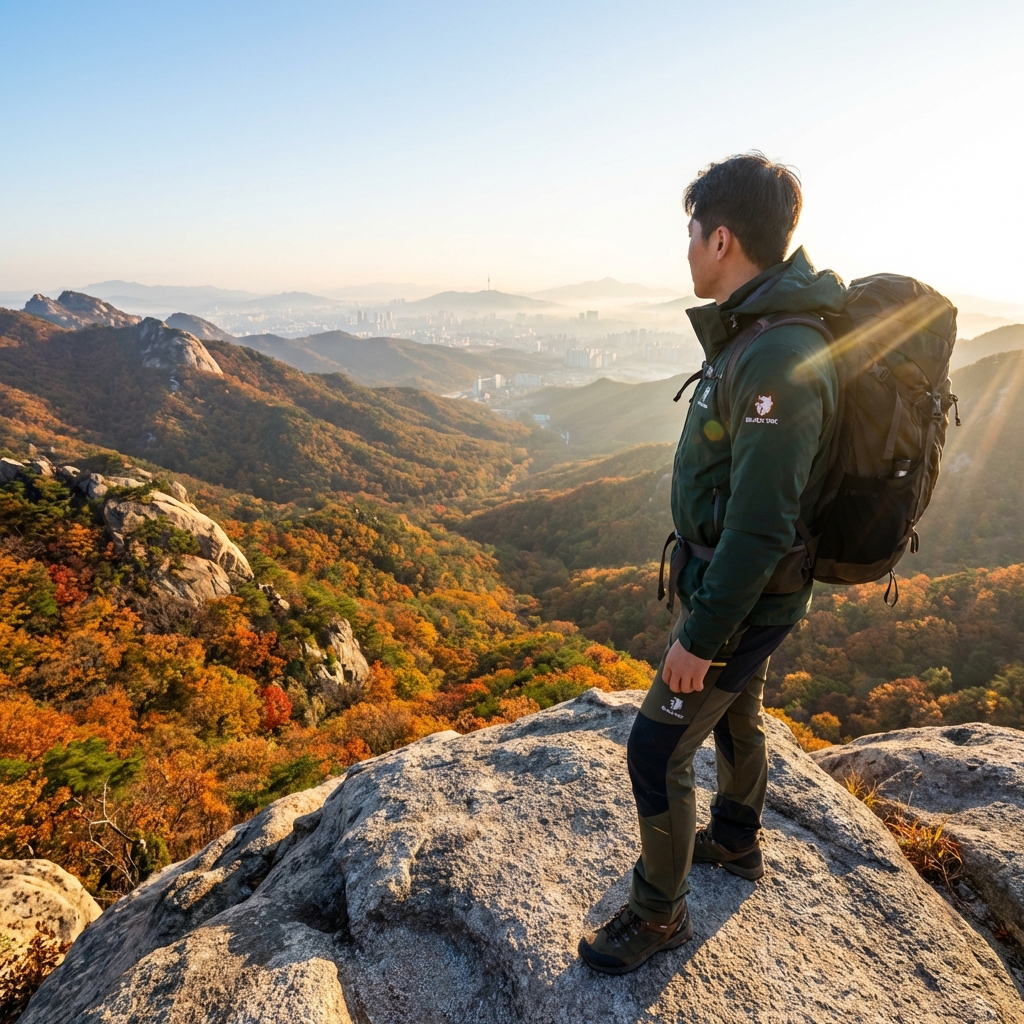
In South Korea, hiking isn't merely a weekend hobby—it’s a national obsession, a sophisticated social ritual, and a high-stakes arena for technical fashion. To the uninitiated, the colorful sea of Gore-Tex and high-tech carbon poles winding up the granite peaks of Bukhansan National Park might look like an expedition to the Himalayas. But don't be fooled: every piece of gear is a calculated response to Korea's unique, demanding terrain.
If you’re planning your first Korean summit, whether it’s the volcanic trails of Hallasan or the jagged ridges of Seoraksan, showing up in casual gym wear isn’t just a safety risk—it’s a cultural faux pas. In this definitive guide, we break down why South Korea’s mountains require a specialized gear strategy, which local brands define the market, and how to master the unspoken rules of the Korean trail.
With 70% of the Korean peninsula covered in mountains, the country is a paradise for hikers. However, unlike the soft, loamy trails of the Pacific Northwest or the rolling hills of Europe, Korean mountains are primarily composed of ancient, weathered granite. This single geological fact dictates everything from the rubber on your boots to the elasticity of your trousers.
The Terrain Challenge: Why Your "General" Gear Might Not Be Enough
Korean hiking trails are famous for two things: high-friction granite rock faces and an almost infinite number of stairs.
1. The Granite Grip
Granite is incredibly grippy when dry but becomes a skating rink when wet. Traditional hiking boots designed for European mud or American dirt often lack the specialized rubber compounds needed to "stick" to Korean rock.
- The "Sticky" Outsole: In Korea, you’ll often hear the term "high-friction" or "ridge rubber." Brands like Black Yak and Kolon Sport develop their own proprietary outsoles specifically designed to maximize contact surface area on smooth granite slabs.
2. The Stairway to Heaven (and Core Shredder)
To make the steep peaks accessible, Korean national parks have installed thousands of wooden and stone stairs. While they prevent erosion, they are punishing on the knees and require footwear with excellent impact absorption.
- Mid-Cut Dominance: While trail runners are gaining popularity, the traditional mid-cut boot remains the gold standard in Korea for the ankle support it provides during the constant vertical change of stair-heavy trails.
3. Vertical Gains
Korean hikes are rarely "flat." They are often a relentless vertical climb from the trailhead to the summit. As such, Korean gear is designed to be exceptionally light and breathable to handle the high aerobic output.
The Big Three: A Guide to Korean Hiking Brands
In Korea, what you wear is a statement of intent. The "Big Three" home-grown brands are the undisputed kings of the trail.
1. Black Yak: The Technical Pioneer
Founded in 1973 by a veteran Himalayan climber, Black Yak is the technical powerhouse of Korea.
- The Vibe: Rugged, dark, and highly functional.
- Best For: If you’re planning on doing "Ridge" hiking or technical summits in the winter. Their Yak-On active heating technology and Yak-H-Mold outsoles are world-class.
2. Kolon Sport: The Heritage Giant
Kolon Sport is often referred to as the "Original" Korean outdoor brand. Since 1973, it has balanced technical performance with a classic, premium aesthetic.
- The Vibe: The "REI Co-op" of Korea, but with a luxury, high-fashion twist.
- Best For: Hikers who want the highest quality materials (Gore-Tex Pro, Pertex) without looking like they’re about to summit Everest. Their "Antarctica" line is a staple of Korean winter fashion.
3. NEPA & The Techwear Wave
NEPA (Natural Ecology Protection Area) has successfully carved out a niche by blending minimalist design with outdoor functionality.
- The Vibe: Modern, younger, and tech-forward.
- Best For: The "Gorpcore" enthusiast who wants gear that looks as good in Hongdae as it does on a mountain ridge.
Seasonal Layering: The 4-Season Matrix
South Korea’s climate is temperate but extreme at the edges.
Spring/Fall: The "15-Degree Gap"
The most popular times to hike are the "shoulder" seasons. However, the temperature difference between the Seoul streets and the mountain summit can be 15°C or more.
- Essential: A lightweight, windproof shell. In Korea, the wind can whip across the ridges with unexpected intensity.
Summer: The Humidity Battle
Hiking in 34°C with 90% humidity is a feat of endurance.
- The Cooling Revolution: Look for "Aero-ready" or cooling-touch fabrics. Many Korean brands produce shirts with integrated chemical-free cooling technologies.
- UV Protection: In Korea, protecting your skin is paramount. You’ll see hikers wearing full UV-sleeves and broad-brimmed hats even in the hottest months.
Winter: The Non-Negotiable Duo
Korean winters are dry, windy, and lethally cold on the summits.
- Crampons (Ice Cleats): Do not attempt Bukhansan or Hallasan in winter without them. Even a thin layer of ice on granite is impossible to navigate safely with plain boots.
- Ondol-grade Base Layers: High-tech thermal wool or synthetic blends that trap heat while moving moisture away from the skin.
The "Essential 10" for the Korean Trail
If you're building your K-hiking kit, these are the items you shouldn't skimp on:
- Granite-Specific Boots: Look for outsoles labeled "Ridge" or "High-Friction."
- Merino Wool Socks: Essential for the moisture-wicking needed for 2,000-stair climbs.
- Telescopic Poles: Your knees will thank you on the descent. Carbon fiber is preferred for weight.
- Elastic Active Pants: Standard jeans or stiff khakis are a recipe for disaster on steep steps.
- Multi-Functional Buff: Used for UV protection, sweat management, and masking against fine dust.
- Pack-able Down Vest: Even in summer, summit winds can be chilly.
- High-Lumen Headlamp: Many hikers start early (3-4 AM) to catch the sunrise.
- The "A-Zone" Pack: A 20-30L pack with a ventilated back panel—essential for the humid Korean summer.
- Energy Gel & Electrolytes: The verticality of the trails depletes energy faster than you expect.
- A Small Trash Pouch: There are almost no trash cans in Korean National Parks.
Acquiring Gear in Korea: Where to Shop
If you arrive in Seoul without gear, you’re in luck.
- Bukhansanseong Hiking Street: At the entrance to Bukhansan National Park, there is an entire street lined with flagship shops for every major brand.
- Paju/Yeoju Outlets: For "Premium" brands at significant discounts, the large outlet malls on the outskirts of Seoul are the best bet.
- Dongdaemun Outdoor Street: A more traditional setting where you can find niche technical brands and specialized climbing gear.
The Etiquette Manual: Becoming a "Respectful Hiker"
Gear makes you look the part, but etiquette makes you a member of the community.
- The "Annyeonghasaeyo" (Hello): It is customary to greet hikers you pass, especially on less crowded trails. A simple head nod and a polite "Annyeonghasaeyo" goes a long way.
- Passing on the Right: On narrow stair sections, the ascending hiker typically has the right of way.
- The Sound of Silence: In recent years, there has been a significant push against "Mountain Clubs" playing loud music on speakers. Use bone-conduction headphones or the sound of the wind instead.
- Food Culture: Don't be surprised if a group of hikers invites you to share their kimbap, fruit, or even a small cup of makgeolli (rice wine) at the summit. It’s polite to accept a small piece of fruit, though safety first—keep the makgeolli to a minimum!
Trail-Specific Gear Considerations
Different Korean mountains demand slightly different equipment priorities. Here's a quick reference:
| Mountain / Park | Key Gear Priority | Notes |
|---|---|---|
| Bukhansan (Seoul) | Granite-grip boots, light daypack | High foot traffic; crowded stairs; 2–5 hour hikes |
| Seoraksan (Gangwon) | Full layers, waterproof shell, poles | Variable weather; longer ridge hikes; falls risk on wet rock |
| Hallasan (Jeju) | Rain gear, mid-layers, crampons (winter) | Elevation of 1,950m; weather changes rapidly; volcanic terrain |
| Jirisan (South) | Multi-day pack if doing ridgeline traverse | Longest national park in Korea; some sections require overnight camping |
| Deokjusan / local parks | Light trail runners acceptable | Lower elevation, maintained paths; good for gear testing |
Renting vs. Buying Gear in Korea
If you're a one-time or casual hiker, buying a full kit is unnecessary. Rental options are available:
Gear Rental: Most major trailheads (particularly Bukhansan) have rental stalls near the entrance where you can hire poles, crampons (winter), and gaiters by the hour or day. Rental rates:
- Trekking poles: 2,000–5,000 KRW/day per pair
- Crampons: 3,000–5,000 KRW/day
- Basic gaiters: 2,000–3,000 KRW/day
Buying in Korea: Korean outdoor gear is genuinely world-class, and buying locally means access to products specifically designed for Korean conditions. Outlet malls (Paju Premium Outlets, Yeoju Premium Outlets) sell Black Yak, Kolon Sport, and NEPA at 30–50% discounts. Budget for ₩80,000–₩200,000 for quality Korean-brand hiking boots, and ₩50,000–₩150,000 for a technical hiking jacket.
Nutrition on the Trail: What Korean Hikers Actually Eat
Korean hiking culture has its own food traditions that are worth adopting:
Before the hike: Kimbap (rice rolls) from a convenience store or traditional rice ball from a trail vendor are the classic Korean pre-hike breakfast. Light, portable, and filling — exactly what you need before a 1,000-meter ascent.
Summit food: Ramen cooked on a portable gas burner at the summit is a near-universal Korean hiking ritual. Many hikers bring lightweight camping stoves and a packet of instant noodles. Eating ramen on a windswept Korean summit with a panoramic view is one of those travel experiences that becomes a core memory.
Trail snacks: Energy bars, roasted chestnuts, dried squid (for sodium replacement), and yakgwa (traditional Korean honey cookies) are all popular choices. Convenience stores near trailheads sell all of these in trail-appropriate single portions.
Hydration: Bring at least 1.5–2 liters of water for a 3–5 hour hike. Electrolyte powder sachets (available at any pharmacy or Olive Young) added to water are especially important in summer when sweat loss is significant.
Building Your Hike Around Your Gear Level
First-time hiker in Korea (basic gear): Start with Bukhansan's Baegundae Trail (Seoul) — the most accessible major summit in the country, well-maintained, and crowded enough that help is always nearby. Duration: 3–4 hours round trip. Required gear: Sturdy sneakers or light hiking shoes, a daypack, water, and a light jacket.
Intermediate hiker (standard kit): Seoraksan's Daecheongbong Trail (Gangwon-do) — a full-day hike to one of Korea's most dramatic summits. Elevation gain of 1,380m. Required gear: Full hiking boot (granite-grip), poles, rain shell, 3+ liters water, proper nutrition.
Experienced hiker (full technical kit): Jirisan's Nodoryeong–Cheonwangbong traversal — a 2–3 day ridgeline traverse across Korea's most expansive national park. Requires overnight camping permit (apply through the Korea National Park Service website at least 1 month in advance during peak season), full backpacking kit, and navigation skills.
Frequently Asked Questions
Do I need to book national park entry in advance? Most Korean national parks do not require advance booking for day hikes. However, popular trails like Hallasan's Witseoreum shelter and Seoraksan's summit (Daecheongbong) have daily visitor caps applied online. Check the Korea National Park Service website (knps.or.kr) and book your slot at least 1–2 weeks ahead for any trail with listed capacity limits.
Can I rent a locker at the trailhead? Yes — most major trailheads (Bukhansan, Seoraksan main entrance) have coin-operated luggage lockers for 1,000–3,000 KRW. Leave non-essential items here before ascending. This is especially useful for day hikers who arrived at the trailhead directly from accommodation with a full bag.
Are there ATMs near trailheads? Most urban trailheads (Bukhansan in Seoul) have ATMs at convenience stores within 5–10 minutes' walk. Remote trailheads (Seoraksan's Osaek entrance, some Jirisan access points) may not. Withdraw cash before leaving the city.
How do Korean trail signs work? National park trail signs in Korea follow a consistent format: blue signs indicate the main route to the summit, brown signs point to shelter huts and camping spots, and yellow signs mark alternate routes and viewpoints. Distance is shown in kilometers; estimated time in minutes is often posted as well. Most signs in major national parks include English transliterations.
Is it safe to hike alone in Korea? Korean national parks are among the safest hiking environments in the world. Well-maintained trails, clear signage, and high foot traffic on popular routes mean genuine emergencies are rare. However, inform someone of your route and expected return time for any mountain hiking. The national park emergency number (119) is Korea's combined fire/rescue number, staffed by mountain rescue teams trained for Korean terrain.
What is "fine dust" and should it affect my hiking plans? Fine dust (미세먼지, misemeonji) is air pollution — a significant seasonal concern in Korea, primarily in late winter and spring when dust blows in from China and Mongolia. On high fine dust days (check the Korea Environment Corporation's AirKorea app), visibility is poor and outdoor exertion is generally not recommended for people with respiratory sensitivities. Most Koreans wear KF80 or KF94 masks (Korean filter standards, roughly equivalent to N95) on high-pollution days. The same mask is a useful multi-buff item for the trail regardless of pollution — wind protection on ridges and warmth below the nose in winter.
Can I bring a dog on Korean hiking trails? Dogs are permitted on some trails but are strictly prohibited in national park sections that have wildlife protection designations. Even where dogs are technically permitted, Korean trail culture generally discourages large dogs on steep, stair-heavy terrain. Check the specific national park's rules before planning a pet-inclusive hike.
Are there weight limits on cable cars at Korean national parks? Most Korean national park cable cars (ropeway gondolas at Seoraksan, Namsan in Seoul, Hallaasan) have posted weight limits per car — typically 600–800 kg for gondola-style cars. Individual passenger weight limits are not posted, but carrying extremely heavy backpacks while also carrying children can be an issue in smaller cars. These cable cars are inspected annually by the Ministry of Land, Infrastructure and Transport, and are considered safe. Queues at peak season (autumn, spring weekends) can exceed 1–2 hours — arrive early or plan to hike both up and down under your own power.
Conclusion
Mastering the gear and culture of Korean hiking is the key to unlocking the soul of the country. Standing on a granite ridge, looking down at the sprawling neon landscape of Seoul while dressed for the occasion, is one of the most rewarding experiences Korea has to offer. If you want a quick, accessible test of your new equipment without leaving the capital, our guide to the best national parks in South Korea for fall foliage covers the finest trails across the seasons. And for guidance on what to wear and how to behave on the trail, our hiking etiquette in Korea guide covers the cultural norms that make Korean mountains such a welcoming place for international visitors.
If you are buying gear for a specific trail, pair this with the Jeju Olle trail guide or the Hallasan-focused travel guide. That gives the gear advice a real route to apply it to.