Foot Massage Shops in Korea: Finding the Best Reflexology for Tired Travelers

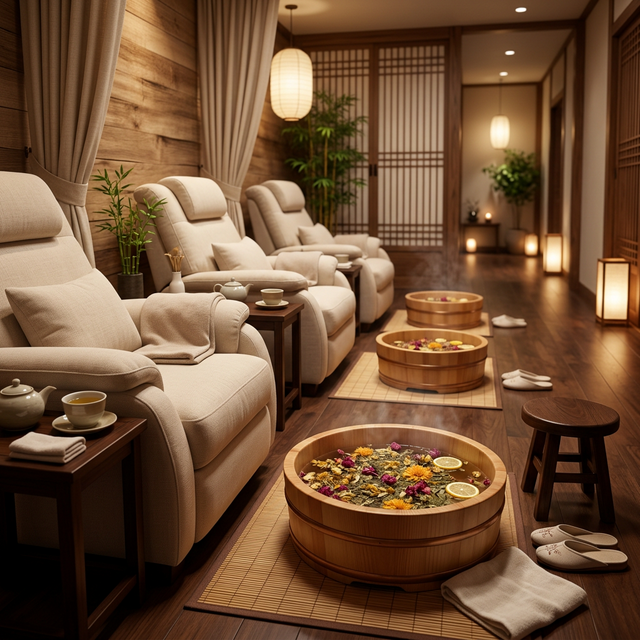
After a long day of navigating the steep hills of Bukchon Hanok Village or braving the sprawling underground shopping malls of Korea, your feet will inevitably start to protest. In South Korea, a country where walking is practically a national sport, foot massage shops (reflexology centers) are more than just a luxury—they are a vital survival strategy for both locals and travelers alike.
If you’ve spent any time exploring the vibrant streets of Seoul, Busan, or Jeju, you’ve likely noticed the ubiquitous signs for "Foot Massage" (더풋샵 - The Foot Shop) or "Reflexology" (발 마사지). While it might feel like a splurge, a professional foot massage in Korea is surprisingly affordable and can be the difference between waking up ready for another day of exploration or spending your morning nursing sore soles in your hotel room.
In this guide, we’ll walk you through everything you need to know about the Korean foot massage experience, from typical costs to essential etiquette.
1. Types of Massage Shops in Korea
Not all massage shops are created equal. Depending on your budget and preference, you can choose from several different tiers of service.
Branded Franchises (The Foot Shop)
The most common sight in any major district is The Foot Shop (더풋샵). These are standardized franchises known for their reliability, cleanliness, and mid-range pricing. They are traveler-friendly, often having menus in English and a consistent process regardless of which branch you visit. If you’re unsure where to go, a branded franchise is always a safe bet.
Luxury Hotel Spas
If you are looking for the absolute pinnacle of relaxation, high-end hotels like the Shilla, Banyan Tree, or Grand Hyatt offer premium spa experiences. These sessions often involve top-tier organic oils, private aromatic rooms, and therapists who specialize in deeper therapeutic techniques. Expect to pay a significant premium for the ambiance and privacy.
Local Neighborhood "Therapy" Spots
In areas like Hongdae or Sinchon, you’ll find many independent shops labeled "Ara Therapy" or simply "Massage." These are often the most budget-friendly (around 30,000 KRW for a 40-minute session). While they offer great value, we recommend checking online reviews (Google Maps or Naver) to ensure they are reputable and foreigner-friendly.
2. Top Recommended Districts for Refortification
Myeongdong: The Shopper’s Sanctuary
Myeongdong is notorious for its density of shops and crowds. Consequently, it has some of the highest concentrations of foot massage shops in the city. Many of these shops cater specifically to tourists, with staff fluent in English, Chinese, and Japanese. It is the perfect place to drop your shopping bags and give your feet a 45-minute break.
Hongdae & Sinchon: Budget-Friendly Bliss
As these are university districts, the shops here tend to be more competitive with their pricing. You can often find "Happy Hour" discounts or student deals that make a 60-minute session very accessible. The vibe here is generally more casual and trendy.
Gangnam: Therapeutic Excellence
Gangnam is where you go for more "clinical" or high-tech wellness. Shops like Jeongyeon Foot Massage or The Hanoi Foot & Body focus heavily on therapeutic reflexology—targeting specific pressure points to relieve jet lag and muscle fatigue.
Itaewon: The Multilingual Experience
Itaewon's massage shops are uniquely international. As Seoul's most globally diverse district—catering to expats and long-term residents from over 100 countries—you'll find English-speaking staff as a given rather than an exception. Many therapists here are trained in both Korean reflexology and traditional Thai techniques, giving you a wider range of options. If you need to communicate health conditions, injuries, or specific pressure preferences without a language barrier, Itaewon is the most foreigner-accessible district for massage services.
Insadong & Bukchon: The Culture-Day Companion
After walking the stone-paved lanes of Insadong or touring the quiet alleyways of Bukchon Hanok Village, your feet will be particularly worn. The cluster of smaller, quieter massage shops in this neighborhood caters to culturally-minded, slower-paced travelers. These tend to be less commercial than Myeongdong tourist outlets, often featuring traditional cedarwood soaking basins and more personalized service. They are an ideal mid-afternoon stop between a morning at Gyeongbokgung Palace and an evening stroll along Cheonggyecheon Stream.
3. What to Expect: The Step-by-Step Experience
If it’s your first time at a Korean foot massage shop, here is the typical flow:
- Arrival & Shoes: You will almost always be asked to remove your shoes at the entrance and change into provided slippers.
- Changing Clothes: Most shops provide loose-fitting t-shirts and shorts (often stored in sterilized cabinets). You’ll change in a locker room.
- The Foot Soak: Your session will likely begin with a 5-10 minute soak in a warm wooden basin. This is often infused with herbal salts like lavender, ginseng, or rose to soften the skin and begin the relaxation process. You might be served a small cup of herbal tea during this time.
- The Session: You’ll be led to a comfortable reclining armchair. Depending on your choice, the therapist will use either a dry technique (through a towel) or a massage oil/cream.
- Pressure Adjustment: If the pressure is too much or too little, don’t hesitate to speak up (see the "Essential Phrases" section below).
- The Oil Choice: Mid-to-premium shops typically offer two technique options: a dry method (firm pressure applied through a thin cotton towel) or an oil method (using organic oils—lavender, ginseng, or arnica—applied directly to the skin). The dry technique suits travelers with sensitive skin or those who do not want to worry about oil residue on their clothes. Oil techniques provide a deeper glide and are preferable for muscular tension relief.
- The Closing Ritual: After your session, staff will offer a warm, damp towel to clean your feet and hands. Most shops then serve a small cup of barley tea (보리차) or omija tea as a gentle closing gesture—a signal that your body has received what it needs and is ready to transition back to the world outside.
4. Practical Guide: Costs & Etiquette
The Cost
- Basic Foot Massage (40-45 mins): 30,000 – 45,000 KRW
- Full Foot & Leg Massage (60 mins): 50,000 – 70,000 KRW
- Premium Oil Massage (60-90 mins): 80,000 – 120,000 KRW
- Pro Tip: Many shops offer a 10% discount if you pay in cash.
Tipping
Tipping is not required and is generally not expected in South Korea. The price you see on the menu is the price you pay. However, in high-end tourist areas or if a therapist does an exceptional job, a small tip (usually 10,000 KRW) is never rejected, but absolutely not mandatory.
Hygiene & Legitimacy
Always look for shops that have a clear, professional exterior and a visible menu. Legitimate shops will have a business license prominently displayed. If a shop seems overly secluded or "dark," it’s best to move on to a well-lit franchise.
5. Helpful Korean Phrases for Your Visit
While many shops in tourist areas have English menus and basic English-speaking staff, knowing a few Korean phrases transforms a functional transaction into a warm, personal experience. Korean therapists deeply appreciate any effort by foreigners to communicate in the local language, and a single well-pronounced phrase often prompts smiles, extra attentiveness, and occasionally a complimentary add-on.
At the Desk (Booking and Payment)
- "Bal masaji hae-ju-se-yo" (발 마사지 해주세요): I'd like a foot massage, please.
- "Sa-sip-o bun jeo-yo?" (45분이에요?): Is it a 45-minute session?
- "Hyeon-geum doe-na-yo?" (현금 되나요?): Do you accept cash? (Often triggers the cash discount.)
- "Gam-sa-ham-ni-da" (감사합니다): Thank you (formal).
During the Session (Pressure and Comfort)
- "A-peo-yo" (아파요): It hurts — the most important phrase to know.
- "Se-ge hae-ju-se-yo" (세게 해주세요): Please do it stronger.
- "Yak-ha-ge hae-ju-se-yo" (약하게 해주세요): Please do it softer.
- "Sshi-won-hae-yo" (시원해요): This feels great / refreshing — the highest compliment you can pay a Korean therapist.
- "Deo i-sso-yo?" (더 있어요?): Is there more? (Asking if the session continues.)
Pointing to Problem Areas
If you have a specific area of tension, simply point to it and say:
- "Yeo-gi jo-geum deo hae-ju-se-yo" (여기 좀 더 해주세요): Please work on this area a bit more.
Most therapists will immediately understand and adjust their focus. This kind of direct communication not only improves your session outcome but signals to the therapist that you are an engaged, appreciative client—often resulting in a few bonus minutes of service.
Full-Body vs. Foot-Only: How to Choose Your Session
First-time visitors often hesitate between a dedicated foot reflexology session and a full-body massage upgrade. Understanding the difference helps you invest your 60–90 minutes wisely.
The Science of Korean Foot Reflexology
Korean reflexology is rooted in Traditional Chinese Medicine, which maps specific zones on the sole to organs throughout the body. The inner arch corresponds to the spine; the ball of the foot connects to the heart and lungs; the heel targets the lower back and pelvis. A skilled therapist applies precise, firm pressure to these zones—far more targeted and therapeutic than a simple relaxation rub.
Research supports its effectiveness. A review published in Complementary Therapies in Clinical Practice found that reflexology significantly reduces physical fatigue and improves sleep quality after prolonged exertion—exactly what you need after a full day of climbing palace staircases and navigating the Seoul subway.
Best for: Day-trippers, travelers with only 45–60 minutes available, or anyone with specific foot, ankle, or lower-back discomfort.
When to Upgrade to Full Body
A full-body session—typically focusing on the back, shoulders, neck, and legs—is the right choice if you have been carrying a heavy backpack, are experiencing tension headaches from jet lag, or are several weeks into a long trip and your muscles need genuine physical reset rather than just relaxation.
The most popular mid-range package is the "Royal 90-Minute": a 20-minute herbal foot soak, followed by 40 minutes of back and shoulder work, then 30 minutes of intensive foot reflexology—for approximately 90,000–120,000 KRW. By international spa standards, this represents exceptional value.
Best for: Long-haul travelers, backpackers, or anyone who has been in transit for more than 10 hours.
The Korean Wellness Ecosystem: Beyond Foot Massage
Once you’ve discovered foot reflexology, an entire wellness landscape opens up. South Korea is one of the world’s most developed countries for affordable, high-quality self-care, and foot massage is just the entry point.
Jjimjilbang (찜질방): The Social Sauna
A jjimjilbang is a large public bathhouse and sauna complex where you can spend an entire day—most operate 24 hours—for a flat fee of 12,000–15,000 KRW. Unlike foot massage shops, jjimjilbangs are communal spaces where families, couples, and solo travelers coexist in a relaxed, unhurried atmosphere. Expect segregated bathing areas, co-ed sauna rooms heated with different mineral stones and aromatic woods, a communal food hall serving roasted eggs and sikhye (sweet fermented rice drink), and even sleeping mats for those who miss the last subway.
For a full breakdown of options, see our Best Jjimjilbangs in Seoul: Honest Reviews for Travelers guide.
The Italian Towel Scrub (Seshin, 세신)
No Korean wellness experience is complete without the seshin—a vigorous full-body exfoliation performed by a specialist using Korea’s iconic abrasive "Italy towel" (이태리 타월). This is not a spa treatment; it is a practical, deeply effective scrub that removes layers of dead skin and leaves you feeling entirely renewed. Most jjimjilbangs offer it as an add-on for 20,000–30,000 KRW, and the results are visible within minutes.
Learn more about the experience in our Korean Skin Care at the Spa: Italy Towel and Seshin Explained guide.
Premium Day Spas
If you prefer a private, high-end environment, Seoul’s luxury spa scene rivals Tokyo and Bangkok. For curated recommendations with pricing and booking details, our Best Luxury Spas in Seoul for a Premium Wellness Day guide covers the top options.
7. 2026 Innovation: The Rise of AI-Assisted Reflexology
By the year 2026, the traditional foot massage experience in Seoul has received a high-tech upgrade. In districts like Seongsu and Pangyo, you’ll now find "Smart Massage Centers."
- Pressure-Sensing Soaks: Some 2026 shops use specialized soaking basins equipped with sensors that analyze your foot’s arch and pressure points while you soak. This data is sent to the therapist’s tablet, allowing them to skip the "diagnostic" phase and get straight to the areas that need the most work.
- Robot-Hand Finishers: While human touch remains superior for deep reflexology, some premium shops offer a "Robot Percussion" finish—a 5-minute mechanized session that uses rapid, rhythmic tapping to wake up the nerves after a deep massage. It’s a quintessential 2026 Seoul experience.
8. The K-Beauty Connection: Why Foot Health Equals Skin Clarity
In Korean traditional medicine (Hanbang), the feet are considered the "Second Heart." But in the world of K-Beauty, they are also considered the secret to a clear complexion.
- Circulation and Glow: Korean therapists believe that by stimulating the "Yongcheon" (Gushing Spring) point on the sole of the foot, you improve overall blood circulation. Better circulation means more oxygen to the facial tissues, leading to that coveted "Glass Skin" glow.
- Detoxification: Many 2026 wellness enthusiasts pair a foot massage with their skincare routine, believing that a 40-minute reflexology session helps drain the lymphatic system, reducing facial puffiness and dark circles under the eyes.
9. Avoiding the Tourist Trap: Pricing Red Flags
While Korea is generally very safe and honest, the high-traffic areas of Myeongdong and Dongdaemun have a few "Tourist Price" pitfalls to avoid.
- The "No Menu" Trap: If a shop does not have a clearly printed menu with prices outside the door, do not enter. Legitimate shops are proud of their standardized pricing.
- The Upsell Pressure: Some shops might try to tell you that your feet are "very sick" and that you must upgrade to a 150,000 KRW package. A reputable therapist will suggest an upgrade but will never pressure you or make you feel anxious about your health.
- The Standard Rate: In 2026, a standard 40-minute foot massage should never cost more than 50,000 KRW in a non-hotel setting. If the starting price is 80,000 KRW for a basic soak and rub, you are in a tourist trap.
10. Planning Your Session: Timing and Finding the Right Shop
Timing is everything when it comes to booking a foot massage in Seoul's busiest districts.
- The Best Time to Go: If you want to avoid a long wait, visit between 11:00 AM and 3:00 PM. Most tourists are either just finishing breakfast or are busy with sightseeing. The shops become significantly more crowded after 6:00 PM as people finish their day of walking.
- Finding Local Gems: Don't just stick to the main road. Some of the best and most affordable reflexology spots are located on the 2nd or 3rd floors of buildings in the side alleys of Myeongdong and Hongdae. Look for the foot-shaped neon signs or boards that say "발 마사지" (Bal Massage).
11. Conclusion
Foot reflexology in South Korea isn’t just about the occasional pampering; in 2026, it is seen as a vital component of both K-Beauty and overall longevity. By maintaining the health of your feet—the foundation of your body—you are ensuring that your stamina remains high enough to see every corner of this beautiful country.
Whether you choose a high-tech AI-assisted soak in a luxury spa or a traditional, pressure-point-focused rub in a neighborhood alley, your legs will thank you the next morning. It is the ultimate traveler's investment.
Once your feet are rested, you can continue exploring alternative therapies with Herbal Medicine and Korean Traditional Healing. For a fully immersive nature getaway that tackles overall bodily stress, check out our guide on Healing Stays: Best Wellness Retreats and Forest Therapy in Korea. And if you're venturing out to the countryside, nothing pairs better with sore muscles than the spots listed in Hot Springs and Onsen in Korea: Best Mineral Bath Destinations. For a full plan across the peninsula, our Ultimate 10-Day South Korea Itinerary is your perfect companion.