Herbal Medicine and Korean Traditional Healing: What Travelers Should Know

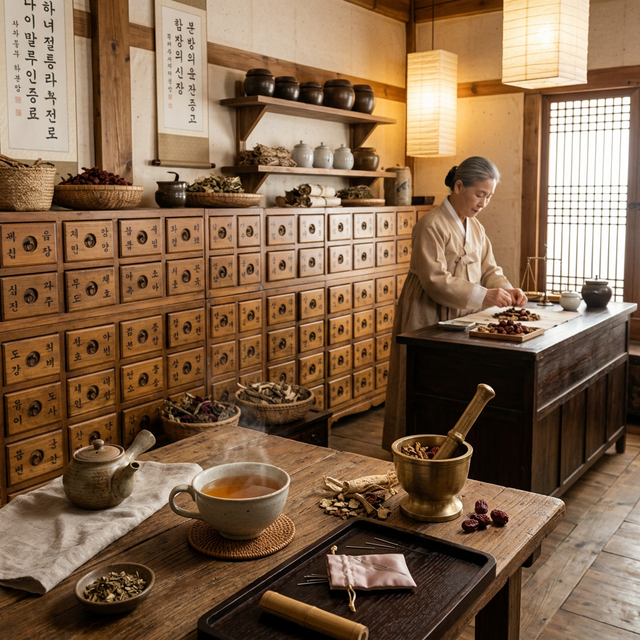
South Korea is internationally famous for its cutting-edge skincare and high-tech hospitals, but its oldest healthcare secret is hidden in plain sight. Hanbang, or Korean Traditional Medicine, offers travelers a deeply holistic, preventative approach to wellness that balances the body, mind, and spirit. Whether you are seeking relief from travel fatigue through acupuncture or simply wanting to experience a soothing herbal foot bath in a traditional cafe, exploring hanbang adds a profoundly restorative layer to your Korean itinerary.
The Ancient Roots of Hanbang in Modern Korea
Hanbang (한방) is the traditional medical practice of Korea, deeply influenced by ancient East Asian medicinal philosophies but uniquely adapted over centuries to the Korean climate, environment, and physical constitution. Unlike modern Western medicine, which often focuses on treating specific diseases or symptoms after they occur, Hanbang is fundamentally holistic and preventative.
It views the human body as a miniaturized universe where physical health is inseparable from emotional and spiritual well-being. By restoring balance to the body and harmonizing the flow of Qi (기 - vital energy), Hanbang aims to heal illness at its root cause. Finding a modern, pristine Hanbang clinic nestled between towering skyscrapers in Seoul perfectly encapsulates the country's fascinating blend of ancient tradition and hyper-modernity.
The Core Philosophy: Sasang Constitutional Medicine
One of the most unique aspects of Korean traditional medicine is Sasang Typology (사상의학), developed in the late 19th century by physician Lee Je-ma. This system categorizes individuals into four distinct body types based on their innate physiological and psychological traits:
- Taeyangin (Greater Yang): Known for strong lungs but a weaker liver. Often described as decisive and creative.
- Taeumin (Greater Yin): Characterized by a strong liver but weaker lungs. Tend to have a sturdy build and dependable nature.
- Soyangin (Lesser Yang): Strong spleen/digestive system but weaker kidneys. Often quick-thinkers with slender frames.
- Soeumin (Lesser Yin): Strong kidneys but a weaker digestive system. Usually analytical, meticulous, and prone to feeling cold.
When visiting a traditional clinic, a Korean Medicine Doctor (KMD) will assess your body type through pulse diagnosis, observation, and consultation. Two people presenting with the exact same headache might receive entirely different herbal prescriptions or acupuncture points depending on their Sasang constitution!
Key Traditional Treatments to Experience
If you decide to visit a clinic for a wellness check or to treat minor traveler's aches, here are the most common treatments you will encounter:
Acupuncture (침 - Chim)
The most internationally recognized treatment, acupuncture involves the precise insertion of exceptionally fine, sterile needles into specific meridians (energy pathways) on the body. It is used to clear blockages in the flow of Qi and stimulate the body’s natural healing processes. It is highly effective for pain relief, digestive issues, and stress. And yes, it is generally painless—most patients report only a mild, dull pressure.
Moxibustion (뜸 - Tteum)
Moxibustion utilizes the warming power of burning mugwort (ssuk). Small, cone-shaped amounts of dried mugwort are placed on or near specific acupoints and ignited. The deep, penetrating heat promotes circulation, dispels cold and dampness from the body, and boosts the immune system.
Cupping Therapy (부항 - Buhang)
Small glass or silicone cups are placed on the skin (usually the back), and a vacuum is created to draw the skin upward. This localized suction increases blood flow, loosens tight muscles, and draws out deep-seated toxins. It is incredibly relaxing, though it will leave distinctive circular, bruise-like marks on your skin for a few days!
Chuna Manual Therapy (추나요법)
Chuna is a traditional Korean osteopathic manipulation technique. The doctor uses their hands to apply targeted pressure and stretch muscles, aligning the spine and joints. It functions similarly to chiropractic care and is excellent for posture correction and relieving acute back or neck pain from long flights.
Navigating Clinics vs. Hospitals
Travelers have two main options for experiencing Hanbang:
- Hanuiwon (한의원 - Local Clinics): These are small, neighborhood clinics on almost every street corner in Korea. They are perfect for minor aches, sprains, or a quick, inexpensive acupuncture session. However, English-speaking staff may be limited.
- Hanbang Byeongwon (한방병원 - Specialized Hospitals): These are large, state-of-the-art medical centers, such as Jaseng Hospital of Korean Medicine or Kyung Hee University Korean Medicine Hospital. They offer integrated Eastern and Western care (e.g., using MRI machines alongside pulse diagnosis), comprehensive wellness programs, and dedicated international clinics with fluent interpreters.
Safety and Professionalism
Safety is understandably a top concern for travelers trying alternative medicine. You can rest assured that traditional medicine is highly regulated in South Korea.
Practitioners must complete a rigorous six-year university program to become licensed Korean Medicine Doctors (KMDs), passing national board examinations. Furthermore, the herbal medicines prescribed are strictly regulated by the Ministry of Food and Drug Safety (MFDS) to ensure they are free from heavy metals, pesticides, and toxins, and are manufactured under Good Manufacturing Practice (GMP) standards.
⚠️ Crucial Tips Before You Go: Medical Disclosures
You must absolutely disclose all Western medications you are currently taking to your KMD. While herbal remedies are natural, they contain active compounds that can interact with prescription drugs (such as blood thinners or blood pressure medication). Always err on the side of caution and provide your full medical history.
Also, be aware of Costs and Insurance: While Korean citizens enjoy heavy subsidies through National Health Insurance for traditional treatments, tourists will pay out-of-pocket. Ensure you check the prices before beginning your treatment plan.
"Soft" Wellness: Experiencing Hanbang Without Needles
Not ready for needles? You can still deeply engage with Korea’s herbal healing culture through "soft" wellness experiences:
Gyeongdong Herbal Medicine Market (경동시장)
Located in Seoul, this is one of the largest traditional medicine markets in the country. The air is thick with the earthy, bitter scent of ginseng, roots, bark, and unimaginable dried herbs. It is a fantastic place for cultural immersion and photography.
Herbal Tea Cafes (Dawon - 다원)
Seoul, particularly the Insadong and Bukchon areas, is famous for traditional teahouses. Places like Tea Therapy (티테라피) allow you to take a simple quiz to determine your body condition and receive a custom-blended herbal tea. You can sip your tea while enjoying a relaxing herbal foot bath—the ultimate traveler’s luxury.
The Korean Medicine Museum
Located in Daegu (the historical heart of Korean medicinal herb trade) or within the Kyung Hee University campus in Seoul, these museums offer interactive exhibits on the history, philosophy, and ingredients of Hanbang.
Which Version of Hanbang Fits Your Trip?
Travelers usually need one of three things, and it helps to choose the right lane before booking anything.
Choose a local clinic if:
- you have one specific issue like neck pain, fatigue, or sore legs
- you want one appointment, not a program
- you are comfortable with a practical neighborhood setting
Choose a specialized hospital if:
- you want stronger English support
- you take regular medication
- you want a more formal consultation and records
Choose a tea house or market visit if:
- you want cultural immersion more than treatment
- you are needle-averse
- you only have a short gap in the day
Those are different products. Treating them as interchangeable is what confuses most first-timers.
Your Step-by-Step Guide to Visiting a Hanbang Clinic as a Traveler
Walking into a clinic for the first time can feel intimidating. Here’s exactly how it works:
Step 1 — Find the Right Clinic For travelers, specialized hospitals with international departments are the safest bet. Search for "Korean Medicine Hospital international clinic Seoul" to find facilities with English-speaking staff. Kyung Hee University Korean Medicine Hospital and Jaseng Hospital of Korean Medicine both serve international patients regularly.
Step 2 — Prepare Your Medical History Write down all prescription medications, supplements, and known allergies in advance. Even over-the-counter medications can be relevant. If you have a chronic condition, bring a written summary in English — the clinic can help translate.
Step 3 — Expect a Thorough Initial Consultation The first appointment is always the longest (30–60 minutes). The Korean Medicine Doctor (KMD) will assess your pulse on both wrists, examine your tongue, and ask detailed questions about your sleep, digestion, emotional state, and energy levels. This comprehensive intake is the foundation of Hanbang’s holistic approach.
Step 4 — Your Treatment Plan After assessment, the KMD will recommend a combination of treatments, typically beginning with the most non-invasive option. For a traveler with only one or two appointments, they may prioritize immediate symptom relief (e.g., acupuncture for jet lag and fatigue) over longer-term constitutional adjustments.
Step 5 — Payment and Receipts Clinics accept cash and most major credit cards. Always request an itemized receipt — many travel insurance policies cover "complementary medicine" abroad, and a detailed receipt is essential for reimbursement claims.
2026 Hanbang Price Guide
Treatment costs vary depending on the type of clinic and the specific procedures. The following ranges reflect current prices at both local clinics and large specialized hospitals:
| Treatment | Local Clinic (Hanuiwon) | Specialized Hospital |
|---|---|---|
| Initial consultation | Free – 10,000 KRW | 20,000 – 50,000 KRW |
| Acupuncture session | 15,000 – 30,000 KRW | 30,000 – 60,000 KRW |
| Moxibustion | 10,000 – 20,000 KRW | 20,000 – 40,000 KRW |
| Cupping therapy | 15,000 – 25,000 KRW | 25,000 – 50,000 KRW |
| Chuna manual therapy | 20,000 – 40,000 KRW | 40,000 – 80,000 KRW |
| Full treatment package (60 min) | 40,000 – 70,000 KRW | 70,000 – 150,000 KRW |
| Custom herbal medicine decoction | 50,000 – 200,000 KRW | 100,000 – 400,000 KRW |
Note: Tourists pay unsubsidized rates. The "National Health Insurance" discount enjoyed by Korean residents does not apply to international visitors.
Key Herbal Ingredients to Know
Understanding a few foundational herbs will deepen your appreciation of what’s in those clay pots and glass jars at Gyeongdong Market:
Ginseng (인삼 - Insam) Korea’s most famous medicinal plant. Red ginseng (홍삼) is the steamed and dried form — more potent and thought to enhance stamina, immunity, and cognitive function. You’ll find it in teas, tonics, candies, and beauty products throughout the country.
Mugwort (쑥 - Ssuk) Used in moxibustion, mugwort is also a common culinary and wellness ingredient. Mugwort rice cakes (ssuk-tteok), mugwort soup, and mugwort steam baths are all traditional uses still popular today.
Jujube (대추 - Daechu) The red Korean date is a core ingredient in traditional wellness teas. Warming and nourishing, it is often combined with ginger and cinnamon in herbal decoctions prescribed for fatigue and digestive weakness.
Astragalus (황기 - Hwanggi) A key Qi-tonifying herb used to strengthen immunity and increase energy. Commonly added to chicken soups and herbal broths.
Licorice Root (감초 - Gamcho) The "harmonizer" of Korean herbal formulas — used to balance the actions of other herbs and improve palatability. It appears in the vast majority of multi-herb prescriptions.
Peony Root (작약 - Jakyak) Used to nourish the blood and relieve tension. A key ingredient in formulas for menstrual irregularity, cramps, and muscle tightness.
Recommended Clinics for International Visitors in Seoul
Kyung Hee University Korean Medicine Hospital (경희대학교 한방병원)
- Location: Dongdaemun-gu, Seoul (Line 1 — Hoegi Station)
- One of the largest and most prestigious Korean medicine hospitals in the country
- Dedicated International Medical Center with English-speaking staff
- Offers comprehensive packages including consultation, treatment, and take-home herbal medicine
Jaseng Hospital of Korean Medicine (자생한방병원)
- Multiple branches across Seoul (Gangnam branch is most centrally located)
- Famous for non-surgical spine and joint treatments using an integrated Eastern-Western approach
- Multilingual support available; booking online recommended
- Particularly good for travelers with back pain from long flights or heavy backpacking
Dongui Bogam Korean Medicine Clinic (동의보감 한의원)
- Smaller, boutique-style clinics in tourist-friendly areas like Insadong and Hongdae
- More affordable than large hospitals; shorter wait times
- Ideal for a single-session wellness treatment rather than a full treatment plan
Hanbang Souvenirs to Bring Home
Beyond the clinical experience, Korea’s herbal medicine culture produces some of the world’s finest wellness products — and many are available in beautifully packaged forms ideal for gifts:
- Korean Red Ginseng Extract (홍삼 정): High-concentration liquid or capsule forms available at Korea Ginseng Corporation (KGC) stores throughout the country. Ensure you declare these at customs and check your country’s regulations on herbal imports.
- Herbal Tea Assortments: Traditional pharmacies and department store basements carry gorgeous gift sets combining jujube, chrysanthemum, ginger, and yuzu teas.
- Ssanghwa-tang (쌍화탕) pouches: A traditional warming tonic for fatigue, available in single-serve packets at any convenience store or pharmacy for around 1,000–2,000 KRW. Think of it as Korea’s traditional "energy drink."
- Hanbang skincare: Brands like Sulwhasoo, O HUI, and The History of Whoo incorporate traditional herbal ingredients into high-end skincare formulas — making them the ideal bridge between Hanbang wellness and Korea’s globally renowned beauty culture.
Frequently Asked Questions
Is traditional Korean medicine safe for travelers? When practiced by licensed Korean Medicine Doctors (KMDs) at regulated clinics, it is very safe. Always disclose your current medications, and stick to large, reputable hospitals if you have complex health conditions. Avoid unregistered "wellness" shops offering treatments at unusually low prices — these fall outside the regulated healthcare system.
Do I need to speak Korean? Not at hospitals with dedicated international departments (Kyung Hee University Korean Medicine Hospital, Jaseng Hospital). For neighborhood clinics, bring a written summary of your health concerns and medications, or use Google Translate for real-time communication. Most KMDs have been trained in medical terminology and can follow written descriptions.
How much time should I set aside for a first appointment? Budget a minimum of 1.5 to 2 hours for the initial consultation and first treatment session at a hospital. Local clinic consultations may be faster (45–60 minutes). Follow-up treatments, if applicable, are typically 30–45 minutes.
Can I buy herbal medicines to take home? Pre-packaged herbal teas, ginseng products, and over-the-counter formulas like ssanghwa-tang are generally permitted for personal use. Prescribed herbal decoctions (customized raw herb formulas) may require documentation and customs declaration depending on your home country. Check your country’s regulations on plant materials and herbal supplements before purchasing.
What is the difference between a Hanuiwon and a Hanbang clinic? The terms are often used interchangeably by travelers, but technically: Hanuiwon (한의원) refers to any outpatient clinic run by a licensed Korean Medicine Doctor; Hanbang (한방) is the broader term for the entire traditional medicine system. A Hanbang Byeongwon (한방병원) is a larger specialized hospital. For travelers seeking a single-session wellness treatment, a local Hanuiwon is sufficient; for comprehensive wellness programs or treatment of chronic conditions, a Hanbang Byeongwon is the better choice.
First-Timer Plan
If this is your first encounter with Korean traditional healing, the easiest sequence is:
- start with a herbal market or tea house
- book a simple consultation or acupuncture session
- only move to custom prescriptions if the clinic and doctor feel trustworthy
That order keeps curiosity high and regret low.
Conclusion
Incorporating traditional Korean medicine into your travel itinerary is a profound way to connect with the country’s ancient heritage while doing something wonderful for your body. Whether you are seeking relief from a stiff neck at a local clinic, unwinding with a cup of jujube tea and a herbal foot bath, or stocking up on red ginseng extract as a gift, South Korea’s holistic healing culture offers rewards at every level of engagement. The best travelers are those who heal as they explore — and in Korea, those two things have been inseparable for centuries.
To stay inside the same wellness cluster, pair this with the more clinic-oriented hanbang guide for tourists, the practical Korean spa etiquette guide, and the slower-reset healing stays and forest therapy guide. That gives you three different intensities: treatment, bathhouse recovery, and retreat pacing.