Hiking Bukhansan National Park: Top Trails Near Seoul
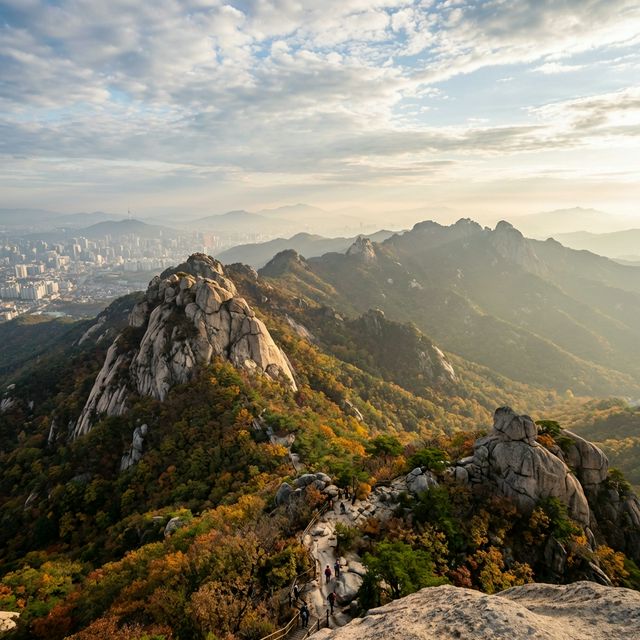
Imagine escaping Seoul's bustling streets and finding yourself surrounded by granite peaks, ancient fortress walls, and panoramic city views—all within 30 minutes of the city center. Bukhansan National Park holds the Guinness World Record as the "Most Visited National Park per Unit Area," and for good reason: it offers world-class hiking that's incredibly accessible to anyone in Seoul.
Why Bukhansan is Seoul's Ultimate Hiking Destination
Bukhansan National Park is a natural wonder that defies its urban setting. Rising dramatically from Seoul's northern edge, its granite peaks create a stunning skyline that's visible from across the city. But what makes Bukhansan truly special isn't just its beauty—it's the combination of accessibility, variety, and cultural richness that few urban national parks can match.
The park's Guinness World Record status isn't just a fun fact—it reflects how seamlessly nature and city coexist here. You can leave your Seoul hotel, take a subway and bus, and be on a mountain trail in under an hour. This accessibility has made Bukhansan a beloved weekend destination for Seoulites and a must-visit for travelers wanting to experience Korea's hiking culture without venturing far from the capital.
The park's historical significance adds depth to every hike. The Bukhansanseong Fortress, built in the early 18th century to defend Seoul, snakes across the mountains with its stone walls and gates still largely intact. As you hike, you're literally walking through history, following paths that soldiers once patrolled and passing through gates that have stood for centuries.
Bukhansan offers year-round hiking opportunities, with each season bringing its own character. Spring blooms paint the mountainsides, summer's lush greenery provides shade, autumn's foliage creates a spectacular color show, and winter transforms the peaks into a snow-covered wonderland. No matter when you visit Seoul, Bukhansan is ready to welcome you.
Getting to Bukhansan: Easy Access from Anywhere in Seoul
One of Bukhansan's greatest strengths is its accessibility. Multiple entrances serve different parts of the park, but most hikers head to one of two main access points.
Bukhansanseong Entrance (West Side - Most Popular)
This is the primary gateway for hiking to Baegundae Peak, the park's highest point. Getting here is straightforward:
- Take Seoul Metro Line 3 to Gupabal Station (구파발역)
- Exit through Exit 1
- Board bus 34, 704, or 8772 at the bus stop outside
- Ride for 10-15 minutes to the "Bukhansanseong" bus stop
- Follow the crowds (or turn right at the first junction) to reach the Bukhansanseong Park Information Center
The journey from central Seoul (Myeongdong, Seoul Station) typically takes 30-60 minutes depending on your starting point. Use Naver Maps for the most accurate real-time directions, as it's better integrated with Korean public transit than Google Maps.
At the entrance, you'll find convenience stores, restaurants, and cafes where you can stock up on water, snacks, and any last-minute supplies. This is your final chance to buy provisions—there are no shops once you're on the trail.
Dobongsan Entrance (East Side)
For trails on the eastern side of the park, including routes to Jaunbong Peak and Uiam Rock:
- Take Seoul Metro Line 1 or 7 to Dobongsan Station (도봉산역)
- Use Exit 1
- Follow signs to the park entrance (short walk)
This entrance is less crowded than Bukhansanseong and offers its own set of excellent trails.
Timing Your Visit
Weekdays offer a more peaceful experience with fewer crowds. Weekends, especially Saturday mornings, can see hundreds of hikers on popular trails. If you're hiking on a weekend, start as early as possible (6:00-7:00 AM) to avoid the rush and enjoy cooler temperatures.
Baegundae Peak: The Crown Jewel (836.5m)
Baegundae Peak, at 836.5 meters, is the highest point in Bukhansan National Park and the ultimate goal for most hikers. The summit offers breathtaking 360-degree views of Seoul, with the city sprawling in every direction and the Han River snaking through it.
Bukhansanseong Route: The Most Popular Path
Distance: 3.4 km one-way
Ascent Time: 2 hours 40 minutes
Round Trip: 4-6 hours
Difficulty: Intermediate to Advanced
This is the most popular route to Baegundae for good reason—it's the most direct path from the main entrance and offers a good balance of challenge and accessibility.
What to Expect:
The hike begins relatively gently, following a well-maintained path through forest. You'll encounter many stairs—hundreds of them—but they're evenly spaced and allow for a steady rhythm. As you ascend, you'll pass sections of the Bukhansanseong Fortress walls, offering glimpses into the park's historical significance.
The trail gradually steepens, and about two-thirds of the way up, the character changes. The forest opens up, granite slabs appear, and the path becomes rockier. You'll start to get teaser views of Seoul below, building anticipation for the summit panorama.
The Challenging Final Hour
Here's what most guides don't emphasize enough: the final section to Baegundae's summit is genuinely challenging. This isn't a gentle stroll—it's a steep scramble that requires both physical fitness and mental determination.
In the last kilometer, you'll encounter:
- Chains and metal ropes bolted into the granite for handholds
- Steep inclines approaching 75 degrees in some sections
- Narrow passages where you'll need to wait your turn on busy days
- Exposed rock faces that can be intimidating if you have a fear of heights
Safety Tips for the Final Push:
- Bring gloves (thin work gloves or hiking gloves) to protect your hands when gripping chains and ropes
- Take your time and don't feel pressured by faster hikers behind you
- Use three points of contact (two hands and one foot, or two feet and one hand) when scrambling
- Look for painted arrows on the rocks showing the safest route
- Turn back if conditions are wet or icy—the granite becomes extremely slippery
The Summit Experience
After the challenging final push, the summit of Baegundae is your reward. The granite platform at the top offers stunning 360-degree views of Seoul. On clear days, you can see:
- The entire Seoul metropolitan area spread below
- The Han River winding through the city
- Other mountain ranges in the distance
- The contrast between urban development and natural peaks
The summit can be crowded, especially on weekends, but there's usually enough space for everyone to find a spot to rest and take photos. Many hikers bring packed lunches to enjoy at the top—there's something special about eating kimbap while overlooking the city.
Photo Opportunities: The summit marker, the views in every direction, and the dramatic granite formations all make for excellent photos. Early morning or late afternoon light is particularly beautiful.
Alternative Trails for Different Skill Levels
Not everyone wants to tackle Baegundae's challenging summit, and that's perfectly fine. Bukhansan offers excellent trails for every fitness level and time commitment.
Easy: Bukhansan Dulle-gil (6.4km)
Time: 2 hours
Difficulty: Easy
Perfect For: Families, beginners, those wanting a gentle forest walk
The Dulle-gil is a gentle forest path that circles around the base of the mountains without any significant elevation gain. It's well-maintained with minimal stairs and offers a peaceful nature experience without the physical demands of summit hikes. This is an excellent choice for a relaxing afternoon walk or for those who want to experience Bukhansan's natural beauty without the challenge.
Moderate: Samcheonsa Trail (7.3km)
Time: 2 hours 40 minutes
Difficulty: Moderate
Perfect For: Those wanting culture and nature combined
This beautiful trail connects ancient Buddhist temples over a thousand years old, offering a unique combination of spiritual sites and natural beauty. The path includes some elevation gain but nothing as extreme as the Baegundae summit route. You'll walk through serene forest, visit historical temples, and enjoy mountain views without the intense physical challenge.
Advanced: Bukhansanseong-Daenammun Circuit (10.2km)
Time: 4 hours 10 minutes
Difficulty: Advanced
Perfect For: Experienced hikers wanting a full-day adventure
This longer circuit follows the fortress walls, passing through multiple gates and offering extensive views of both the mountains and Seoul. It's a challenging full-day hike that combines historical exploration with physical challenge. You'll gain a deep appreciation for the fortress's scale and the effort required to build it centuries ago.
Insubong Peak: For Rock Climbers Only
At 811 meters, Insubong is Bukhansan's second-highest peak, and its dramatic granite face is visible from many points in the park. However, unlike Baegundae, Insubong is not accessible to regular hikers.
Insubong is a rock climbing destination with 89 documented climbing routes ranging from moderate to extremely difficult. The peak requires specialized climbing equipment, technical skills, and experience. Attempting to reach the summit without proper gear and training is dangerous and illegal.
For Non-Climbers: You can enjoy excellent views of Insubong from several vantage points:
- From Insuam Temple along the Bukhansan Ui trail
- From certain points on the Baegundae route
- From various viewpoints in the park
Watching climbers tackle Insubong's routes is impressive and gives you an appreciation for the technical climbing community that thrives in Bukhansan.
Best Times to Hike Bukhansan
Bukhansan is hikeable year-round, but each season offers a different experience.
Spring (March-May): Blooms and Renewal
Spring brings mild temperatures and blooming flowers to Bukhansan. Cherry blossoms, azaleas, and various wildflowers paint the mountainsides. The weather is generally pleasant, though early spring (March) can still be chilly at higher elevations. This is an excellent time for hiking before the summer heat arrives.
Autumn (September-November): Peak Season
Autumn is arguably the best time to hike Bukhansan. The fall foliage is spectacular, with the mountains ablaze in reds, oranges, and yellows. Late October to early November typically offers peak colors. The weather is cool and comfortable, with clear skies providing excellent visibility.
Downside: Everyone knows autumn is beautiful, so expect crowds, especially on weekends. Start early to beat the rush.
Summer (June-August): Early Morning Essential
Summer in Seoul is hot and humid, and Bukhansan is no exception. The mountains offer some relief from the city heat, but summit hikes in midday summer sun can be exhausting. If you hike in summer:
- Start at first light (5:00-6:00 AM)
- Bring extra water (4+ liters)
- Wear sun protection
- Consider shorter, shadier trails
- Be prepared for afternoon thunderstorms
Winter (December-February): Snow-Covered Challenge
Winter transforms Bukhansan into a snow-covered landscape that's beautiful but challenging. The granite can become extremely slippery when icy, and crampons or ice cleats are often necessary. Some sections may be closed for safety during severe weather.
Winter hiking requires:
- Proper winter gear and layers
- Crampons or ice cleats
- Extra caution on steep sections
- Checking trail conditions before you go
Weekend vs. Weekday Strategy: If possible, hike on weekdays to avoid crowds. If you must hike on weekends, start before 7:00 AM to enjoy a more peaceful experience and avoid traffic jams on narrow trail sections.
Essential Gear and Preparation
Proper preparation makes the difference between an enjoyable hike and a miserable one.
Footwear: Non-Negotiable
Proper hiking shoes or boots with good grip are essential, especially for Baegundae. The granite can be slippery, and the steep sections require solid traction. Sneakers or casual shoes are inadequate and dangerous for summit hikes.
Gloves for Rope Sections
Bring thin work gloves or hiking gloves for the chain and rope sections near Baegundae's summit. The metal can be rough on bare hands, and gloves provide better grip and protection.
Water: Bring More Than You Think
There are no water sources on the trails. You must carry all the water you'll need for 4-6 hours of hiking. Bring:
- 3 liters minimum for Baegundae in moderate weather
- 4+ liters in summer
- 2-3 liters for shorter trails
Dehydration is one of the most common problems hikers face. It's better to carry extra water down than to run out halfway up.
Clothing Layers
Mountain weather can change quickly, and the summit is often windier and cooler than the base. Use a layering system:
- Base layer: Moisture-wicking shirt
- Mid layer: Light fleece or insulated jacket
- Outer layer: Windproof jacket
- Hat and gloves: Even in summer for the summit
Food and Snacks
Pack high-energy snacks and a lunch if you're doing a longer hike:
- Trail mix, nuts, dried fruit
- Energy bars or granola bars
- Kimbap or sandwiches for lunch
- Chocolate or candy for quick energy
What to Buy at Entrance Convenience Stores
The convenience stores near the park entrance stock everything you might have forgotten:
- Water and sports drinks
- Snacks and instant noodles
- Gloves (usually available)
- Basic first aid supplies
- Hiking poles (sometimes available for rent)
Trail Etiquette and Safety
Bukhansan's popularity means you'll be sharing the trail with many other hikers. Good etiquette makes the experience better for everyone.
Crowded Trail Management
On busy weekends, popular trails can feel like a slow-moving parade. Be patient and courteous:
- Let faster hikers pass when safe to do so
- Don't block narrow sections for extended photo sessions
- Keep moving on steep sections where others are waiting
- Be encouraging to struggling hikers—a kind word helps
Passing Protocol
On narrow sections, especially the final approach to Baegundae:
- Uphill hikers have right of way (it's harder to restart uphill)
- Communicate with a simple "excuse me" or hand gesture
- Wait for safe spots to pass rather than forcing it on dangerous sections
Emergency Procedures
In case of emergency:
- Call 119 (Korea's emergency number)
- Alert other hikers who can help or relay messages
- Stay put if injured rather than trying to continue
- Know your location (trail name, approximate distance from entrance)
Rangers patrol the trails regularly, and the park has emergency response systems in place.
Leave No Trace
- Pack out all trash (there are no bins on the trails)
- Stay on marked trails to prevent erosion
- Don't pick flowers or disturb wildlife
- Keep noise levels down to respect others' nature experience
Historical and Cultural Highlights
Bukhansan isn't just about natural beauty—it's steeped in history.
Bukhansanseong Fortress
Built in 1711 during the Joseon Dynasty, the Bukhansanseong Fortress was constructed to defend Seoul from invasion. The fortress walls stretch for over 9 kilometers across the mountains, connecting peaks and valleys in a defensive perimeter.
As you hike, you'll pass through several fortress gates (mun) and walk alongside sections of the stone walls. These structures have stood for over 300 years, a testament to the skill of their builders and the strategic importance of these mountains.
Ancient Temples
Several Buddhist temples dot the park, some over a thousand years old. These serene sites offer moments of quiet contemplation and cultural insight. The temples are still active, and you might encounter monks or Buddhist practitioners during your hike.
Cultural Significance
For Koreans, hiking is more than exercise—it's a cultural practice that brings together fitness, nature appreciation, and social connection. Bukhansan embodies this culture, with groups of friends, families, and hiking clubs tackling the trails together. You'll often see hikers dressed in full technical gear (Koreans take their hiking fashion seriously!) and groups sharing food and soju at the summit.
Common Mistakes to Avoid
Learn from others' errors to ensure your Bukhansan experience is a positive one.
Underestimating the Difficulty: Many hikers assume that because Bukhansan is in Seoul, it must be easy. The final push to Baegundae is genuinely challenging and has defeated many unprepared hikers.
Starting Too Late on Weekends: Beginning your hike at 10:00 AM on a Saturday means you'll be in a crowd the entire way and might face a slow-moving line on the final summit approach.
Bringing Inadequate Water: Running out of water on a hot day with hours of hiking ahead is miserable and dangerous. Always bring more than you think you'll need.
Wearing Wrong Footwear: Sneakers or casual shoes on the Baegundae route is asking for slips, falls, and sore feet. Invest in proper hiking shoes.
Skipping the Final Push: Some hikers give up just before the challenging final section, missing the summit views. If you've come this far, push through—the reward is worth it.
Conclusion: Your Bukhansan Adventure Awaits
Bukhansan National Park offers something rare: world-class hiking right in the heart of a major metropolis. Whether you're tackling the challenging summit of Baegundae, enjoying a peaceful forest walk on the Dulle-gil, or exploring historical temples on the Samcheonsa trail, you're experiencing one of Seoul's greatest natural treasures. Its sheer accessibility means you can easily schedule a hike alongside palaces and shopping; our Seoul Travel Guide can help you orient the park relative to your accommodation. Before heading up the granite slopes, review our guide to Essential Gear for Hiking in Korea to ensure you have the appropriate footwear and layers. As you map out everything you want to accomplish in the country, finding a morning for Bukhansan is one of the easiest ways to inject outdoor adventure into a well-rounded 10-Day South Korea itinerary.