Digital Nomad Guide to South Korea: Visas, Co-working Spaces and Cost of Living

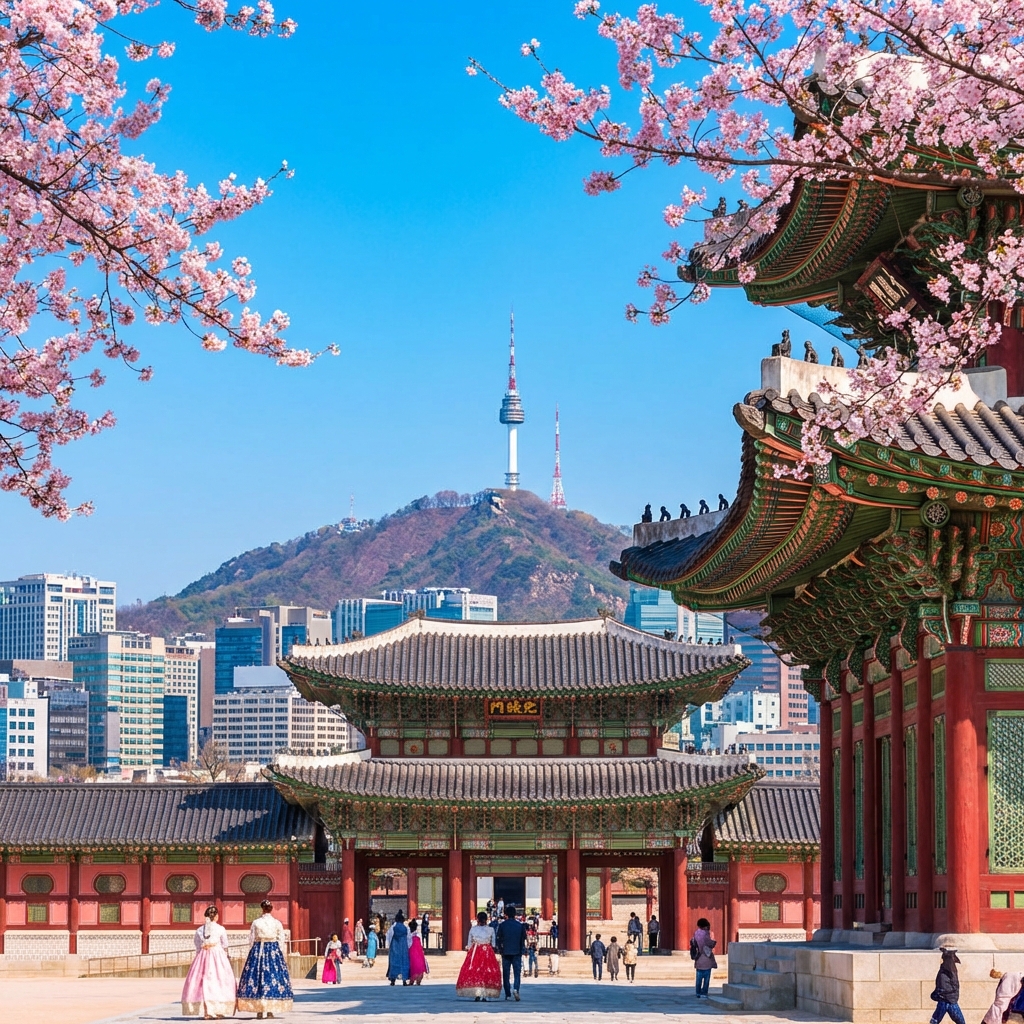
South Korea has rapidly transformed from a high-tech stopover into one of the world's most desirable long-stay destinations for remote workers. In 2026, the "Land of the Morning Calm" is anything but quiet for the global digital nomad community; it is a vibrant, ultra-connected hub where ancient traditions meet a cyberpunk future. Whether you are sipping a latte in a high-rise cafe in Gangnam or coding from a seaside workation center in Busan, Korea offers an infrastructure and lifestyle that few countries can match.
The Dawn of the Korean Workation Era
To become a digital nomad in South Korea in 2026, you primarily need to secure the F-1-D Workation Visa, which requires an annual income of approximately $66,000 USD (85M KRW). Combine this with a T-Money card for transport and a Residence Card (ARC) for local services, and you can enjoy world-class connectivity and safety.
For years, digital nomads flocked to the familiar trails of Southeast Asia or the coastal towns of Portugal. However, as the demand for high-speed infrastructure, safety, and unique cultural immersion grew, South Korea stepped up to the plate. In 2024, the government launched the pilot for the F-1-D Workation Visa, and by 2026, this program has become a cornerstone of the country's tourism strategy.
What makes Korea different? It’s the "Pali-Pali" (hurry-hurry) culture paired with a deep respect for "Slow Life" in the provinces. You get the world’s fastest internet, 24-hour convenience, and a public transport system that runs like clockwork, all while being minutes away from mountain trails or historic temples. This guide breaks down everything you need to navigate this transition, from legal requirements to finding your perfect community.
1. The South Korea Digital Nomad Visa (F-1-D) in 2026
The most significant hurdle for long-term stays has always been the visa. While the 90-day K-ETA remains popular for short-term visitors, the F-1-D Workation Visa is the "gold standard" for true nomads. For those eyeing longer-term employment or a more structured residency path, our dedicated Korean E-7 and Digital Nomad Visa guide covers every visa category in depth.
The 2026 Policy Landscape
As of 2026, the Workation Visa has evolved from a pilot program into a permanent immigration category. The government has streamlined the process, allowing for digital applications in many jurisdictions. The primary goal is to decentralize the expat population, encouraging nomads to spend time in "Local Workation Centers" across the country, not just in Seoul.
Eligibility and Income Requirements
The F-1-D visa is specifically designed for remote workers employed by companies outside of South Korea or freelancers with a stable global client base. The most critical requirement is the income threshold. As of 2026, applicants must prove an annual income that is more than twice the Korean Gross National Income (GNI) per capita from the previous year.
For 2026, this translates to approximately 85 million KRW (roughly $66,000 USD) per year. While this is higher than many European nomad visas, it ensures that visitors can comfortably afford the cost of living in major cities like Seoul without needing local employment.
Document Checklist
To apply, you will typically need:
- Proof of Employment: A contract or certificate of employment from a non-Korean company showing you have worked there for at least one year.
- Income Proof: Bank statements and tax returns showing you meet the GNI threshold consistently over the last 12 months.
- Criminal Record Check: An apostilled background check from your country of origin (must be issued within the last 6 months).
- Health Insurance: A private policy with at least 100 million KRW (~$75,000 USD) coverage for medical treatment and repatriation.
- Family Inclusion: Spouses and dependent children can join the primary visa holder, making it an attractive option for "nomad families."
The Application Process: Step-by-Step
- Preparation: Gather your apostilled documents. This usually takes 4-8 weeks depending on your home country.
- Submission: Apply at a Korean Embassy or Consulate. Some regions now allow for e-Visa submissions.
- Conversion (Optional): If you are already in Korea on a B-1 (Visa Exempt) or C-3 (Short-term) status, you can visit a local immigration office to request a change of status to F-1-D.
- Registration: Once approved, you must apply for an Alien Registration Card (ARC)—now often referred to as a "Residence Card"—within 90 days of arrival. This card is your key to local services, banking, and phone plans.
2. Choosing Your Hub: A Neighborhood Deep-Dive
South Korea may be small, but the difference between living in North Seoul and South Busan is immense. Here is where the nomads are settling in 2026.
Seoul: The Hyper-Scale Metropole
Seoul is essentially a collection of 25 "mini-cities."
- Seongsu-dong (The Industrial Chic Hub): This is the current "it" neighborhood. Once a district of shoe factories, it’s now the headquarters for creative agencies and tech startups. Nomads love it for the massive cafes (like Daelim Changgo) and the proximity to Seoul Forest for afternoon walks.
- Yeonnam-dong (The Chill Creative Hub): Located next to the bustling Hongdae, Yeonnam-dong is more residential and refined. The "Gyeongui Line Forest Park" (often called 'Yeontral Park') is a perfect spot for working outdoors on a sunny day.
- Hannam-dong (The Global Hub): If you want an international community with high-end dining and art galleries, Hannam is the place. It’s expensive, but it offers the easiest transition for those who aren't ready to dive fully into a 100% Korean-speaking environment.
- Euljiro (The "Newtro" Hub): For those who love the contrast of gritty alleys and hidden rooftop bars. It’s central and great for exploring the old markets of Seoul while staying close to coworking spaces in the CBD.
Busan: The Ocean-Front Office
Busan is no longer just a weekend getaway. It has matured into a serious nomad destination.
- Haeundae: The classic choice. You have high-rise luxury apartments, the beach, and the "Centum City" business district nearby. It feels like a mix of Miami and Tokyo.
- Gwangalli: More popular with the younger, digital-savvy crowd. The view of the Diamond Bridge (Gwangandaegyo) at night is iconic, and the beachfront is lined with cafes that welcome laptop workers.
- Yeongdo: A rugged island district that is being revitalized with "Workation" grants. It’s quieter, more traditional, and offers some of the best coffee roasteries in the country.
Regional Spotlights: Beyond the Big Two
- Gangneung: The East Sea's Rising Star. Only 1.5 hours from Seoul via KTX, it offers the "Coffee Street" on Anmok Beach and a much lower cost of rent. The city government provides subsidies for nomads who stay for at least two weeks in designated workation houses.
- Jeju Island: The slow-life paradise. Perfect for those who want to surf or hike Hallasan between meetings. Jeju has a very established expat and nomad community in the Aewol and Seongsan areas.
- Daegu: Often overlooked, Daegu is the "hot" city (literally and figuratively) with a thriving cafe culture and much more affordable luxury housing than Seoul. Our Daegu travel guide covers the city's best neighborhoods and hidden gems.
3. Cost of Living: Korea vs. The World (2026)
To understand the budget required, it helps to compare Korea with other popular hubs. While more expensive than Bali or Mexico City, it is significantly cheaper than New York, London, or Singapore.
| Expense Category | Seoul (Comfortable) | Busan (Comfortable) | Comparison: London |
|---|---|---|---|
| Rent (Studio/1BR) | $900 - $1,300 | $600 - $900 | $2,200+ |
| Monthly Utilities | $80 - $150 | $60 - $120 | $250+ |
| Daily Meal (Out) | $8 - $15 | $6 - $12 | $18 - $25 |
| Monthly Transport | $50 | $40 | $180+ |
| 5G Data (Unlimited) | $45 | $45 | $35 |
The "Key Money" Hurdle
The most unique aspect of Korean living is the Jeonse and Wolse systems.
- Wolse: You pay a monthly rent and a significant deposit (usually $4,000 - $10,000).
- Short-term Rentals: For nomads, the "Short-term" (Danggi) market is better. These apartments often come fully furnished and require only a small deposit (equivalent to one month's rent), but the monthly price is 20-30% higher.
- Goshiwon/Goshitel: These are tiny, one-room units with a bed and desk, often including free rice and kimchi. While too small for many, they are an ultra-budget option ($300 - $500/mo) with zero deposit.
4. Connectivity and Tech Infrastructure
In Korea, 5G isn't a luxury; it's a basic human right. You will find high-speed public Wi-Fi on subways, buses, and even in many public parks.
Mobile Plans for Nomads
If you have an ARC (Residence Card), you can get a "Post-paid" plan with KT, SKT, or LG U+. These are the cheapest. Without an ARC, you are limited to:
- Prepaid SIMs: Can be bought at the airport or in major districts.
- eSIMs: The most convenient for those with modern phones. Companies like Woori Mobile or Chingu Mobile specialize in foreigner-friendly plans that can be topped up via an app.
VPN Usage
While the internet is fast, Korea does have some censorship (mostly related to adult content and certain North Korean websites). Most nomads use a VPN (like NordVPN or ExpressVPN) to access their home country's streaming services and ensure a layer of privacy while using public Wi-Fi.
5. Coworking and the "Cafe-Working" Culture
Korea might have the highest density of cafes in the world. However, not all are suitable for a full 8-hour shift.
The Coworking Titans
- FastFive: The dominant local player. Their "Lounge Pass" is a favorite for nomads who move around Seoul. It gives you access to the shared lounges of multiple branches.
- WeWork: Still present and popular in Gangnam and Euljiro, offering a familiar environment for those used to the brand globally.
- SparkPlus: Similar to FastFive, with a focus on more "serious" business environments.
The Specialized Nomad Spots
- Hoppin House (Seoul): This remains the "Embassy" of the digital nomad world in Korea. It’s designed by nomads, for nomads. The community aspect—Slack channels, weekend trips, and potluck dinners—is what sets it apart.
- The Cave (Busan): A unique, moody space in Busan that feels like a high-end lounge but is built for productivity.
Cafe Etiquette: The Unwritten Rules
- The 1-Drink Rule: Buy a drink every 3 hours if you are staying all day.
- Power Outlets: Look for "Konsento" (concentrate/outlet). Most modern cafes have them at every table, but some "Instagram-worthy" cafes have removed them to discourage long stays.
- Volume: Koreans are generally quiet in cafes. If you have a Zoom call, use a phone booth in a coworking space or go to a specific "Study Cafe."
6. A Week in the Life: The Nomad Routine
What does a typical week look like for a nomad in Korea?
- Monday - Wednesday (Deep Work): 9 AM start at a local FastFive. Lunch at a "Baekban" (home-style meal) spot for $7. Afternoon "Cafe hopping" to a new aesthetic spot in Seongsu.
- Thursday (Networking): Afternoon Korean language class at the Global Village Center. Evening meetup with the "Digital Nomads Korea" Slack group for craft beers in Itaewon.
- Friday (Coastal Escape): Take the KTX to Busan. Check into a workation house. Work from the Gwangalli beach-front Workation Center until 6 PM.
- Weekend (Exploration): Hiking in Bukhansan National Park or exploring the ancient palaces. Sunday night spent at a Jjimjilbang (Korean sauna) to reset for the week.
7. Nomad Success Stories: Real-World Experiences
Case Study: Mark, Software Engineer (US)
"I moved to Seoul on the Workation Visa in early 2025. The biggest surprise wasn't the tech—it was the safety. I can walk home at 3 AM with my laptop bag and feel completely secure. I spend about $2,500 a month living in a nice officetel in Mapo, and my productivity has skyrocketed because of the cafe culture."
Case Study: Sarah, Graphic Designer (Germany)
"I spent 3 months in Busan before moving to Jeju. The Busan Workation Center was a game-changer. Working with a view of the ocean for free? You can't beat that. I found it easy to make friends through the local language exchange meetups."
8. Practicalities: Health, Banking, and Safety
Healthcare: The Gold Standard
If you hold a Residence Card and stay over 6 months, you will join the National Health Insurance (NHI).
- Cost: ~$130/month.
- Efficiency: You can walk into almost any clinic (Dental, Dermatology, GP) without an appointment.
- Cost of Visit: A typical consultation plus three days of medicine usually costs under $10 USD.
Banking for Nomads
Opening a bank account is easier once you have your Residence Card. Hana Bank and Shinhan Bank are the most foreigner-friendly. For those without a card:
- WOWPASS: Use it! It’s the easiest way to manage money. You can exchange cash at the machine and use the card for everything.
- T-Money: Essential for buses and subways.
9. Cultural Nuances: Living, Not Just Visiting
To truly enjoy your time, you need to understand a few cultural concepts.
- Jeong: This is the uniquely Korean feeling of deep attachment and "social glue." As a regular at a local cafe or restaurant, you might experience "Service" (free extras), which is a sign of Jeong.
- Social Hierarchy: Age and status matter. Even in nomad circles, showing respect to elders (even if they are just 2 years older) is appreciated.
- Drinking Culture: Socializing often involves food and alcohol. Learning the drinking etiquette (pouring with two hands, turning away to drink) will earn you huge respect from locals.
- Giving Back: Many nomads find meaning beyond their work by getting involved with local communities. Volunteering in Korea is a rewarding way to build genuine connections and contribute during your stay.
10. The 2026 Nomad Checklist: Ready to Go?
Before you book your flight, ensure you have ticked these boxes:
- Apostilled Criminal Record Check: (Takes the longest).
- Proof of Income: (Last 12 months of bank statements).
- Health Insurance Certificate: (Meeting the 100M KRW requirement).
- Accommodation for first 2 weeks: (Booked near your target coworking space).
- Essential Apps Downloaded: (Naver Maps, KakaoTalk, Papago).
- WOWPASS / T-Money: (Research where to pick these up at the airport).
Conclusion: Why Korea is the Ultimate 2026 Destination
South Korea in 2026 is a masterclass in modern living. It offers a effortlessly "frictionless" lifestyle where high-speed infrastructure meets rich traditional culture. While navigating the technicalities of the F-1-D visa might seem daunting, the professional and personal rewards of relocating to this hyper-connected hub are immense. Once you're settled, you may want to start testing the waters by exploring some of the best cafes to work from in Seoul or reading up on learning Korean as a traveler to deepen your daily interactions.
Whether you're here for the flawless 1Gbps Wi-Fi, the dynamic food scene, or the seamless public transport, South Korea will fundamentally change how you experience remote work. It’s time to pack your laptop and experience the Land of the Morning Calm.
Ready to start your journey? Complete your setup by checking out our full reviews of the best co-working spaces in Seoul and be sure to read our step-by-step guide on opening a Korean bank account to handle your local finances like a pro.