Opening a Korean Bank Account as a Foreigner: The Ultimate 2026 Guide

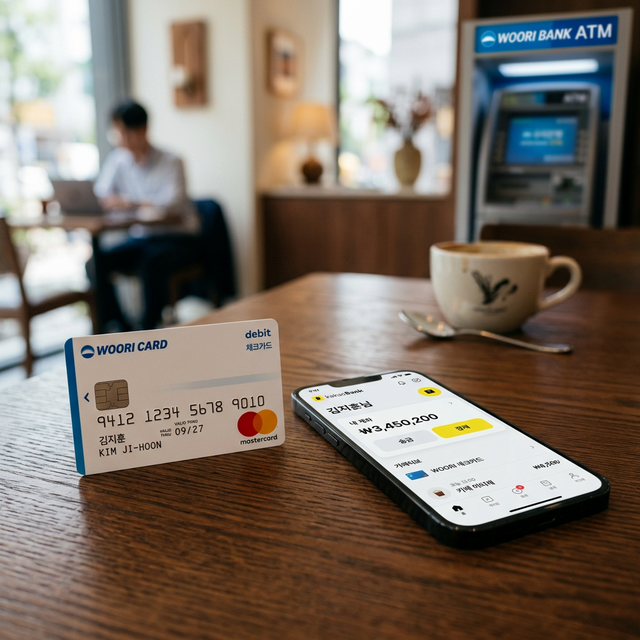
Opening a bank account in South Korea often feels like the final boss battle of the "settling in" process. While the country is famous for its hyper-digital lifestyle and lightning-fast services, its banking sector is notoriously guarded, requiring a specific set of documents and a fair amount of patience to navigate.
Introduction: Why a Local Account is Your Key to Korea
If you are planning to stay in South Korea for more than a few weeks, you will quickly realize that while your international Visa or Mastercard works for most face-to-face transactions, the "real" Korea happens behind a digital wall. Whether you want to order late-night fried chicken on Baemin, shop for lightning-deal groceries on Coupang, or simply pay your monthly rent without carrying a stack of 50,000 KRW bills to the local convenience store, a local bank account is non-negotiable.
In 2026, the landscape has shifted significantly. We have seen the full integration of the Mobile Alien Registration Card (ARC), the rise of foreigner-friendly digital banks like Toss and Kakao, and a push from traditional banks to offer AI-powered interpretation services. However, the core challenges—identity verification and transaction limits—remain. This guide is designed to take you through the entire journey, from walking into a branch with nothing but a passport to becoming a fully verified user with a high-limit account and a wallet full of rewards-heavy "Check Cards."
The "Big 3" Requirements: What You Need Before You Start
Before you even think about stepping into a bank branch or downloading a banking app, you need to ensure your "Identification Trinity" is in order. Banking in Korea is built on a foundation of "Real Name Verification" (실명확인), and if one piece of the puzzle doesn't match the others, the system will reject you.
1. The Alien Registration Card (ARC)
The ARC (officially known as the Residence Card) is the most critical piece of identification. While some banks can open accounts with just a passport, these accounts are severely crippled (more on that later). To access mobile banking, online shopping, and debit cards, you need your ARC.
Pro Tip for 2026: If you have already received your physical card, make sure to also issue the Mobile ARC via the "Government 24" app. As of late 2025, almost all major banks (Hana, Shinhan, KB, and Toss) now accept the digital QR-based ID for account opening and verification, which can save you if you forget your physical wallet.
2. A Korean Phone Number (In Your Name)
This is the step where most expats stumble. In Korea, your phone number is your digital signature. To open a bank account, you MUST have a Korean phone number that is registered to the exact same name and ID number as your bank application.
If you are using a "Tourist SIM" or a "Prepaid SIM" registered under a generic name or your passport number, you will likely fail the identity verification step for mobile banking. Once you get your ARC, your first stop should be a mobile service provider (SKT, KT, or LG U+) to update your registration or sign up for a "Postpaid" contract.
3. Proof of Purpose
Gone are the days when you could open an account just because you "wanted to save money." To combat money laundering and voice phishing, Korean banks now require a "Proof of Purpose" (금융거래목적확인). Depending on your visa, this could be:
- Employment Contract / Certificate of Employment: For E-series visa holders.
- Certificate of Enrollment: For D-series students.
- Rental Agreement: To prove you need an account to pay monthly rent.
- Utility Bills: To prove residency.
Can You Open an Account Without an ARC?
The short answer is yes, but the long answer is you probably won't like it.
If you have just arrived and need a place to park your money while waiting for your ARC (which can take 4-6 weeks), you can open a Non-Resident Won Account.
The Limitations of Passport-Only Accounts:
- No Check Card: You usually won't get a debit card. You'll only get a "Bankbook" (Tongjang) and maybe an ATM-only card.
- No Online/Mobile Banking: Most banks will not allow you to use their app because they cannot verify your identity through the standard mobile carrier system.
- Transaction Limits: Expect a very low daily limit (often 1,000,000 KRW for counter transactions and much less for ATMs).
- Branch Bound: You have to visit the branch in person for almost every transaction.
The Strategy: Use a passport account as a temporary measure. As soon as your ARC arrives, visit the same branch and "upgrade" your account. The teller will update your ID from your passport number to your ARC number, which unlocks the ability to apply for a Check Card and register for mobile banking.
Which Bank Should You Choose? (Top 5 Ranked for 2026)
Not all banks are created equal when it comes to the expat experience. Here is how the major players rank for foreigners in 2026.
1. Hana Bank: The "Gold Standard" for Expats
Hana Bank has consistently held the title of the most foreigner-friendly bank in Korea.
- The App: The Hana EZ app is specifically designed for foreigners. It supports 16 languages and simplifies international remittances. In 2026, the app has been updated with "One-Click Remittance," allowing you to set a favorite recipient and send money home just by making a local transfer to a dedicated virtual account. It also features a built-in "Exchange Rate Alarm" that notifies you when your home currency hits a specific target rate.
- The Service: Many Hana branches in areas like Itaewon, Hongdae, and Gangnam have dedicated "Global Desks" with fluent English speakers. They also operate "Sunday Branches" in places like Wongok-dong (Ansan) and Toegye-ro (Seoul), which are lifesavers for those working regular 9-to-6 jobs.
- Card Benefits: Their "VIVA G" and "VIVA X" Check Cards are legendary among travelers. They offer 0% international transaction fees and 1.0% cashback on overseas spending, making them perfect for digital nomads who occasionally travel to Japan or Southeast Asia while based in Korea.
2. Toss Bank: The Digital Nomad's Favorite
Toss Bank changed the game in 2022 by becoming the first internet-only bank to allow foreigners to open accounts entirely through an app.
- Pros: No branch visits required. The UI is incredibly clean and modern. In 2026, Toss has the best English interface of any digital-only bank. Their "Foreign Exchange" service is particularly impressive, offering 100% exchange rate preference (meaning they don't take a spread) on 17 major currencies. You can hold balances in multiple currencies and spend them directly using your Toss debit card.
- Cons: You must have an ARC and a Korean phone number in your name. You cannot use Toss with just a passport. Also, because they have no physical branches, if you ever lose access to your phone or get locked out, resolving the issue requires a video-call verification process that can be strict.
3. Shinhan Bank: Strong Global Presence
Shinhan is a solid alternative to Hana, especially for those who need physical branches.
- Global+ Service: They offer video-call consultations in multiple languages. Their "Hey Young" account brand is targeted at people in their 20s and 30s, offering high interest rates on small savings balances (often up to 5% on the first 2 million KRW).
- Weekend Branches: Shinhan operates several "Sunday Branches" in areas with high foreign populations to serve those who can't visit during the week.
- App Innovation: The Shinhan SOL Bank app now features a "Foreigner-Only Mode" that streamlines the interface, focusing only on the services expats use most: transfers, utility payments, and card management.
4. Kakao Bank: The Cultural Powerhouse
For a long time, Kakao Bank was off-limits to foreigners. That changed recently.
- The Draw: Everyone in Korea uses KakaoTalk. Having a Kakao Bank account allows for seamless "Kakao Pay" integration and the ability to send money to friends via chat without needing their account number.
- Card Design: Let's be honest—part of the appeal is the "Ryan" or "Apeach" character-themed debit cards. They are a great conversation starter and come with surprising benefits, like discounts on Kakao Hairshop and Kakao Taxi.
- Availability: Like Toss, it's 100% digital and requires an ARC.
5. Woori Bank: The Reliable Workhorse
Woori Bank has a massive network and is often the "default" bank for many universities and large corporations.
- Global Desks: They have specialized desks in major cities.
- University Partnerships: If you are a student, check if Woori has a branch on your campus; they often have special streamlined processes for international students. They often offer a "Student ID + Debit Card" combo that simplifies your life significantly, acting as your library card, dorm key, and wallet all in one.
Step-by-Step Guide: The Branch Visit
If you are opening your first account (especially if you don't have an ARC yet), you will need to brave the physical bank branch.
Step 1: Find the Right Branch
Don't just go to the nearest branch. Search for a branch in a major "Global" area. In Seoul, branches in Itaewon, Myeongdong, Gangnam, or near major universities (Yonsei, SNU, Ewha) are much more likely to have English-speaking staff and experience with foreign ID formats. Using Kakao Maps or Naver Maps, you can often find "Global" branches by searching for "Foreigner Friendly Bank" in English or "외국인 특화 영업점" in Korean.
Step 2: Prepare Your "Battle Kit"
Bring the following (and check it twice):
- Passport (Physical copy).
- ARC (If you have it).
- Korean Phone Number (Have the number written down).
- Proof of Purpose (Employment contract, student ID, or a copy of your housing contract).
- Initial Deposit (10,000 - 50,000 KRW is enough).
- Your Home Country Tax ID (e.g., SSN for Americans, NI for UK citizens). Many banks require this for FATCA/CRS compliance. Without this, some banks might refuse to open an account that allows for international transfers.
Step 3: The Interaction
Take a ticket for "General Banking" (일반예금). When your number is called, tell the teller: "Oegugin gyegwa-reul mandeulgo sipeoyo" (I want to open a foreigner account).
A Handy Language Guide for the Bank:
| English | Korean | Pronunciation |
|---|---|---|
| I want to open an account. | 계좌를 만들고 싶어요. | Gye-jwa-reul man-deul-go si-peo-yo. |
| I want a debit card too. | 체크카드도 만들고 싶어요. | Che-keu-ka-deu-do man-deul-go si-peo-yo. |
| I want to apply for online banking. | 인터넷 뱅킹 신청하고 싶어요. | In-teo-net beng-king sin-cheong-ha-go si-peo-yo. |
| Please lift my transfer limit. | 이체 한도 올려주세요. | I-che han-do ol-lyeo-ju-se-yo. |
| I forgot my password. | 비밀번호 잊어버렸어요. | Bi-mil-beon-ho i-jeo-beo-ryeo-sseo-yo. |
| I lost my card. | 카드를 분실했어요. | Ka-deu-reul bun-sil-hae-sseo-yo. |
| Where do I sign? | 어디에 사인해요? | Eo-di-e sa-in-hae-yo? |
Step 4: Digital Certificates (The Important Part)
Before you leave, the teller will help you set up your mobile banking. In Korea, you need a "Certificate" (인증서) to do almost anything online. Ask them to help you issue a "Financial Certificate" (금융인증서) or a "Joint Certificate" (공동인증서).
Wait, what's the difference?
- Financial Certificate: Stored in the cloud. Easier to use across multiple devices. Valid for 3 years. This is the modern standard.
- Joint Certificate (Gong-dong In-jeung-seo): The old "Public Certificate." Stored on your phone's internal memory or a USB. It's clunky and expires every year, but some very old government websites still insist on it. In 2026, always go for the Financial Certificate first.
The "300,000 KRW Limit" (The Financial Transaction Restricted Account)
This is the number one complaint of foreigners in Korea. To prevent fraud and combat "Voice Phishing" (a major issue in Korea), almost all new accounts are categorized as "Financial Transaction Restricted Accounts" (한도제한계좌).
What are the limits?
- ATM Withdrawal/Transfer: 300,000 KRW per day.
- Mobile/Internet Transfer: 300,000 KRW per day.
- In-Person Counter Withdrawal: 1,000,000 KRW per day.
Imagine trying to pay a 2,000,000 KRW deposit on an apartment or buying a new high-end laptop when you can only transfer 300,000 KRW a day. It’s a nightmare that often takes newcomers by surprise. You can spend more using your Check Card (usually up to your account balance for physical swipes), but you cannot transfer money or withdraw large amounts.
How to Lift the Limit:
You cannot lift this limit online. You must return to the branch (usually after 3 months of active use) with proof of income or employment.
- Provide a Salary Certificate: If the bank sees a regular "Payroll" (급여) deposit coming into the account for 3 consecutive months, they will usually lift the limit. Bring your "Certificate of Income" (Sodeuk Geumaek Jeungmyeongwon) from the tax office if you are a freelancer or have been working longer.
- Automatic Payment Setup: Sometimes, setting up 2-3 automatic bill payments (phone, utilities, insurance) can help speed up the process. It shows the bank that this is a "living" account used for legitimate daily needs.
- The "Real Estate" Exception: If you are moving and need to transfer a large sum for your deposit (Jeonse/Wolse), you can bring your signed real estate contract to the branch. They will often grant a one-time increase for that specific day or amount.
- 2026 Context: Many banks are now using "AI-based limit lifting." If your spending patterns are consistent and your income is verified through the National Health Insurance (NHI) database, you might see a notification in your app offering to lift the limit automatically.
International Remittances: Sending Money Home
Once your account is set up, you’ll eventually need to send money back to your home country. In 2026, you have three main paths:
1. Traditional Bank Transfer (SWIFT)
- Best for: Very large sums (over $20,000).
- Pros: Highest security, direct bank-to-bank.
- Cons: High fees ($20-$50 per transfer), poor exchange rates (the bank takes a 1-3% spread), and takes 3-5 business days.
- Designation: Most Korean banks now require you to designate "one" bank as your primary remittance bank (거래외국환은행 지정) for the year. This is a regulatory requirement to track the $50,000 annual limit for overseas transfers. You can do this easily in the Hana EZ or Shinhan SOL apps.
2. Specialized Remittance Apps (SentBe, GME, WireBarley)
- Best for: Regular monthly transfers (sending salary home).
- Pros: Extremely low fees (often $0-$5), great exchange rates that are very close to the market rate, and often arrives within minutes.
- Integration: These apps use "Open Banking" to pull money directly from your Korean bank account once you authorize it.
- 2026 Update: Many of these apps now offer "Cash Pickup" in countries like the Philippines or Vietnam, and direct-to-wallet transfers for services like GCash or Venmo.
3. Wise (Formerly TransferWise)
- Best for: Mid-sized transfers and people who already use Wise globally.
- How to use in Korea: You cannot "send" KRW directly from the Wise app as easily as in other countries. Usually, you have to use a service like SentBe to send to your Wise account in USD/EUR/GBP, or use the "Wise Business" if you are an entrepreneur. However, in 2026, some Korean digital banks have begun trials for direct Wise integration.
The Checklist: Check Cards & Online Shopping
In Korea, we don't call them "Debit Cards"—we call them "Check Cards".
Why you need a good Check Card:
- T-Money Integration: Most Check Cards can function as a transportation card (Hu-bul Kyo-tong). You tap your bank card on the bus or subway, and the total is deducted from your account once a month.
- Cashback and Points: Korean cards are incredibly competitive. Look for cards that offer 5-10% back on "Life" categories like Starbucks, convenience stores, and Coupang.
- Online Authentication: When shopping on Coupang or Baemin, you will select your bank's app (e.g., Hana Pay, Shinhan SOL) to authenticate the purchase. This is why having your phone number and bank registration perfectly matched is so vital.
2026 Tech Updates: The Future of Banking in Korea
If you are reading this in 2026, you are in the era of "Open Banking 2.0."
- AI Interpretation: Banks like NH Nonghyup and KB Kookmin have introduced AI-powered translation screens at their counters. You speak into a mic in your native language, and it translates for the teller in real-time.
- Global Remittance Apps: While banks have their own apps, many expats now use third-party services like SentBe or GME Remittance. These apps often integrate directly with your Korean bank account via "Open Banking," allowing you to send money home with lower fees and better rates than a traditional bank transfer.
- The Death of the Bankbook: Physical paper bankbooks (Tongjang) are finally becoming optional. Most banks will now offer you a "Digital Bankbook" which you can view as a PDF or within the app.
Conclusion: Patience and Preparation
Opening a bank account in Korea is a necessary rite of passage for any long-term expat or remote worker. It usually requires a morning spent taking a number, signing a dozen digital forms, and exchanging a bit of creative "Konglish" with a teller. But once you hear that satisfying chime of a real-time transfer notification, or you use your new Check Card to order a late-night meal, that initial effort pays off massively by unlocking the country's ultra-convenient digital ecosystem.
To smooth out these necessary administrative hurdles, you might find it incredibly valuable to begin learning Korean as a traveler with key apps—it transforms daunting paperwork encounters into manageable tasks. Once your finances are flowing freely, you'll be perfectly poised to settle down and purchase a desk pass at one of the best co-working spaces in Seoul using your new local payment methods.
Banking in Korea is arguably the gateway to experiencing one of the most efficient, frictionless lifestyles on the planet. For a broader overview of thriving as an expat or remote professional, be sure to dive into our comprehensive digital nomad guide to South Korea and ensure the rest of your stay is a breeze.
Looking for more logistics tips? Check out our Digital Nomad Guide to South Korea or find the Best Neighborhoods for Expats in Seoul.