Korea with Toddlers: Practical Tips for Traveling with Young Children

South Korea is often celebrated for its neon-lit skyscrapers, ancient palaces, and spicy street food, but there is one side of the country that remains a well-kept secret among traveling parents: it is an absolute paradise for toddlers. From the hyper-clean nursing rooms in every department store to a culture that genuinely smiles at a fussy three-year-old, Korea offers a level of logistical support that makes family travel not just possible, but genuinely enjoyable. If you are planning to navigate the "Land of the Morning Calm" with a little one in tow, this guide will provide you with the essential, boots-on-the-ground tips to make your journey seamless.
The "Hidden Gem" for Families: Why Korea is a Toddler Paradise
When most parents think of international travel with a toddler, they envision cramped subways, inaccessible streets, and the constant stress of finding a clean place to change a diaper. South Korea, however, challenges these assumptions at every turn. The country is remarkably safe, impeccably clean, and surprisingly well-equipped for young children.
One of the first things you will notice is the cultural attitude toward children. In Korea, children are often viewed as the "kings and queens" of the household. It is not uncommon for restaurant owners to bring out an extra bowl of seaweed soup for a toddler "on the house," or for elderly locals to offer a warm smile or a small treat (with permission) to your child on the subway. This cultural embrace goes a long way in lowering the "travel anxiety" that many parents feel when their child is being, well, a toddler.
Furthermore, the infrastructure in major cities like Seoul, Busan, and Jeju is designed with efficiency in mind. Whether it is the dedicated "Pink Seats" on subways (intended for pregnant women but often yielded to parents with small children) or the ubiquitous presence of elevators in modern stations, the logistics of moving a family are surprisingly manageable. In this article, we will dive deep into the practicalities—the "where, how, and what"—of traveling in Korea with your young children.
Navigation: Conquering the Streets and Subways
Navigating a foreign city with a stroller can be the ultimate test of patience. In Korea, the experience is a mix of high-tech convenience and old-world challenges.
Stroller vs. Carrier: The Great Debate
The single most common question parents ask is: "Should I bring a stroller or just use a baby carrier?" The answer is: Bring both, but choose your stroller wisely.
Korea’s terrain is diverse. While modern areas like Gangnam or Songdo are stroller-friendly with wide, flat sidewalks, older neighborhoods like Bukchon Hanok Village or the hills of Busan are a nightmare for wheels. A lightweight, compact travel stroller that can be folded with one hand is your best friend. However, for those "last mile" stretches or for visiting traditional markets like Gwangjang, a high-quality ergonomic carrier is essential.
Subway Mastery: Finding Your Way
The Seoul Metropolitan Subway is one of the best in the world, but it was built in phases over several decades. This means that while newer lines (like Line 9 or the Shinbundang Line) are perfectly accessible, older stations (like those on Line 1 or 3) might require a bit of a hunt for the elevator.
- Look for the Icons: Most stations now have clear signage for elevators. Download the KakaoBus or Naver Map apps; they often indicate which station exits have elevators or escalators.
- T-money Cards: Children under the age of 6 travel for free on public transportation in Korea. You do not need a card for them; just walk through the wide "disabled/stroller" gate or carry them through the turnstile.
- The "Pink Seat" Etiquette: While these are specifically for pregnant women, in a crowded train, people will almost always offer their seat to a parent holding a toddler.
The Bus Challenge
Unlike the subway, Korean city buses can be tricky with toddlers. Most buses are not "low-floor," meaning you have to navigate several steep steps. If you have a stroller, you must fold it before boarding. If the bus is crowded, this can be extremely stressful. For this reason, we recommend sticking to the subway or taxis whenever possible.
Taxis & Rideshare: The LPG Surprise
Taxis are affordable and plentiful in Korea. Using the Kakao T app is the most efficient way to hail a cab. However, be aware of the "LPG tank surprise." Many Korean taxis run on liquid petroleum gas, and the tank occupies about 40-50% of the trunk space. If you have a large stroller and multiple suitcases, you might need to call a "Venti" (large van taxi) via the app.
For more on navigating the digital landscape, check out our guide on Essential Apps for Traveling in South Korea in 2024.
The "Suyu-sil" Sanctuary: Nursing and Diaper Changing
If there is one thing that will make you fall in love with Korea as a parent, it is the Suyu-sil (수유실). These are dedicated nursing and baby care rooms, and they are nothing short of a sanctuary.
What to Expect in a Suyu-sil
Forget the cramped, dirty "family restrooms" you might find elsewhere. A typical Suyu-sil in a Korean department store (like Shinsegae, Lotte, or Hyundai) or a major mall (like COEX or IFC) often includes:
- Private, curtained nursing booths with comfortable armchairs and nursing pillows.
- Padded diaper changing stations with built-in sinks and free wet wipes.
- Kitchenettes equipped with bottle warmers, microwaves, and water purifiers (hot and cold).
- High chairs for feeding solids.
- Sometimes even a dedicated "sleeping room" with cribs for overstimulated toddlers.
Where to Find Them
- Department Stores: These are the gold standard. The nursing rooms are usually located on the children’s clothing floor (often the 6th or 7th floor).
- Subway Stations: Most major transfer stations have a Suyu-sil. They are often located near the station office or inside the ticket gates. Look for the baby bottle icon.
- Highway Rest Stops: If you are road-tripping to Busan or Gyeongju, Korean highway rest areas (hyugeso) are legendary. They almost always have clean, well-maintained nursing rooms.
Packing Light: Baby Supplies in Korea
You do not need to pack two weeks' worth of diapers and milk. Korea is a consumer heaven, and you can find everything your toddler needs locally.
Diapers (Gijeog-i)
The most popular brand is Huggies, which is readily available. However, Korean brands like Goon or Bosomi are also excellent. You can buy these at large supermarkets like E-mart, Lotte Mart, or Homeplus. If you are in a pinch, convenience stores like GS25 or CU usually sell small travel packs of 3-5 diapers.
Milk and Formula
Fresh cow’s milk is available everywhere in the refrigerated section (look for "U-yu"). If your child uses formula, you can find international brands like Aptamil or local ones like Imperial Dream XO. Note that Korean formula often has different scoop sizes and mixing ratios, so it is best to bring enough for the first few days while you transition or stick to your brand if your child has a sensitive stomach.
Baby Food (Juk)
One of the best "hacks" for traveling in Korea is Juk (Korean porridge). Chains like Bonjuk are everywhere. They offer many non-spicy varieties like vegetable porridge, abalone porridge, or beef and mushroom porridge. You can ask them to make it "gan-eul hagi-ma-se-yo" (without salt/seasoning) for younger babies. It is healthy, easy to digest, and toddlers usually love the soft texture.
Pharmacy & Healthcare
Korean pharmacies (Yak-guk) are ubiquitous, marked by a green or red "약" sign. For basic issues like diaper rash, mild fever, or a runny nose, pharmacists can provide over-the-counter help. Many pharmacists in tourist areas speak basic English and can recommend age-appropriate dosages for common medications.
However, if you need a doctor, Korea has a world-class healthcare system. For minor illnesses, look for a "Pediatrics" clinic (So-a-gwa). These are often located in "medical buildings" near subway stations. For more serious concerns, major hospitals in Seoul have international clinics.
- Severance Hospital (Sinchon): One of the oldest and most respected international clinics in the country.
- Samsung Medical Center (Gangnam): Excellent facilities and a very efficient international department.
- Asan Medical Center: Another top-tier option with specialized pediatric care.
Pro Tip: Always carry your child’s passport and your travel insurance information. While medical care in Korea is affordable compared to the US, international clinics can be pricier, and having your paperwork ready will speed up the process.
Traveling Between Cities: The KTX Experience
If you are planning to travel from Seoul to Busan or Gyeongju, the KTX (Korea Train Express) is your best option. It is fast, smooth, and surprisingly toddler-friendly.
- The "Family Car": When booking your tickets (via the Korail Talk app or website), look for Car No. 8 on most KTX-Sancheon trains. This is often designated as the "Family Car" or is located near the nursing room and diaper changing station.
- Fares for Kids: Children under 6 travel for free if they share your seat. However, for a 2-3 hour journey, we highly recommend buying a child’s ticket (which is 50% off the adult fare) so your toddler has their own space to wiggle and nap.
- Stroller Storage: There are luggage racks at the end of each car where you can store your folded stroller. If you have a very compact stroller, it might even fit in the overhead rack.
Shopping for the "K-Toddler" Look
Korean children's fashion is world-famous for being incredibly stylish, high-quality, and reasonably priced. If you want to stock up on cute outfits, there is one place you cannot miss: Namdaemun Market.
Namdaemun has a dedicated Children’s Clothing Market that is a maze of hundreds of tiny stalls. It can be overwhelming, but it is where you will find the best deals on unique, "made in Korea" designs.
- When to Go: The children's market is most active during the day (10:00 AM to 5:00 PM), though some parts operate at night for wholesalers.
- Sizing: Korean sizing is usually based on age or height in centimeters. A "Size 5" generally fits a 2-3 year old, but it is always best to bring a piece of your child’s current clothing to compare sizes, as stalls rarely have changing rooms.
For more shopping tips, see our Myeongdong Shopping Guide.
Dining Out: Toddler-Friendly Korean Food
Korean food is not all spicy kimchi and gochujang. In fact, many traditional dishes are perfect for a toddler's palate.
High Chairs and Etiquette
Most modern restaurants and those in malls will have high chairs (A-gi Ui-ja). In traditional "sit-on-the-floor" restaurants, you won't need a high chair, which can actually be easier for toddlers who like to move around. It is perfectly acceptable to bring your own toddler cutlery, though many places will proactively bring out a "baby set" (a plastic bowl and spoon).
Non-Spicy Heroes
- Bulgogi: Thinly sliced marinated beef. It is sweet and savory, and most toddlers devour it.
- Gyeran-jjim: A fluffy, steamed egg pot. It is soft and mild—ideal for mixing with rice.
- Seolleongtang: An ox-bone soup that is milky white and rich in calcium. It is usually served unseasoned, so you can add a tiny bit of salt for your child.
- Gimbap: Seaweed rice rolls. You can order "A-gi Gimbap" (mini versions) or just ask for them without certain ingredients.
- Grilled Fish: Many traditional restaurants serve grilled mackerel or croaker, which is a healthy, easy protein for kids.
Convenience Store Hacks
If you are having a "meltdown day" and need a quick meal in your hotel room, head to a GS25 or CU. You can find pre-cooked rice bowls, mild seaweed snacks, steamed corn, and a variety of high-quality fruit pouches.
Playtime: Top Toddler-Friendly Attractions
Korea understands that "if the kids are happy, the parents are happy." The play options for toddlers are world-class.
Kids Cafes: The Ultimate Parent Hack
If you haven't experienced a Korean Kids Cafe, you are in for a treat. Places like Pororo Park, Tayo Kids Cafe, or Champion are indoor playgrounds on steroids.
- For Toddlers: They have dedicated "toddler zones" with ball pits, sensory play (like cypress wood cube pits), and miniature trampolines.
- For Parents: There is usually a cafe area where you can sit, drink a high-quality latte, and watch your child play in a safe, enclosed environment. Most cafes have staff members who help supervise the children.
Outdoor Spaces
- Seoul Forest: This is a massive park with a dedicated "Deer Park" where kids can see (and sometimes feed) deer. There are also fantastic playgrounds and wide-open spaces for running.
- Han River Parks: Perfect for a family picnic. You can rent a tent, order fried chicken to be delivered to your spot, and let the toddler splash in the shallow water fountains during summer.
- Children's Grand Park (Seoul): This place is a hidden gem. It features a free zoo, a botanical garden, and an amusement park, all very accessible for younger children.
Themed Parks
Everland and Lotte World are the big two. While they are famous for thrill rides, they both have extensive "Kid Zones." Lotte World, in particular, is great for toddlers because it is mostly indoors, protecting little ones from the summer heat or winter chill.
Accommodation: Sleeping Like a Local
When booking your stay, consider the Ondol advantage. Traditional Korean rooms use underfloor heating and have no bed frames. Instead, you sleep on thick, comfortable mattresses (yo) on the floor.
For parents of toddlers who tend to roll off beds, an Ondol room is a game-changer. There are no sharp corners and no height to fall from. Many modern hotels offer "Family Rooms" that combine a standard bed for parents with an Ondol area for children.
If you prefer a crib, be sure to request one well in advance. While 4- and 5-star hotels usually provide them, smaller boutique hotels or "pensions" may not have them available.
Practical Logistics & Survival Tips
Jet Lag Management
Korea is likely in a significantly different time zone from your home. The first 48 hours will be tough. Our tip: Don't fight it too hard. If your toddler is wide awake at 3:00 AM, take advantage of Korea's 24-hour culture. Some 24-hour porridge shops or convenience stores can be a lifesaver for an early morning "breakfast" stroll.
Seasonal Considerations
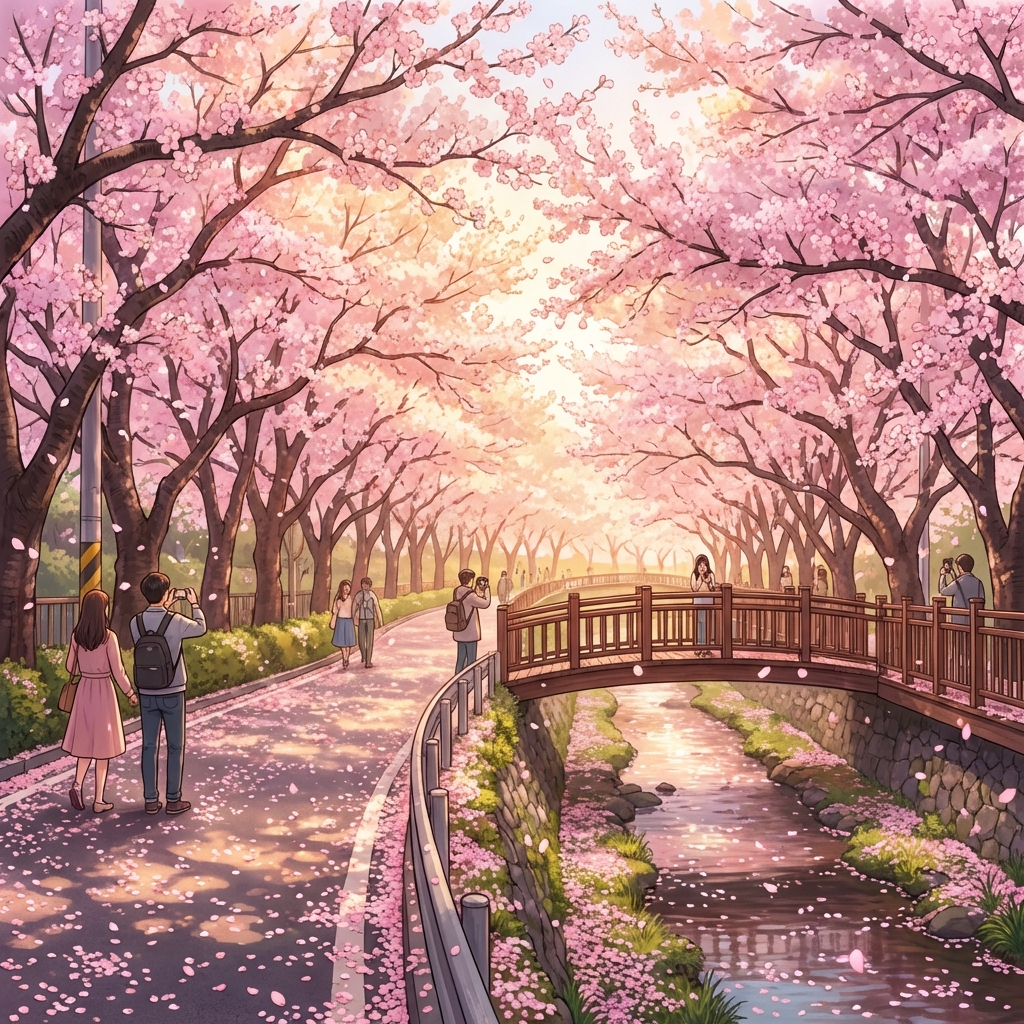
- Spring (April-June): The best time. Mild weather and cherry blossoms.
- Summer (July-August): Very hot and humid. Be prepared for the "Monsoon Season." Stick to indoor attractions like Lotte World or Kids Cafes.
- Autumn (September-November): Also beautiful with crisp air and stunning foliage.
- Winter (December-February): Can be extremely cold. If you visit now, make sure you have high-quality thermal layers for the little ones.
Useful Phrases for Parents
- "A-gi ui-ja iss-na-yo?" (Do you have a baby chair?)
- "An-mae-ub-ge hae-ju-se-yo." (Please make it not spicy.)
- "Gye-ran-jjim ha-na ju-se-yo." (One steamed egg, please.)
- "Suyu-sil eo-di-ye-yo?" (Where is the nursing room?)
Conclusion
Traveling to South Korea with a toddler might seem daunting from afar, but once you land, you will find a country that is incredibly welcoming to families. Between the high-tech nursing rooms, the abundance of healthy food options, and a culture that celebrates children, Korea is one of the easiest international destinations for parents of young kids.
Yes, there will be challenges—strollers on subways and the occasional "lost in translation" moment—but the memories of your toddler laughing in a Hanok village or discovering their love for Bulgogi will far outweigh the effort. Pack light, bring a good carrier, and get ready to discover why Korea is the ultimate family-friendly destination in Asia.
For a broader look at designing an unforgettable itinerary, explore our overview of Family Travel in South Korea: Best Kid-Friendly Destinations and Tips. Once you've mapped out the basics, you can treat your energetic little ones to a day of wonder at the Best Theme Parks in South Korea: Everland, Lotte World and Beyond or foster their curiosity at the Best Children's Museums and Science Parks in Seoul.