Building a Local Life: How to Make Friends and Find Community in Korea
South Korea is a land of vibrant cityscapes and deep-rooted traditions, but for many expats, the initial excitement of moving here is often followed by a period of profound isolation known as the 'six-month wall.' As of late 2025, the foreign resident population has exceeded 2.8 million, creating a more diverse social landscape than ever before. Breaking through the expat bubble and building a genuine local life in 2026 requires more than just showing up—it demands a proactive strategy, a few essential digital tools like the "Wooh App," and a willingness to navigate the unique cultural landscape of the Land of the Morning Calm.
Introduction: Beyond the Expat Bubble
Landing at Incheon Airport is the easy part. The first few months of life in South Korea are typically a whirlwind of neon lights, incredible street food, and the novelty of a new culture. However, as the "vacation mode" fades into the reality of daily life, many long-stay visitors find themselves trapped in the expat bubble—socializing exclusively with other foreigners in English-friendly neighborhoods like Itaewon.
While having an expat support system is vital, true integration is the secret to mental health and longevity in Korea. Building a local life means finding your "people," whether they are fellow nomads, local Koreans, or hobbyists who share your niche interests. This guide will walk you through the digital foundation, physical spaces, and cultural mindsets needed to transform South Korea from a temporary stopover into a true home.
The Digital Foundation: Essential Apps for Socializing
In the world's most connected country, your social life starts on your smartphone. If you aren't using the right apps, you are invisible to 90% of the social opportunities happening around you.
KakaoTalk Open Chats (The Secret Sauce)
While everyone knows KakaoTalk is for messaging, the Open Chat feature is where the real community lives. These are anonymous (or semi-anonymous) group chats based on specific interests or locations.
To find them, go to the "Chats" tab, click the speech bubble icon with a plus sign, and select "Open Chat." You can search for keywords like "Seoul Digital Nomad," "Hiking in Busan," "English Language Exchange," or even "Vegan Seoul." Many of these groups host regular offline meetups. They are the fastest way to get real-time advice and meet people without the pressure of a formal event.
Somoim (소모임): The Local Way to Club
If you want to meet locals, Somoim is the primary app used by Koreans to organize hobby-based "circles" (dong-ho-hoe). While the interface is in Korean, it is relatively intuitive. You can join groups for everything from running crews and board games to watercolor painting and wine tasting.
Joining a Somoim group is a bold move if your Korean is limited, but it is also the most rewarding. Many groups are open to foreigners, especially if the hobby doesn't require high-level conversation (like sports or photography).
Meetup.com vs. Facebook Groups
As of 2026, Meetup.com remains a staple for the expat-local bridge. It is excellent for "soft landings"—events like language exchanges or weekend hikes where English is the primary medium of communication.
Facebook Groups (like "Seoul Expat Community" or "South Korea Travel Planning") are better for logistics and high-level networking. If you have a specific question about a visa or need to buy a second-hand bike, Facebook is your friend.
Wooh App: The 2026 Disruptor
A new entry in the 2026 social scene is the Wooh App. Unlike traditional dating-style swiping, Wooh is designed specifically for expats in Seoul to find "activity partners" for in-person meetups. It prioritizes shared values and hobbies, making it the go-to for finding someone to explore a new cafe in Seongsu or a museum in Yongsan without the romantic pressure.
Carrot Market (Danggeun): More Than a Marketplace
Most foreigners know Danggeun (Carrot Market) for cheap second-hand furniture. However, in 2026, its "Neighborhood Community" (Dong-ne-se-sang) tab has become a powerhouse for local integration.
- Wait-list Alerts: Locals use this to post about canceled reservations at popular restaurants.
- Hobby Groups: You can find "flash mobs" for jogging along the Han River or neighborhood book clubs.
- Lost & Found: It is the fastest way to find a lost wallet or pet in your specific "neighborhood zone."
Language Exchange Apps: HelloTalk and Tandem
If you are looking to bridge the gap between digital and physical, HelloTalk and Tandem are essential. These apps allow you to connect with locals who want to practice English while helping you with your Korean. The key is to move from the app to a "coffee meetup" as soon as you feel comfortable. These one-on-one interactions are often the gateway to broader social circles. For more resources on this, see our guide on Learning Korean as a Traveler.
Mastering the "Third Space": Where to Meet People Physically
In a country where living spaces are often small (the "studio" or "one-room" life), social life happens in the "third space"—the cafes, co-working hubs, and community centers.
Café Culture: More Than Just Coffee
In Korea, cafes are not just places to drink; they are semi-public living rooms. To meet people, you need to find the right kind of cafe.
- Study Cafes: Generally quiet, but many have social areas.
- Theme Cafes: Whether it's a cat cafe, a board game cafe, or a plant-themed space, shared interests make it easier to strike up a conversation.
- Nomad Hubs: Certain cafes in Mapo-gu and Seongsu-dong are known magnets for remote workers. Check out our list of the Best Cafes to Work from in Seoul to find your next "office."
Co-working Spaces: Professional Community
If you are a digital nomad, joining a co-working space is the single best investment you can make in your social life. Large chains like FastFive and SparkPlus have "community managers" who specifically organize networking events, beer nights, and educational workshops. For a deeper dive into which space fits your vibe, read our Best Co-working Spaces in Seoul reviews.
Global Village Centers
The Korean government provides an incredible resource for foreigners: Global Village Centers. Located in neighborhoods like Itaewon, Gangnam, and Seorae, these centers offer free Korean classes, cultural workshops (like Kimchi making or Hanji paper crafts), and volunteer programs. They are safe, welcoming environments to meet other people who are in the same "new expat" boat as you.
🏫 Globallingual Hubs & University Programs
By 2026, "Globallingual Hubs"—collaborative spaces run by major universities like Yonsei (KLI) and Sogang—have become more than just classrooms. They now function as social centers where students and the general public can mix.
- The Sogang Vibe: Known for its "Speaking-First" approach, Sogang’s social mixers are famous for being the least intimidating for beginners.
- Itaewon & Seorae GVCs: These Global Village Centers have expanded their "Youth Korean Courses" to include non-student expats, often pairing you with a "Buddy" (a local volunteer) to navigate things like opening a bank account or visiting a traditional market.
Hobby-Based Communities: The "Circle" (Dong-ho-hoe) Culture
Koreans take their hobbies seriously. If someone says they enjoy hiking, they often have the full $500 Gore-Tex outfit to prove it. This "circle" culture is the backbone of Korean social life.
Hiking (Deung-san): The National Pastime
Hiking is the ultimate equalizer in Korea. On the trails of Bukhansan or Seoraksan, the hierarchical social rules of the city soften. Groups like Seoul International Hikers or the Seoul Hiking and Nature Group are legendary for their weekend trips and inclusive atmosphere. It’s an easy way to spend 6 hours with a group of people, which naturally leads to post-hike meals and drinks.
Sports and Fitness
- Running Crews: Running is exploding in Seoul. You’ll see large groups running along the Han River at night. Many of these crews have Instagram pages where they announce "open runs."
- CrossFit and BJJ: The CrossFit community in Korea is incredibly tight-knit. Most "boxes" have a strong social culture that extends beyond the workout.
- Somaim Sports: Use the Somoim app to find local football (soccer), basketball, or badminton clubs in your neighborhood.
Arts and One-Day Classes
Neighborhoods like Seongsu and Hongdae are hubs for "one-day classes." You can learn everything from perfume making to traditional pottery. While these are often one-off events, they are great for meeting people with similar aesthetic tastes. If you're into the arts, don't miss our guide on Learning K-Pop Dance in Seoul.
The Language Paradox: Do You Need Korean to Have a Life?
There is a common trap for English speakers in Korea: the "English Teacher Trap." Because many foreigners work as teachers, they find it easy to survive within an English-speaking bubble. However, your quality of life and depth of community will scale 1:1 with your Korean ability.
You don't need to be fluent to build a local life, but having "survival Korean" (ordering food, asking for directions, basic greetings) shows a level of respect that opens doors. When you use Korean—even poorly—it signals to locals that you are interested in their world, not just expecting them to fit into yours.
Free Korean Resources:
- KIIP (Korea Immigration & Integration Program): Government-funded classes for residents.
- Global Village Centers: Often offer free beginner and intermediate courses.
- Language Exchanges: As mentioned, these are perfect for practicing what you learn in a low-pressure environment.
Cultural Intelligence (CQ): Navigating Social Norms
Building community in Korea requires understanding the invisible rules of the game. Korean social dynamics are governed by concepts that have no direct English translation but are felt in every interaction.
Nunchi: Reading the Room
Nunchi is the art of sensing other people's thoughts and feelings to build harmony. In a social setting, it means being aware of the group dynamic. Are you talking too much? Is someone feeling left out? Having "good nunchi" makes you a desirable friend in any Korean social circle.
Jeong: The Invisible Bond
Jeong is the unique Korean concept of "social glue"—an emotional attachment that develops over time through shared experiences and giving. It is why a restaurant owner might give you "service" (free food) or why a friend will insist on walking you all the way to the subway station. You can't force jeong, but you can cultivate it by being consistent and showing small acts of kindness. For more on these nuances, see our Guide to Navigating Korean Social Customs.
The Hierarchy: Age and Seniority
Korean society is hierarchical. Age is often the first thing people ask (after your name) so they know how to address you correctly. While foreigners are often given a "pass" on the strict honorifics, showing respect to those older than you will go a long way in building trust within a community.
Dining Etiquette and Hwesik
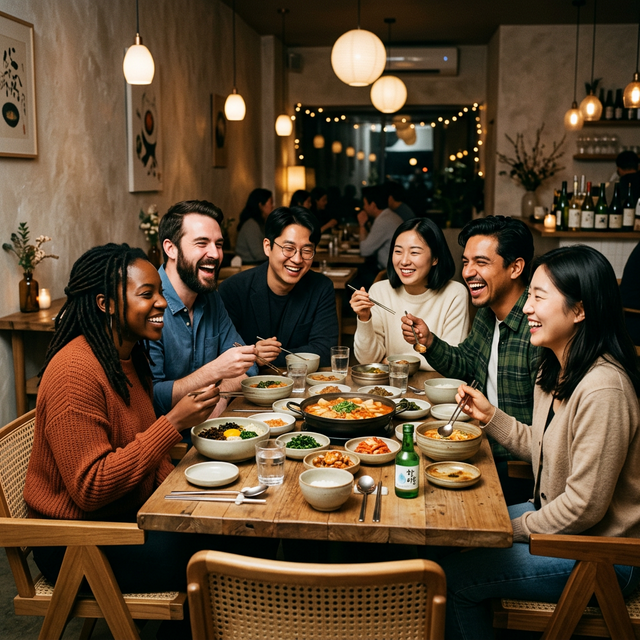
Community in Korea is built over food. The Hwesik (work dinner) culture might be changing, but the concept of communal eating remains. Knowing how to pour drinks for others and the basics of table manners is essential. Check our Korean Dining Etiquette guide before your first group dinner.
Regional Spotlights: Community Outside of Seoul
While Seoul is the heart of the expat scene, other cities offer unique community vibes.
Busan: The Laid-Back Coast
Busan has a more relaxed social scene. The community here often revolves around the beach (Haeundae and Gwangalli) and outdoor activities. It’s smaller, which means you’ll run into the same people more often, making it easier to build a consistent social circle.
Gwangju and Daegu: The Tight-Knit Scenes
In smaller cities, the expat community is often tighter because there are fewer of us. People look out for each other, and it's easier to become a "regular" at the local foreigner-friendly bars and cafes.
Jeju Island: The Nomad's Paradise
Jeju is becoming a major hub for digital nomads, but it can be isolating due to its geography. Socializing here requires a car (or a lot of patience with buses) and joining specific nomad retreats or co-living spaces. If you're planning a stay there, our Digital Nomad Guide to South Korea covers the logistics.
Overcoming Loneliness and "Expat Fatigue"
It is important to acknowledge that moving to Korea is hard. There will be days when the language barrier feels like a wall and the cultural differences feel insurmountable.
The 10-Visit Rule
When you find a cafe, a bar, or a hobby club you like—go back. Ten times. Consistency is the key to being recognized and eventually included. In Korea, being a "dan-gol" (regular customer) is a position of status and leads to the development of jeong.
Mental Health Resources
Loneliness is a real part of the expat experience. If you find yourself struggling, there are English-speaking resources available:
- Seoul Counseling Center: Offers professional therapy for foreigners.
- AHS Korea: Provides mental health support across various cities.
- Expat Support Groups: Many can be found through the Global Village Centers.
🌿 Mental Health & "Expat Fatigue"
Even with a thriving social circle, Expat Fatigue is real. In 2026, the term "Digital Burnout" is often used for nomads who try to do too much, too soon.
Identifying the Signs
- The Language Wall: Feeling physically exhausted after a simple interaction in Korean.
- Micro-Aggression Sensitivity: Getting disproportionately upset over small things like a crowded subway or a missed delivery.
- The "I Prefer My Home Food" Phase: Avoiding local interactions to seek out familiar comfort.
The Recovery Strategy
- Unplug from Social Media: Global expat groups can sometimes be echo chambers of negativity. Take a 3-day break.
- Go "Half-Local": Spend a day in a neighborhood like Mangwon or Yeonhui-dong. They offer a blend of traditional life and modern comfort that feels less overwhelming than Gangnam.
- The "Forest Therapy" Hack: Seoul is 25% mountains. A solo walk in Inwangsan or along the Cheonggyecheon can reset your nervous system and remind you why you chose this city.
Conclusion: Your New Home in the Land of the Morning Calm
Building a local life in South Korea doesn't happen overnight. It is a slow process of trial and error, digital discovery, and cultural adaptation. By stepping out of the Itaewon bubble, mastering the local apps, and embracing the "circle" culture, you’ll find that Korea is one of the most rewarding places in the world to call home. Whether you are still deciding on the best neighborhoods to call home, sorting out essential logistics like opening your first Korean bank account, or familiarizing yourself with how the national healthcare system works, taking the time to build a solid foundation makes all the difference.
📅 The One-Month Milestone: Celebrate the Small Wins
In your first 30 days, don't aim for deep friendships—aim for familiarity. Being recognized by the owner of your local gimbap shop or correctly navigating a complex subway transfer without an app is a victory. These small moments of competence are the bricks that build your eventual sense of belonging.
The rewards are worth the effort: the deep bonds of jeong, the thrill of a shared hike up a misty mountain, and the simple joy of being a regular at your neighborhood kimbap shop. Welcome to your new local life in Korea.